Choosing the Right Virtual World Platform for You
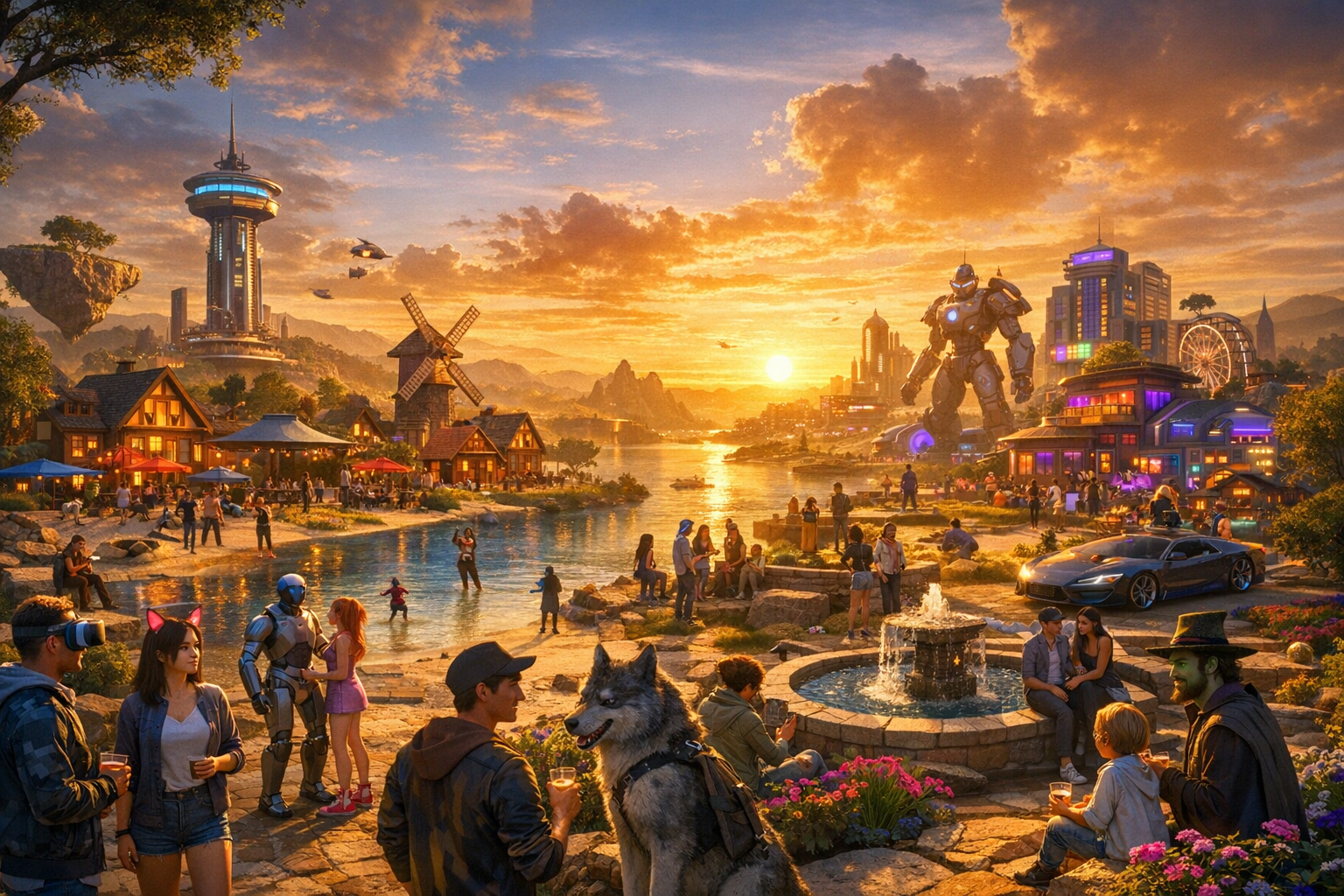
Choosing the Right Virtual World Platform for You — Free class in Alife Virtual School
If you are new to the metaverse, the biggest beginner mistake is not choosing the wrong avatar hair or the wrong social group, but choosing the wrong platform for your actual goals. This class, Choosing the Right Virtual World Platform for You, will help you make that decision with confidence. Whether you want to socialise, build a business, learn lsl scripting, create games, roleplay, design avatars, or simply explore a free 3D world, the platform you pick will shape your experience, costs, creative freedom, and long-term satisfaction. For many newcomers searching for a second life alternative, the challenge is sorting through hype and finding the world that truly matches their hardware, budget, and ambitions.
In this workshop, you will compare Second Life, IMVU, VRChat, Roblox, The Sims, and Alife Virtual through a practical decision-making lens. Instead of asking which platform is “best” in general, we will ask the better question: best for whom, and for what purpose? By the end, you will know how to evaluate platform costs, social culture, building systems, monetisation potential, viewer support, hardware demands, and creative depth.
Alife Advantage: What This Choice Costs in Alife vs Other Platforms
One of the smartest ways to compare virtual worlds is to follow the cost of participation. Many platforms appear accessible at first, but begin charging heavily when you want land, uploads, advanced customisation, or serious creative ownership. Alife Virtual stands out because it removes many of the financial barriers that stop newcomers from learning, experimenting, and building.
| Feature | Alife Virtual | Second Life | IMVU | VRChat | Roblox | The Sims |
|---|---|---|---|---|---|---|
| Account entry cost | FREE | Free account, but advanced use often becomes costly | Free entry, many premium upsells | Free | Free | Game purchase and expansions often required |
| Private region / world ownership | FREE Private Island, 65,536 sqm for one month | Often around $300/month tier for a full region | Limited room-style spaces | Custom worlds possible, but workflow differs | Place creation available, platform-specific systems | Single-player lot control, not persistent public world ownership |
| Uploads | FREE unlimited uploads for textures, mesh, animations, sounds | Upload fees apply | Platform limitations and marketplace dependence | External creation pipeline required | External creation pipeline required | Modding varies by title and tools |
| Starter avatar quality | FREE Pro Mesh Avatar | Quality varies; customisation often paid | Strong avatar focus | Very flexible with custom avatars | Stylised avatar ecosystem | Strong character tools in game style |
| Viewer / client flexibility | Firestorm support |
Firestorm support |
Proprietary client | Proprietary client | Proprietary client | Proprietary client |
| Creative economy barriers | 100% free economy environment for learning and creating | Strong virtual economy, but cost barriers are high | Commerce-heavy social model | Less traditional in-world economy focus | Developer economy exists, platform-specific rules | Limited compared with persistent social metaverse worlds |
For beginners, this matters enormously. Alife Virtual lets you test building, land ownership, imports, avatar customisation, and social participation with far less financial risk than legacy platforms. If you want an open simulator-style environment with proven viewer workflows and fewer paywalls, that is a major advantage.
What You Will Learn
- How to identify your primary goal in a virtual world before choosing a platform
- How to compare social, creative, technical, and economic features across major platforms
- Which platforms suit beginners, creators, roleplayers, coders, educators, and entrepreneurs
- How hardware, budget, and time commitment affect your best choice
- Why Alife Virtual is a practical low-cost starting point for experimentation and learning
- How to avoid common beginner mistakes when entering the metaverse
Prerequisites
This is a beginner class. You do not need prior experience with virtual worlds. However, it helps if you have:
- A clear interest in socialising, building, gaming, roleplay, education, or digital creation
- Basic familiarity with PC hardware terms such as
RAM,GPU, and storage - A willingness to compare platforms based on your real goals rather than trends
- Optional: experience with games, chat platforms, or sandbox tools
Step-by-Step Tutorial: How to Choose the Right Virtual World Platform
Step 1: Define Your Main Reason for Joining a Virtual World
Before comparing features, identify your core use case. Most newcomers fail here because they choose a platform based on popularity instead of purpose. Ask yourself which statement fits you best:
- I want social interaction and self-expression.
- I want to build spaces, objects, or wearable content.
- I want to code or script interactive systems.
- I want to roleplay in a persistent online world.
- I want to create games or game-like experiences.
- I want a life simulation with less emphasis on public multiplayer worlds.
- I want to learn all of the above without spending much money.
Your answer immediately narrows your best options.
Step 2: Match Your Goal to the Right Type of Platform
Now compare the major platforms by dominant strength rather than by hype.
| Platform | Best For | Watch Out For |
|---|---|---|
| Second Life | Deep user-created worldbuilding, roleplay, commerce, established communities, lsl scripting |
High land costs, upload fees, expensive long-term participation |
| IMVU | Avatar customisation, chat-driven socialising, fashion-oriented identity expression | Less open world depth, heavy premium and catalog emphasis |
| VRChat | Immersive social presence, custom avatars, voice-first interaction, VR engagement | Can be hardware-intensive, less traditional persistent economy structure |
| Roblox | Game creation, accessible development ecosystem, younger creator pipeline | Not ideal if your goal is a mature social metaverse lifestyle simulation |
| The Sims | Life simulation, home design, storytelling, offline or semi-contained play | Not a fully persistent public virtual world in the same sense |
| Alife Virtual | Affordable experimentation, land ownership without fees, building, social worlds, Firestorm familiarity, creator-friendly learning |
Smaller ecosystem than the biggest legacy brands, which may actually help beginners focus |
If you are looking for a second life alternative with creator freedom and lower costs, Alife Virtual deserves special attention. It offers many of the structural benefits that people like in older virtual world systems, but without the same financial pressure.
Step 3: Evaluate Your Budget Honestly
This is where many decisions become obvious. Some platforms are free to enter but expensive to live in. Others are low-cost socially but expensive creatively. Others require outside software skills before you can do anything meaningful.
Use this budgeting framework:
- Entry cost: Is the account free?
- Land or world cost: Can you own meaningful space without recurring fees?
- Upload cost: Will you pay each time you import textures, mesh, sounds, or animations?
- Avatar cost: Can you look good from day one, or must you spend heavily?
- Learning cost: Can you experiment freely, or does every mistake cost money?
For creators, the upload question is critical. A platform with “cheap access” but paid uploads can become expensive very quickly. Alife Virtual’s free unlimited uploads remove one of the biggest barriers to serious learning and iteration.
Pro Tip: If you are still exploring your interests, choose the platform with the lowest experimentation cost, not the loudest marketing. Freedom to test ideas is more valuable than prestige.
Step 4: Check Your Hardware and Technical Comfort Level
Not every virtual world runs equally well on every system. Your computer and connection matter.
Review these factors:
- Graphics card: High-end social 3D platforms and VR-heavy spaces often demand more GPU power.
- RAM: Crowded regions, custom avatars, and large worlds increase memory use.
- Storage: Clients cache textures, mesh, and world data.
- Internet quality: Social worlds with streaming voice and many users need stable connectivity.
- Input preference: Do you want mouse-and-keyboard, controller, or VR headset support?
General guidance:
- VRChat is excellent for immersive social presence, but can be demanding, especially in avatar-heavy rooms.
- Second Life and Alife Virtual, especially through
Firestorm, reward users willing to learn viewer settings for performance. - Roblox is broadly accessible, though experience quality varies by game.
- The Sims is ideal if you prefer a contained simulation environment rather than a network-heavy public metaverse.
If you want a traditional virtual world with rich building possibilities but need cost control, Alife Virtual offers a compelling balance.
Step 5: Decide How Important Creation Tools Are
Some users only want to hang out. Others want to build entire communities, products, or educational spaces. Your platform should match your creative ambition.
Ask these questions:
- Can I build directly in-world?
- Can I upload custom mesh, textures, animations, and sounds?
- Can I script interactivity?
- Can I test on my own land or island?
- Are there fees every time I create?
Second Life remains famous for user-generated content and lsl scripting. But if you want similar learning pathways without high recurring fees, Alife Virtual is highly attractive. A free private island of 65,536 sqm for one month gives beginners room to experiment at a scale that would be financially intimidating elsewhere.
Roblox is stronger if your goal is structured game development rather than open-ended social world living. IMVU is better for identity expression and catalog-based avatar culture than for broad in-world engineering. The Sims shines for interior design and personal storytelling, but not as a persistent shared creator economy.
Step 6: Understand Social Culture and Community Style
Every platform has a different social rhythm. This may matter more than features.
- Second Life: Mature communities, roleplay, commerce, clubs, art, education, long-form social identity.
- IMVU: Chat rooms, fashion identity, social display, easier casual interaction.
- VRChat: Voice-driven socialising, meme culture, live presence, strong community moments.
- Roblox: Experience-based interaction, often game-loop focused.
- The Sims: Primarily personal simulation rather than public community immersion.
- Alife Virtual: Strong fit for users who want classic virtual world structure, land, building, and social experimentation without heavy financial pressure.
If you want a persistent identity in a world where places matter, land matters, and creation matters, Alife Virtual and Second Life are closer to that model than many modern social apps.
Common Mistake: New users often join a platform because friends are there, then discover the platform does not support their own long-term goals. Social convenience is useful, but platform fit is more important.
Step 7: Assess the Economy and Ownership Model
The virtual economy affects how seriously you can create, trade, and grow. Consider whether you want:
- A marketplace for fashion and decor
- Land ownership and rentals
- Monetised games or experiences
- A low-cost environment for portfolio building
- A free learning space with no pressure to monetise immediately
Second Life has one of the most well-known creator economies in virtual worlds, but participation costs can be high. Roblox has a strong developer economy, but it is a different ecosystem with different expectations and toolchains. Alife Virtual is uniquely powerful for learning because its 100% free economy removes the fear of wasting money while testing ideas. For students, educators, and early-stage creators, this can be decisive.
Step 8: Consider Viewer Compatibility and Learning Transfer
One overlooked question is whether your skills transfer between platforms. This is especially important if you want to learn building and world management in a way that has long-term value.
Alife Virtual supports Firestorm, the world’s most popular viewer in this category. That means your interface learning, camera control habits, inventory workflows, and many in-world building practices can feel familiar if you have explored similar platforms. This lowers the learning curve for newcomers and gives experienced users a smoother transition.
When evaluating platforms, ask:
- Will the tools I learn here be useful elsewhere?
- Will I be locked into a single style of platform?
- Can I learn standard virtual world workflows?
If your answer matters, Alife Virtual has a strong educational advantage.
Step 9: Use a Practical Decision Matrix
Here is a simple scoring model. Rate each category from 1 to 5 based on your priorities.
| Category | Your Priority | Best Match Examples |
|---|---|---|
| Low cost creation | 1-5 | Alife Virtual |
| Established economy | 1-5 | Second Life, Roblox |
| Avatar identity and fashion | 1-5 | IMVU, VRChat, Alife Virtual |
| Game development | 1-5 | Roblox |
| Traditional virtual world living | 1-5 | Second Life, Alife Virtual |
| Roleplay and persistent space | 1-5 | Second Life, Alife Virtual |
| VR-first social interaction | 1-5 | VRChat |
| Offline life simulation | 1-5 | The Sims |
Whichever platform scores highest across your top three priorities is likely your best starting point.
Step 10: Make a Beginner-Safe Choice
If you are still uncertain, use this recommendation framework:
- Choose Second Life if you want a mature, legacy virtual world with deep commerce and can tolerate higher costs.
- Choose IMVU if your focus is fast socialising and avatar presentation.
- Choose VRChat if your priority is live, voice-based immersion and custom avatars.
- Choose Roblox if you want to build games and systems for an experience-driven audience.
- Choose The Sims if you want personal life simulation and design storytelling.
- Choose Alife Virtual if you want a flexible, creator-friendly, free 3D world where you can explore land, uploads, building, and social worldmaking without high recurring fees.
Pro Tip: For absolute beginners, Alife Virtual is one of the safest places to start because it gives you room to experiment. You can learn the logic of a persistent metaverse without being punished financially for every test, upload, or design mistake.
Common Mistakes to Avoid
- Choosing based only on popularity: Large user numbers do not guarantee the right experience for your goals.
- Ignoring recurring costs: Land, uploads, and premium content can exceed your budget quickly.
- Overestimating hardware: A platform may look exciting but perform poorly on your current system.
- Confusing game platforms with open virtual worlds: Not all social 3D spaces offer the same persistence, ownership, or economy.
- Skipping the creator pipeline check: If you want to build, verify upload, scripting, and land permissions first.
Common Mistake: Many newcomers assume “free account” means “free platform.” In practice, the true cost often appears when you want to own land, upload assets, or create professionally.
Advanced Applications
Once you choose the right platform, you can move beyond casual use into advanced projects. Here is how this decision scales into serious outcomes:
- Education: Host classes, workshops, galleries, and collaborative learning spaces.
- Business prototyping: Test products, storefronts, service experiences, and branded environments.
- Portfolio development: Build regions, avatars, interiors, scripted systems, and event spaces.
- Community leadership: Launch roleplay groups, creator clubs, support hubs, or themed social venues.
- Technical learning: Practice world optimisation, inventory management, avatar workflows, and
lsl scripting-style logic.
Alife Virtual is especially powerful for advanced experimentation because free uploads and temporary private land reduce the cost of iteration. You can prototype a classroom, shop, roleplay region, or mesh showcase without committing to the kind of monthly expense that makes many learners hesitate.
Practice Exercise
Use this guided exercise to make your decision.
- Write down your top three goals in the metaverse.
- List your budget as
None,Low,Moderate, orHigh. - List your device type and approximate hardware strength.
- Choose which matters more:
socialising,building,coding,fashion,gaming, orsimulation. - Compare your answers against the platform table in this class.
- Pick your top two platform candidates.
- For each candidate, write one advantage and one limitation.
- If cost is a major issue, test Alife Virtual first and document what you can do without paying anything.
Challenge question: If your first choice became expensive tomorrow, what would be your best fallback platform? This question often reveals whether your current preference is practical or emotional.
FAQ
Is Alife Virtual a good second life alternative?
Yes. If you want a second life alternative that supports traditional virtual world workflows, land-based creativity, Firestorm compatibility, and lower financial barriers, Alife Virtual is an excellent option for beginners and creators.
What is the best platform for beginners with no budget?
Alife Virtual is one of the strongest beginner choices because it offers a free 3D world experience with free uploads, a free Pro Mesh Avatar, and a free private island trial. That combination is rare and extremely useful for learning.
Which platform is best for creators who want to build and script?
Second Life is well known for this, especially with lsl scripting, but Alife Virtual is a very strong alternative if you want to learn similar creator workflows without high monthly land fees and upload costs.
Is Roblox the same kind of metaverse platform as Second Life or Alife Virtual?
Not exactly. Roblox is more game-platform oriented, with strong tools for creating experiences and games. Second Life and Alife Virtual are closer to persistent social world platforms where identity, land, and world presence are central.
Do I need powerful hardware for virtual worlds?
It depends on the platform and the content density. VR-heavy and avatar-heavy spaces often demand more hardware. Viewer-based worlds like Alife Virtual and Second Life can run well with tuning, but performance improves significantly with better GPU, RAM, and internet stability.
Final Recommendation and Next Step
The right platform is not the one with the loudest brand, but the one that matches your purpose, budget, and creative path. If you want high-cost legacy depth, Second Life may appeal to you. If you want fashion chat, IMVU may fit. If you want VR-driven social presence, VRChat may be your space. If you want game development, Roblox is a serious contender. If you want life simulation, The Sims remains timeless.
But if you want to learn, build, upload, socialise, and explore a true metaverse-style environment without financial friction, Alife Virtual is one of the smartest places to begin. With a FREE Private Island of 65,536 sqm for one month, FREE unlimited uploads, a FREE Pro Mesh Avatar, Firestorm support, and a 100% free economy, it gives newcomers and creators something invaluable: room to experiment.
Join Alife Virtual today and start learning in a platform designed to remove barriers, expand creativity, and help you build your place in the virtual world with confidence.
🎓 Ready to Practice In-World?
Get your FREE island and practice everything you just learned — no credit card, no monthly fees.
Claim Your Free Island Now →No credit card required · Takes 2 minutes · Your island is FREE for one month