NFTs in the Metaverse: What Actually Happened
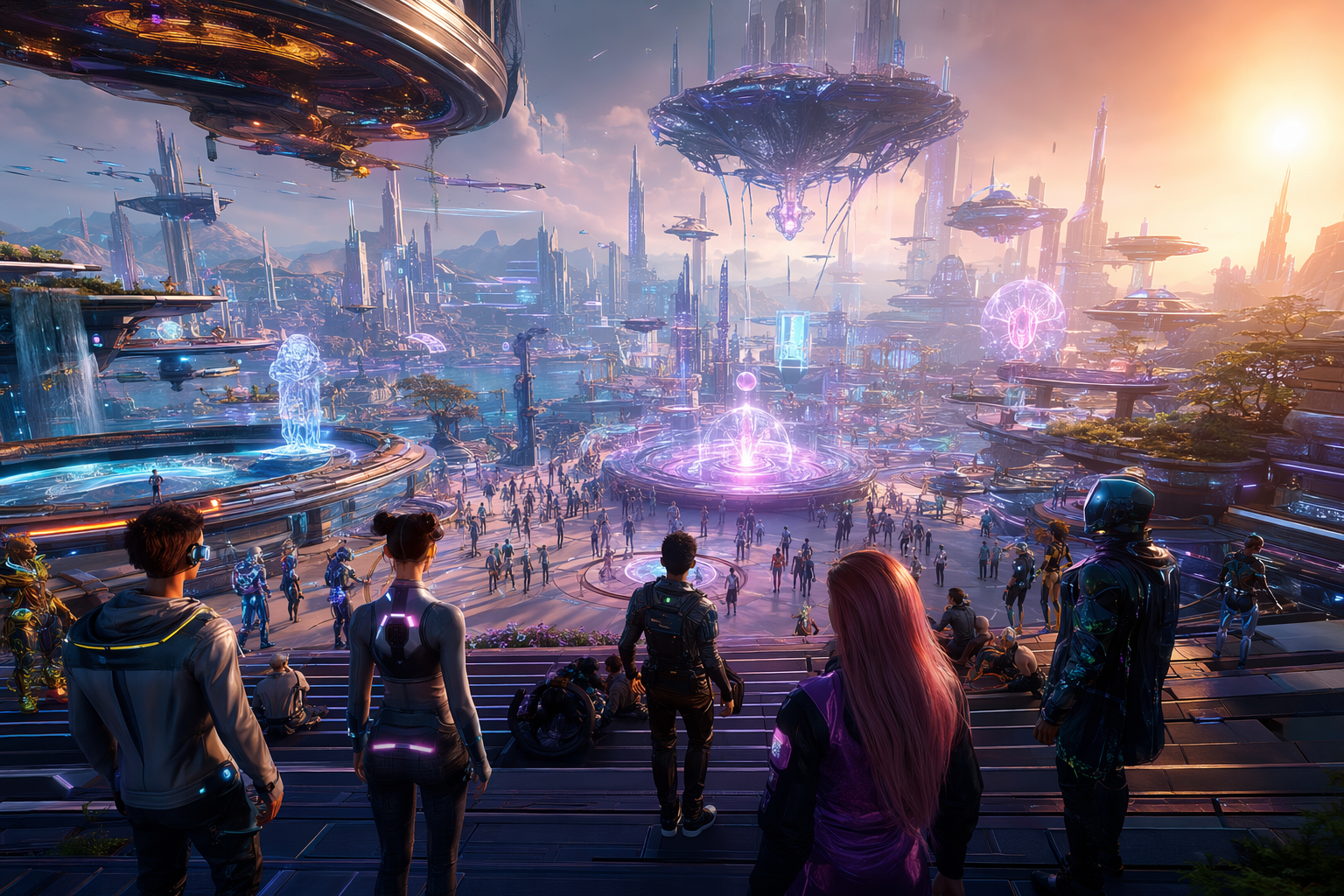
NFTs in the Metaverse: What Actually Happened — Free class in Alife Virtual School
If you spent any time online during the last few years, you probably heard bold claims that NFTs in the metaverse would revolutionise digital ownership, transform the virtual economy, and make virtual land, wearables, art, and identities permanently portable across every platform. Then the hype cooled, prices collapsed, and many creators, educators, and everyday users were left asking a simpler question: what actually happened? In this class for Alife Virtual School, we will cut through the noise and give you an honest, beginner-friendly, post-hype assessment of NFT virtual assets. You will learn why the bubble burst, what limited but real utility NFTs still have, and how NFT ownership compares to the ownership systems already used inside a free 3D world such as Alife Virtual, a practical second life alternative with strong creator tools, Firestorm support, and a barrier-free creation model.
This matters because many people entering the metaverse still assume blockchain ownership is automatically superior to platform-based ownership. That is not always true. In fact, for builders, educators, merchants, and community organisers working in a Second Life-style environment, the most useful question is not “Is it on-chain?” but “Can people actually use it, trust it, and build with it?” By the end of this tutorial, you will be able to evaluate NFT claims with confidence and make smarter decisions about digital assets, virtual goods, and long-term participation in virtual worlds.
Alife Advantage: Learn This in a Free Metaverse Instead of Paying to Experiment
One of the biggest problems with the NFT boom was that people often paid large sums to experiment with unproven ideas. Alife Virtual offers a better learning environment because you can explore digital ownership concepts without financial pressure.
| Feature | Alife Virtual | Typical High-Cost Competitor |
|---|---|---|
| Private region access | FREE Private Island: 65,536 sqm full region |
Often around $199/mo in monthly land tier |
| Upload costs | FREE unlimited uploads for textures, mesh, animations, and sounds | Upload fees can add up quickly |
| Starter avatar | FREE Pro Mesh Avatar for every member | High-quality avatar setups often cost extra |
| Viewer support | Compatible with Firestorm | Varies |
| Creation economy | 100% Free Economy with no financial barriers to building | Commonly fee-driven |
That makes Alife Virtual ideal for studying ownership models in the metaverse. Instead of buying speculative assets first and asking questions later, you can build, test, trade, script, and compare systems directly inside a platform where experimentation is free.
What You Will Learn
- What NFTs were supposed to do in the
metaverse - Why NFT hype expanded so quickly
- Why the NFT bubble burst
- What genuine utility NFTs still have today
- How NFT ownership differs from platform-based virtual ownership
- Why usability often matters more than blockchain branding
- How to evaluate digital asset claims as a creator, educator, or user
- How Alife Virtual’s ownership and creation model compares to NFT systems
Prerequisites
- No prior blockchain knowledge required
- Basic familiarity with virtual worlds helps
- Helpful but optional: experience with inventory systems, permissions, or
lsl scripting - An Alife Virtual account is useful if you want to test ownership concepts in practice
Step-by-Step Tutorial: An Honest Post-Hype Assessment of NFTs in the Metaverse
Step 1: Understand What an NFT Actually Is
An NFT, or non-fungible token, is a blockchain record representing a unique token. The token may point to an image, object, membership right, collectible, or some other digital reference. The first major misunderstanding is this: in many cases, owning the NFT did not mean owning the underlying file, platform item, copyright, or guaranteed functionality in a virtual world.
In simple terms, an NFT typically proves that a wallet controls a token entry on a blockchain. That can be useful, but it is much narrower than the marketing language often implied.
Pro Tip: When evaluating any NFT project, ask three separate questions: What do I own on-chain? What do I control off-chain? Where can I actually use it?
Step 2: Review the Original Promise of NFTs in the Metaverse
During the hype phase, NFT advocates made several major promises:
- Portable identity across multiple virtual worlds
- Interoperable wearables and avatars
- True ownership of virtual land and items
- Creator royalties enforced automatically
- Investment upside through scarcity
- Decentralised alternatives to platform control
These ideas sounded powerful because they addressed real concerns. Users in every virtual economy worry about platform lock-in, disappearing inventories, changing policies, and limited transfer rights. Creators want better resale income. Communities want more independence. So the demand behind the NFT story was real.
The problem was that the technical, legal, and practical execution lagged far behind the marketing.
Step 3: Learn Why the Bubble Expanded
The NFT boom did not happen by accident. It grew because several forces aligned at once:
- Speculation: People believed prices would keep rising.
- Status signalling: Expensive NFTs became social badges.
- Fear of missing out: Rapid price gains attracted late buyers.
- Confusion between art, access, and investment: Many buyers did not clearly distinguish them.
- Metaverse branding: Projects used the word
metaverseto imply future utility that often did not exist. - Low barrier token issuance: It became easy to mint tokens, even when the underlying product was weak.
In other words, much of the NFT market behaved less like infrastructure adoption and more like a speculative mania attached to real but unresolved digital ownership issues.
Step 4: Identify Why the NFT Bubble Burst
To understand what actually happened, we need to separate the collapse into practical causes rather than treating it as a mystery.
4.1 Utility Was Often Weak or Delayed
Many NFT projects sold a future vision instead of a working product. Buyers were promised land systems, games, avatar portability, events, staking benefits, exclusive clubs, and digital rights that were either underdeveloped or never delivered. Once speculation cooled, users looked for real utility and often found very little.
4.2 Interoperability Was Harder Than Advertised
One of the biggest claims was that NFT assets could move freely between worlds. In reality, this is extremely difficult. Different platforms use different avatar skeletons, animation systems, rendering pipelines, physics rules, permission systems, and item standards. A jacket designed for one world does not automatically fit another world’s avatar body. A sword from one game does not automatically function in another game’s combat system.
Blockchain can track a token, but it does not magically solve content compatibility. True interoperability requires shared technical standards, platform cooperation, and extensive production work.
Common Mistake: Assuming that “on-chain” means “works everywhere.” A token can be portable while the actual asset remains platform-specific.
4.3 Ownership Was More Limited Than Buyers Expected
Many users thought buying an NFT meant they owned the artwork, commercial rights, in-world item, and future access rights all at once. In fact, the legal terms often varied widely. Some projects granted limited display rights. Others granted commercial rights up to certain conditions. Some granted almost nothing beyond token possession. If the image host disappeared, game shut down, or company changed direction, the token remained but the practical value could collapse.
4.4 Market Prices Became Detached from User Demand
At the peak, many NFT valuations were driven by resale expectations rather than actual use. This is not unique to NFTs; it happens in many bubbles. But because NFT pricing was highly visible and social-media-driven, the correction was dramatic. Once new buyers slowed, many prices fell sharply because there was no underlying demand for the asset’s actual function.
4.5 Fees, Friction, and Complexity Hurt Mainstream Adoption
Wallets, seed phrases, gas fees, bridges, scams, failed transactions, and chain fragmentation created too much friction for ordinary users. By contrast, established virtual worlds often already had functioning inventory systems, permissions, marketplaces, and social norms that were easier to understand.
4.6 Trust Was Damaged by Scams and Low-Quality Projects
Rug pulls, wash trading, fake communities, unauthorised art minting, misleading roadmaps, and celebrity-driven promotions damaged confidence. Even legitimate builders were hurt because the market became noisy and distrustful.
Step 5: Compare NFT Ownership with Traditional Virtual World Ownership
This is the most important part of the class. Let us compare two models: NFT-based ownership and platform-based virtual ownership.
| Question | NFT Model | Virtual World Platform Model |
|---|---|---|
| What is owned? | A blockchain token | An account-linked item, land parcel, inventory asset, or permission-based object |
| Can it exist without the platform? | The token can exist, but utility may not | Usually no, because use depends on the platform |
| Can I use it immediately? | Sometimes, but not always | Usually yes inside the platform |
| Interoperability | Often promised, rarely seamless | Usually limited to that platform unless exports are supported |
| User complexity | High for beginners | Lower and more familiar |
| Royalties | Possible but not always enforceable in practice | Depends on platform marketplace rules |
| Risk of platform shutdown | Token remains; utility may vanish | Item utility usually vanishes with the platform |
| Best use case | Verifiable provenance, membership, limited cross-platform identity layers | High usability, immediate in-world function, stable creator workflows |
The key lesson is that both systems depend on infrastructure. NFT advocates often criticised platform dependence, but most NFT projects still depended on websites, marketplaces, game servers, hosted metadata, brand teams, and community management. The chain alone rarely delivered the full experience.
Step 6: Recognise the Genuine Utility NFTs Still Have
After the hype, some real use cases remain. They are just narrower and less magical than the marketing suggested.
6.1 Provenance and Collecting
NFTs can provide transparent provenance for digital collectibles. If a community values verifiable origin and transfer history, that can matter. This is most useful for collectors who specifically care about token history.
6.2 Membership and Access
NFTs can function as membership passes, event tickets, or gated-access credentials. In this role, they are less about art speculation and more about community access management.
6.3 Creator Funding and Patronage
Some creators used NFTs as a direct support mechanism for fans who wanted to back a project. Even here, the value depends on the creator’s community, not just the token format.
6.4 Portable Identity Layers
In some ecosystems, NFTs can act as identity markers or wallet-linked badges. This can be useful for reputation, access, or affiliation, though usually at the community level rather than universal metaverse portability.
6.5 On-Chain Records for Specific Ecosystems
In tightly designed systems, NFTs can support property records, item authenticity, or tradable licences. But this only works well when the surrounding platform is carefully designed and users understand the limits.
Pro Tip: The strongest NFT use cases today are usually specific, not universal. Be cautious when a project promises to replace every ownership model everywhere.
Step 7: Understand Why Virtual World Ownership Still Matters
Long before the NFT boom, virtual worlds had already solved many practical ownership problems through account systems, inventories, permissions, land controls, and marketplaces. In a mature free 3D world, users care about questions like:
- Can I rez this object?
- Can I transfer it?
- Can I copy it?
- Can I modify it?
- Can I script it?
- Can I sell it?
- Can I use it on my land?
These are practical ownership questions. For many users, they matter more than whether a token exists on a public blockchain.
Platforms like Alife Virtual, especially for users familiar with Second Life-style environments, offer immediate and understandable control. You can build on your own region, test permissions, create products, experiment with lsl scripting, and participate in a virtual economy without paying upload fees or monthly land tier. That means utility comes first.
Step 8: Evaluate NFT Claims Like an Expert
Use the following framework whenever you encounter a metaverse asset project.
- Check the asset layer: Is the NFT the asset, or just a pointer to the asset?
- Check the hosting layer: Where are the files stored? On-chain, decentralised storage, or a private server?
- Check the platform layer: Which virtual worlds or games actually support it today?
- Check the legal layer: What rights are granted to the buyer?
- Check the usability layer: Can a beginner use it without technical pain?
- Check the economic layer: Is the value based on utility, community, or pure resale speculation?
- Check the governance layer: Who can change the rules?
If a project cannot answer these clearly, it is likely selling hype rather than durable value.
Step 9: Apply This to Alife Virtual
Now let us translate the lesson into practice inside Alife Virtual.
Suppose you are a creator building a fashion brand, educational campus, roleplay region, or interactive exhibit. In Alife Virtual, you can:
- Claim a FREE private island of
65,536 sqm - Upload textures, mesh, animations, and sounds with no upload fee
- Use a FREE Pro Mesh Avatar as your starting point
- Work through the familiar
Firestormviewer - Experiment without monthly financial penalties
This creates a powerful educational environment. You can test what ownership means in practice: permissions, distribution, branding, access control, scripted interactions, and community trust. You can even discuss where NFTs might complement a virtual world model, such as external memberships or collectible certificates, while keeping core in-world functionality simple and user-friendly.
Common Mistake: Treating blockchain as a substitute for good platform design. A bad user experience does not become good just because ownership is tokenised.
Step 10: Build a Balanced Conclusion
So, what actually happened?
NFTs in the metaverse were built on a mix of real needs and unrealistic promises. The real needs included creator income, user ownership, digital provenance, community identity, and reduced platform dependency. The unrealistic promises included effortless interoperability, guaranteed value growth, universal portability, and the idea that tokenisation alone could solve every trust and usability problem.
The bubble burst because speculation outran utility. But the underlying conversation about digital ownership remains important. NFTs did not make traditional virtual ownership obsolete. Instead, they forced more people to ask better questions about what ownership means online.
That is the lasting educational value of the topic.
Common Mistakes to Avoid
- Confusing token ownership with copyright ownership
- Assuming all NFT assets are usable across all metaverse platforms
- Buying based on roadmap promises instead of current functionality
- Ignoring file hosting and metadata risks
- Overlooking platform-native systems that already work well
- Assuming scarcity automatically creates lasting value
Pro Tip: In any
virtual economy, value tends to last when it is tied to community, usability, identity, or creativity—not just artificial scarcity.
Advanced Applications
Even as a beginner, it helps to know where this topic leads next.
Hybrid Ownership Models
Some future systems may combine platform-native usability with optional blockchain verification. For example, a platform item could remain easy to use in-world while an external token provides proof of edition history or membership benefits.
Educational Credentials
Virtual schools and training communities may explore token-based certificates, but only if they add genuine verification value and do not complicate access for learners.
Creator Licensing Systems
Some creators may use blockchain records to track editions or licences, while still delivering the actual product through a virtual world’s native inventory and permission system.
Scripted Access and Identity
In advanced environments, creators may experiment with wallet-linked access systems alongside in-world scripting. While Alife Virtual users may focus first on standard permissions and lsl scripting, the conceptual bridge is useful for understanding future identity systems.
Practice Exercise
Complete this beginner exercise inside Alife Virtual or as a written analysis:
- Choose one digital asset category: virtual land, fashion item, collectible artwork, or event ticket.
- Describe how ownership works in a traditional virtual world platform.
- Describe how ownership might work if the item were represented by an NFT.
- List three advantages of the platform-native model.
- List three advantages of the NFT model.
- Decide which model gives the better beginner user experience and explain why.
- If possible, rez or create a sample object in Alife Virtual and inspect its permissions to connect theory with practice.
Bonus challenge: write a short paragraph explaining whether the asset needs blockchain at all, or whether a strong in-world permission and inventory system is enough.
FAQ
Are NFTs dead in the metaverse?
No, but the hype-driven phase largely collapsed. NFTs still have niche uses in provenance, membership, and specific ecosystem records. They are just not the universal solution they were marketed as.
Do NFTs guarantee true digital ownership?
Not by themselves. They usually guarantee control of a token in a wallet. Actual utility depends on platforms, files, licences, and community support.
Is platform-based ownership worse than NFT ownership?
Not necessarily. Platform-based ownership is often more usable, more immediate, and easier for beginners. Its main limitation is that it usually depends on the platform’s continued operation and policies.
Can NFTs make items interoperable across every virtual world?
No. Interoperability requires much more than token transfer. Worlds need compatible technical standards, asset formats, animation systems, and gameplay rules.
Why study this in Alife Virtual?
Because Alife Virtual lets you explore these concepts in a free 3D world with no monthly land tier, no upload fees, a FREE full-region trial, Firestorm support, and a creator-friendly environment that makes ownership practical instead of speculative.
Join Alife Virtual and Learn the Metaverse by Building, Not Guessing
If you want to understand the future of the metaverse, do not stop at headlines, hype cycles, or social media arguments. Learn by creating. Test ownership models. Build assets. Explore permissions. Use lsl scripting. Experiment in a real second life alternative where the cost barrier is removed.
Alife Virtual gives you what many platforms do not: a free island + 1,000 C$ for shopping (until 31 Dec 2026) of 65,536 sqm, FREE unlimited uploads, a FREE Pro Mesh Avatar, full Firestorm compatibility, and a 100% Free Economy designed for creators, educators, and explorers.
Join Alife Virtual today and turn theory into experience inside a truly accessible Second Life-style world where learning the metaverse costs nothing—but the skills you gain can be valuable for years.
🎓 Ready to Practice In-World?
Get Your Free Avatar and practice everything you just learned — no credit card, no lock-in.
Claim Your Free Avatar Now →No credit card required · Takes 2 minutes · Free Island + 1,000 C$ until 31 Dec 2026