Class 72: Virtual World vs Video Game: Key Differences Explained
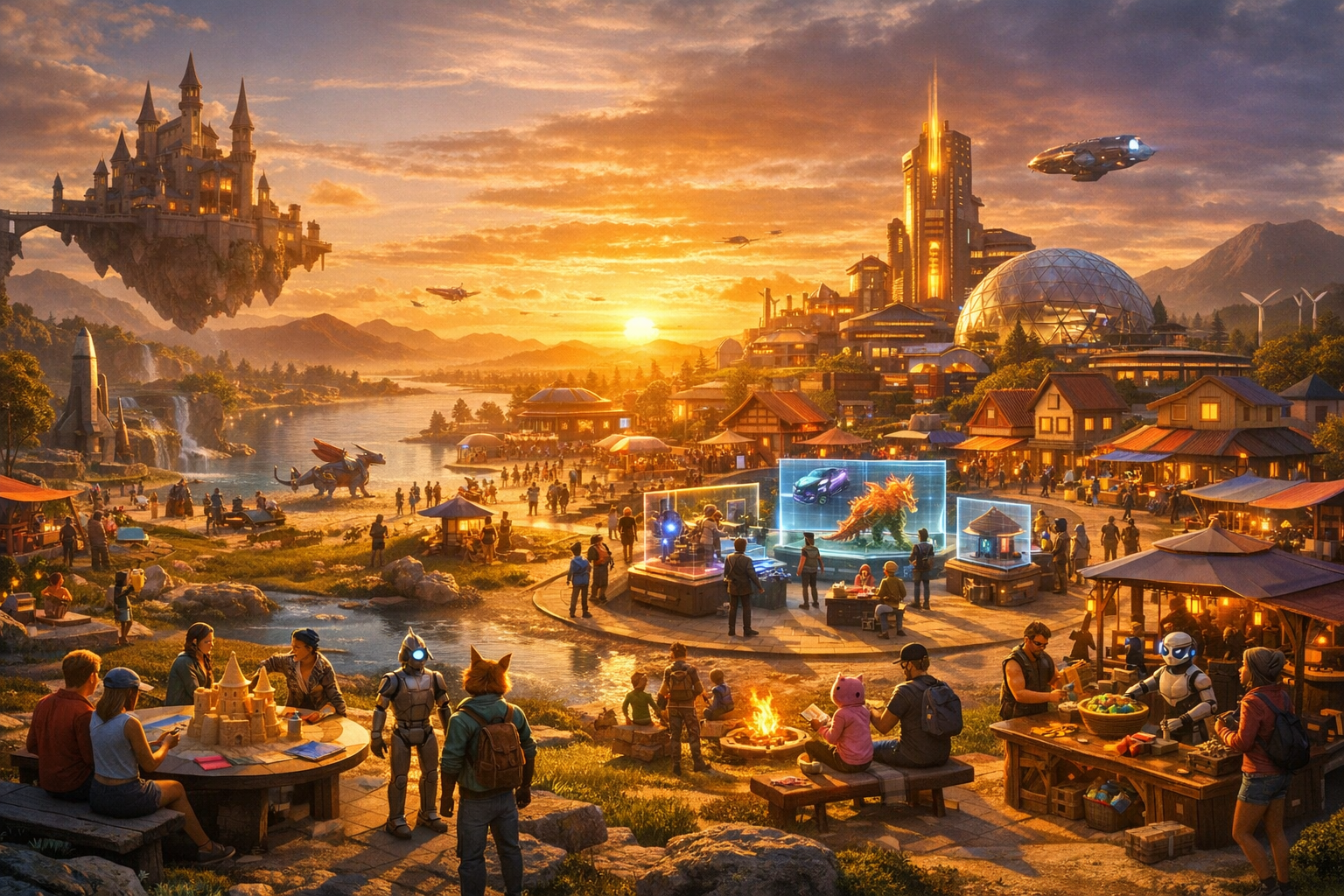
Virtual World vs Video Game: Key Differences Explained — Free class in Alife Virtual School
If you have ever wondered why people spend years building, socialising, trading, scripting, designing, and even teaching inside a digital space with no final boss, no end credits, and no fixed win condition, this class is for you. Virtual World vs Video Game: Key Differences Explained is one of the most important beginner lessons for anyone entering a modern metaverse, because understanding the difference changes how you learn, create, and participate. In a traditional game, the world usually exists to serve a designed challenge. In a virtual world, the platform exists to support human presence, creativity, identity, commerce, and community.
For new residents of Alife Virtual, this distinction matters immediately. Alife is not just a game to consume. It is a free 3D world where you can build spaces, launch experiences, develop social groups, experiment with lsl scripting, host events, and participate in a living virtual economy. If you are looking for a Second Life alternative, or exploring an open simulator-style environment with fewer financial barriers, learning this difference will help you use the platform the right way from day one.
In this master-level beginner workshop, we will break down the core differences between virtual worlds and traditional video games, explain why social depth is the true long-term value, and show you how to recognise the systems that make platforms like Alife Virtual fundamentally different from mission-based entertainment software.
Why This Skill Matters in a Free Metaverse
Many beginners enter a virtual world with a video game mindset. They ask questions like:
- What is the objective?
- How do I win?
- Where is the main quest?
- What am I supposed to do first?
Those are reasonable questions, but they come from a different design tradition. A video game usually gives players a bounded system with authored goals. A virtual world gives residents a platform with tools, land, identity, communication, and persistence. The value is not only in what the platform gives you. The value is in what people do with it over time.
That is why understanding this topic is a foundational literacy skill for the modern metaverse. If you understand how virtual worlds work, you stop waiting to be entertained and start participating. You begin to see land as opportunity, avatars as identity, scripting as agency, and social networks as infrastructure. This is especially powerful inside Alife Virtual, where the lack of fees removes many of the cost barriers that often limit experimentation elsewhere.
Alife Advantage: Free vs High-Cost Competitors
One of the biggest practical differences between learning in Alife Virtual and learning in other platforms is cost. In many worlds, experimentation is expensive. In Alife, it is accessible.
| Feature | Alife Virtual | Typical High-Cost Competitor |
|---|---|---|
| Private Island / Full Region | FREE private island for one month, 65,536 sqm |
Often around $300/month or more in ongoing tier fees |
| Monthly Land Fees | No monthly tiers/fees | Recurring monthly charges are common |
| Uploads | FREE unlimited uploads for textures, mesh, animations, and sounds | Upload fees often apply per asset |
| Starter Avatar | FREE Pro Mesh Avatar included for every member | High-quality avatars often require additional purchases |
| Viewer Support | Firestorm compatible | Varies |
| Creative Economy | 100% free economy with low barrier to entry | Creation often gated by upload and land costs |
This cost difference is not just a marketing point. It shapes behaviour. In expensive systems, users may hesitate to build, prototype, learn scripting, test products, or host events because every mistake has a financial cost. In Alife Virtual, you can treat learning like learning should be treated: experimental, creative, iterative, and open.
What You Will Learn
- The fundamental difference between a virtual world and a traditional video game
- Why no win condition is a feature, not a flaw
- How user-generated content changes the platform itself
- What makes a persistent economy different from game loot systems
- Why social depth is the core long-term value of virtual worlds
- How to identify when a platform is closer to a game, a sandbox, or a true virtual world
- How Alife Virtual fits into the wider
metaverselandscape as a free Second Life alternative
Prerequisites
This is a beginner-friendly class. You do not need prior building or scripting experience. However, it helps if you:
- Have visited at least one multiplayer game or social platform
- Understand basic terms like avatar, inventory, land, and chat
- Are curious about digital identity, online communities, or creation tools
- Have access to Alife Virtual through a compatible viewer such as
Firestorm
No paid content, premium account, or technical background is required.
Step-by-Step Tutorial: Understanding the Difference
Step 1: Start with the Core Question — What Is the Platform For?
The first and most useful distinction is purpose.
A traditional video game is usually designed around a structured activity. That activity may be action, strategy, combat, survival, sports, puzzle-solving, or story progression. Even open-world games usually contain intended loops: level up, complete missions, unlock gear, defeat enemies, finish campaign content.
A virtual world is designed around presence. The platform exists so people can inhabit a shared digital space through avatars. Activities happen inside it, but the platform is not limited to one gameplay loop. It is a host environment for many forms of participation.
Ask yourself:
- Does the platform primarily deliver authored challenges?
- Or does it provide tools and space for people to create their own activities?
If the answer is the second one, you are moving into virtual world territory.
Step 2: Understand Why “No Win Condition” Matters
One of the clearest differences is the absence of a final victory state.
In most video games, progress is measured against a target. You beat the level, complete the mission, unlock the rank, finish the campaign, or dominate the scoreboard. Even endless games usually use score loops, progression ladders, or performance metrics.
In a virtual world, there is often no universal definition of success. That can be confusing at first, but it is actually what gives the environment depth.
Inside a virtual world, one resident may define success as:
- Building a home
- Running a fashion brand
- Learning
lsl scripting - Hosting live music events
- Teaching classes
- Roleplaying a character
- Making long-term friends
- Launching a business in the
virtual economy
None of these goals “complete” the world. The world continues because it is persistent and social. This is a major design shift: the user is not only a player solving a challenge. The user is a resident shaping an ongoing environment.
Pro Tip: If you feel lost because there is no main objective, create your own three-part starter goal: one social goal, one creative goal, and one exploration goal. For example: attend one event, customise your avatar, and visit five regions.
Step 3: Learn the Difference Between Developer Content and User-Generated Content
In most video games, the world is largely built by the game studio. Players interact with content, but they do not usually redefine the platform itself.
In a virtual world, user-generated content is central. Residents create homes, cities, vehicles, furniture, clothing, animations, roleplay systems, art galleries, educational spaces, businesses, and interactive objects. The world grows through participation.
This changes everything:
- The platform becomes culturally diverse
- New experiences appear continuously
- Users are creators, not just consumers
- Identity expression becomes much deeper
- The economy is tied to actual creation and services
In Alife Virtual, this is especially important because the platform removes common cost barriers. With FREE unlimited uploads for textures, mesh, animations, and sounds, creators can experiment without paying per asset. That is a major advantage over systems where uploads cost money and every design iteration adds friction.
If you are from a game background, think of the difference like this:
- A game says: “Here is the world we made for you.”
- A virtual world says: “Here is the world, now help build what it becomes.”
Step 4: Recognise Persistence as More Than Saved Progress
Games often save your progress. That is not the same as world persistence.
A persistent virtual world continues existing even when you log off. Land remains where it was. Buildings remain in place. markets continue to operate. Social groups continue to gather. Events happen without you. Relationships evolve. Economies fluctuate. Communities form history.
This means you are entering not just a session, but a living environment.
Persistence includes:
- Persistent land ownership or control
- Persistent inventories
- Persistent identity through avatars and profiles
- Persistent places built by users
- Persistent community memory
- Persistent commerce and exchange
This is one reason the metaverse concept is often associated with virtual worlds rather than ordinary multiplayer games. Persistence supports continuity. Continuity supports meaning.
Step 5: Compare Game Currency to a True Virtual Economy
Many games have coins, gold, credits, or loot. That does not automatically create a real virtual economy.
In a traditional game, currency usually exists to support the game loop. You earn money to buy better gear, unlock upgrades, or progress through designed systems. Prices and rewards are tightly controlled by developers.
In a virtual world, an economy can be much broader. Residents may create products, sell services, rent land, perform at events, teach classes, or commission custom work. Economic activity is tied to social value and user-generated content, not just combat reward systems or NPC shops.
Key signs of a virtual economy include:
- User-created goods and services
- Person-to-person transactions
- Land value and location strategy
- Brand identity and reputation
- Long-term creator businesses
- Community demand shaping supply
Alife Virtual’s 100% free economy lowers the cost of entry dramatically. Because there are no monthly tiers for land ownership in the same way many competitors charge, and because uploads are free, creators can start small and learn fast. This is a major advantage for beginners who want to test ideas before investing heavily.
Common Mistake: New users often assume a virtual economy is only about making money. In reality, it is also about exchanging value, building reputation, supporting communities, and creating useful or beautiful experiences.
Step 6: See Why Social Depth Is the Core Value
This is the most important lesson in the entire class: social depth is what gives virtual worlds lasting power.
A video game can be excellent even if social interaction is limited. A virtual world becomes meaningful because people bring identity, memory, trust, collaboration, performance, creativity, and culture into a shared space.
Social depth includes:
- Real-time conversation
- Group belonging
- Shared rituals and events
- Collaborative building
- Mentorship and teaching
- Creative partnerships
- Roleplay and identity exploration
- Long-term friendships and networks
This is why a virtual world can remain engaging even without a questline. Human relationships create emergent content. A nightclub, classroom, gallery, roleplay region, store, or community hub can be compelling because of who gathers there and what they do together.
In other words, the platform is the stage. The people are the ongoing story.
Step 7: Understand the Role of Creation Tools and Scripting
A major difference between a passive social app and a true virtual world is the ability to build and script inside the environment.
Creation tools allow users to shape space. Scripting tools allow users to shape behaviour.
In Alife Virtual and similar platforms, lsl scripting enables objects to respond, communicate, animate, interact, and automate. This means residents can create:
- Doors that open
- Vendors that sell products
- HUD systems for games or roleplay
- Interactive teaching tools
- Teleport systems
- Animated furniture
- Scoreboards, timers, and event systems
Traditional games may allow modding, but modding is often separate from ordinary play and restricted by the developer. In a virtual world, creation is often integrated into daily participation.
This is one reason platforms built on open simulator-style principles remain so powerful for educators, builders, and entrepreneurs. They are not just places to visit. They are places to shape.
Step 8: Distinguish Sessions from Lifestyles
Most games are session-based. You log in, play a match, complete a run, or continue a campaign. The session is the core unit of engagement.
Virtual worlds often operate more like digital lifestyles. People maintain homes, communities, businesses, identities, wardrobes, inventories, and social calendars. They may return not because of a new quest, but because they have an ongoing presence there.
This is a subtle but essential difference. A game asks for playtime. A virtual world invites residency.
Step 9: Use a Simple Diagnostic Framework
When evaluating any platform, use this five-part framework:
- Goal Structure: Is there a fixed win condition or open-ended participation?
- Content Source: Is most content made by developers or by users?
- Persistence: Does the world continue meaningfully when you leave?
- Economy: Is currency tied only to game progression, or to user exchange and creation?
- Social Depth: Are relationships and communities central to the experience?
The more a platform leans toward open goals, user-generated content, persistence, creator-led economy, and deep social interaction, the more it behaves like a virtual world rather than a traditional video game.
Step 10: Apply the Framework to Alife Virtual
Now let us apply the framework directly.
- Goal Structure: Alife Virtual is open-ended. Residents choose their own goals.
- Content Source: User creation is central, from land design to products and experiences.
- Persistence: Spaces, avatars, groups, and economies continue over time.
- Economy: The platform supports a creator-focused
virtual economywithout heavy financial barriers. - Social Depth: Community, events, education, and collaboration are core to the experience.
This makes Alife Virtual much closer to a full virtual world than to a conventional game. It also makes it a strong Second Life alternative for users who want the creative freedom of a mature world model without the high monthly costs often associated with older platforms.
Common Beginner Mistakes
Common Mistake #1: Waiting for the platform to assign meaning. In virtual worlds, meaning is often self-directed and community-driven.
Common Mistake #2: Treating other residents like NPCs. Real people power the experience, so etiquette, communication, and collaboration matter.
Common Mistake #3: Assuming building is only for experts. In a free 3D world like Alife, experimentation is one of the best ways to learn.
Common Mistake #4: Confusing game rewards with social value. A small, active community hub can be more meaningful than any achievement badge.
Common Mistake #5: Ignoring the economy because you are “not a seller.” Everyone participates in the
virtual economythrough exchange, attention, reputation, and demand.
Pro Tips for New Residents
Pro Tip: Use
Firestormfor a familiar, powerful viewer experience and better access to world features.
Pro Tip: Visit educational regions and creator communities early. They will teach you more about virtual worlds than passive wandering ever will.
Pro Tip: Start a notebook of your personal goals in-world. Track places visited, people met, and skills learned. This creates your own progression system.
Pro Tip: If you receive a
65,536 sqmfree private island trial, use it as a sandbox for experimentation: layout tests, event planning, store prototypes, and scripting practice.
Pro Tip: Customise your free Pro Mesh Avatar early. Identity investment increases confidence, presence, and social engagement.
Advanced Applications
Once you understand the virtual world vs video game distinction, you can apply that knowledge in more sophisticated ways.
Education and Training
Virtual worlds support immersive classrooms, simulations, workshops, and collaborative learning spaces. Because the world is persistent and social, learning can continue beyond a single session.
Creator Entrepreneurship
Designers, builders, scripters, animators, and event hosts can use a low-cost platform to prototype services and products. In Alife Virtual, free uploads and no monthly land fees make this especially attractive.
Community Architecture
Understanding social depth helps you design better spaces. A successful venue is not just visually impressive. It supports movement, conversation, gathering, repeat visits, and identity expression.
Interactive Systems Design
Using lsl scripting, creators can build game-like systems inside a virtual world without turning the entire platform into a game. This hybrid approach is one of the most powerful aspects of open virtual environments.
Metaverse Strategy
For businesses, educators, and digital creators, knowing the difference between a game and a virtual world helps with platform selection. If your goal is long-term community, co-creation, events, and persistent identity, a genuine virtual world is often the better fit.
Practice Exercise
Complete the following beginner exercise inside Alife Virtual or while researching comparable platforms:
- Write down three features commonly found in video games.
- Write down three features commonly found in virtual worlds.
- Visit one social space, one commercial space, and one creative or educational space in Alife Virtual.
- For each location, ask:
- What is the purpose of this place?
- Is the value coming from developer design or user activity?
- How does social interaction affect the experience?
- Create a short reflection of 150 to 300 words explaining why Alife Virtual is not just a game.
Bonus challenge: identify one way you could contribute to the world yourself, even as a beginner. Examples include hosting a meetup, decorating a small space, learning a basic script, or creating a themed exhibit.
FAQ
Is a virtual world just another type of video game?
Not exactly. Some virtual worlds include game-like activities, but their core structure is different. A virtual world is typically persistent, socially driven, open-ended, and heavily shaped by user-generated content rather than fixed developer objectives.
Why do people spend time in a world with no win condition?
Because the value comes from creativity, identity, community, exploration, and long-term participation. In a virtual world, residents define their own goals rather than following a universal victory path.
What makes Alife Virtual a strong Second Life alternative?
Alife Virtual offers many of the core strengths people want from a mature virtual world model, but with dramatically lower barriers. You get a free private island for one month at 65,536 sqm, no monthly tiers or fees, free unlimited uploads, a free Pro Mesh Avatar, and Firestorm support.
Does a virtual economy mean I need to become a seller?
No. You can participate in the virtual economy as a buyer, event attendee, collaborator, land user, student, or community member. Economies in virtual worlds are not only about profit; they are about value exchange and ecosystem participation.
Do I need scripting skills to enjoy a virtual world?
No, but learning even a little lsl scripting can significantly increase what you can build and customise. Many residents begin with social exploration and later move into building, scripting, or business creation as their confidence grows.
Final Takeaway
The difference between a virtual world and a traditional video game is not just technical. It is philosophical. Games are usually designed to be played. Virtual worlds are designed to be lived in, shaped, and shared. They may contain games, but they are not defined by victory. They are defined by persistence, creation, economy, and above all, social depth.
That is why this lesson matters so much for new residents. Once you understand that a virtual world is a platform for human creativity and connection, your mindset changes. You stop asking, “How do I beat this?” and start asking, “What can I build here? Who can I meet? What can I become?”
Join Alife Virtual and Start Exploring the Free Metaverse
If you are ready to move beyond passive gameplay and enter a true free 3D world, Alife Virtual is the perfect place to begin. As a powerful Second Life alternative with Firestorm support, free unlimited uploads, a free Pro Mesh Avatar, and a 65,536 sqm private island free for one month, Alife gives you the freedom to learn, build, socialise, and create without monthly financial pressure.
Join Alife Virtual today and experience a metaverse where your imagination, not your budget, sets the limits.
🎓 Ready to Practice In-World?
Get your FREE island and practice everything you just learned — no credit card, no monthly fees.
Claim Your Free Island Now →No credit card required · Takes 2 minutes · Your island is FREE for one month