Second Life in 2026: Is It Still Worth Playing?
Second Life in 2026: Is It Still Worth Playing? — experience it now in Alife Virtual
If you have ever dreamed of stepping into a digital life that feels bigger, wilder, and more personal than a typical game, you have probably looked at Second Life. For years, it was the name in virtual worlds: sprawling user-made cities, neon clubs that never seemed to sleep, beaches filled with custom homes, roleplay kingdoms, fashion districts, and businesses built by everyday people. But this is 2026, and the big question is no longer whether Second Life was important. It is whether it is still worth your time, your creativity, and your money.
That question matters even more now because there is a serious alternative for people who want the same freedom without the same frustrations. Alife Virtual captures the spirit so many people still chase in Second Life, while cutting away major barriers like punishing region costs, awkward onboarding, and the feeling that you are paying premium prices for aging technology. If you want the honest truth about where Second Life stands in 2026, and what a more exciting path looks like, this guide is for you.
The Honest 2026 Review of Second Life
Let’s start with the truth: Second Life is still fascinating. It still offers a kind of online freedom that most platforms have never matched. You can rent land, build almost anything, script interactive objects, create fashion, run stores, host events, perform live, roleplay in entire civilizations, and shape your digital identity in ways that feel deeply personal. That creative openness remains rare, and it is the main reason people still log in.
But in 2026, the cracks are impossible to ignore.
The technology feels old in ways that affect everyday enjoyment. New users often encounter clunky performance, dated visuals unless heavily customized, a steep learning curve, and a user experience that can feel like it belongs to another internet era. Even loyal players admit that getting Second Life to look and run well often takes patience, hardware tuning, graphics knowledge, and a willingness to wrestle with settings.
Then there is the cost. Owning or operating a full region in Second Life is still shockingly expensive compared to modern expectations. A region size equivalent to 65,536 sqm can cost around $199/mo. For hobbyists, builders, educators, small communities, or dreamers who simply want a private world to experiment in, that price alone shuts the door before the experience even begins.
Population is another reality. Second Life still has devoted communities, but the platform no longer carries the same sense of unstoppable momentum. Some areas feel vibrant and alive, while others feel empty, abandoned, or frozen in time. You can absolutely still find amazing people there, but you may also spend long stretches teleporting through beautiful but silent spaces, wondering where everyone went.
So, is it still worth playing? Yes, for some people — especially if you value open-ended world-building, deep customization, and niche communities enough to tolerate the age, cost, and friction. But if what you truly want is the magic of that experience without the same financial and technological burden, you should be looking at Alife Virtual.
What People Are Really Looking For in a Virtual World
Most people searching for “Is Second Life still worth it?” are not really asking about a brand. They are asking whether the dream still exists.
They want to wander through glowing city streets at midnight while music pours from an open club. They want to stand in a hand-built home above the sea and rearrange furniture until it feels like theirs. They want a full-body mesh avatar that looks stylish, expressive, and unmistakably personal. They want to meet creators, dancers, DJs, roleplayers, and entrepreneurs. They want to build a gallery, a fantasy forest, a cyberpunk district, a café, a wedding venue, a school, a business, or a whole island life.
That dream is still alive. In the right world, it can feel electric.
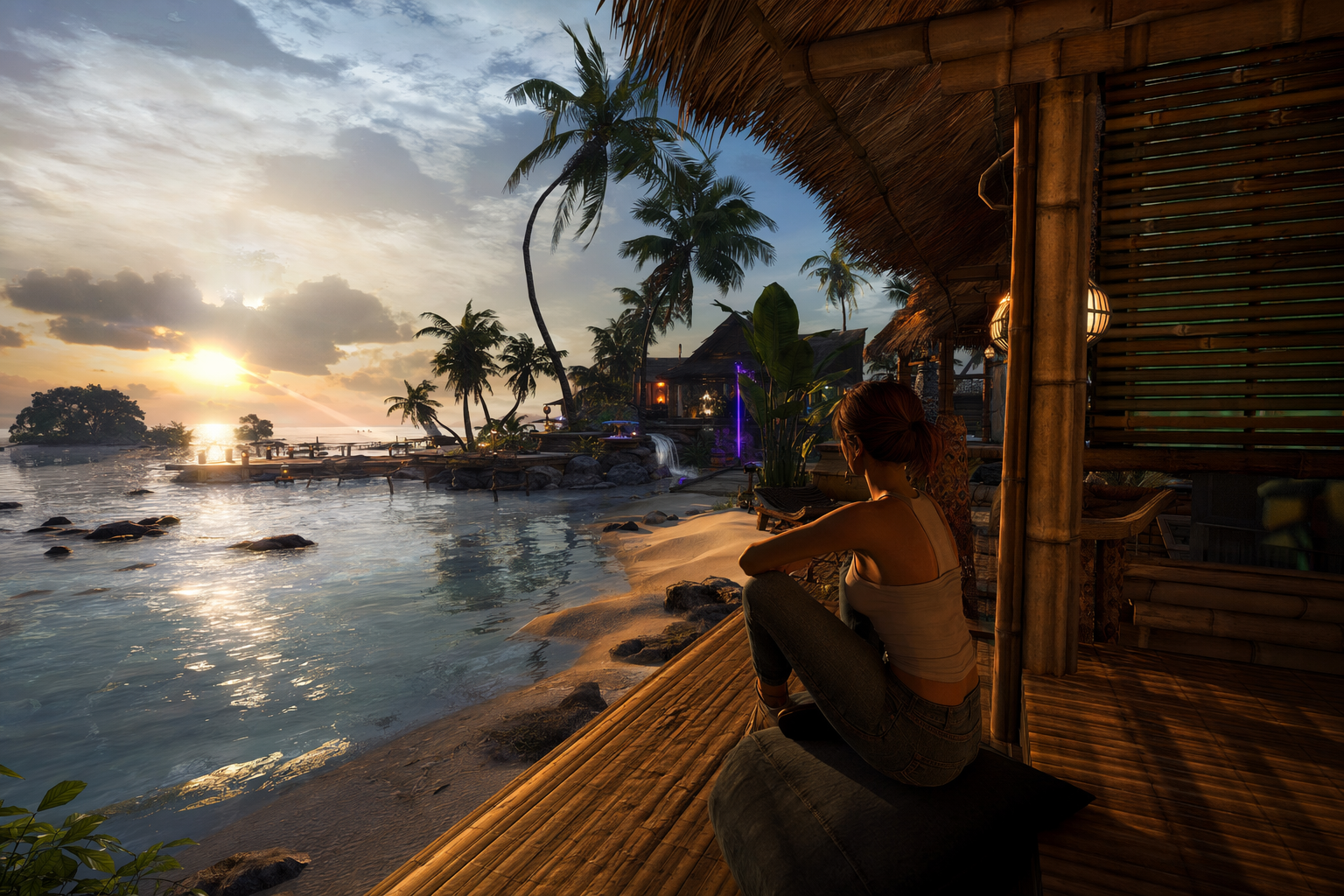
Picture this: you log in from an ordinary desktop computer, no VR headset needed. Your avatar arrives on your own island, light sliding over the water while palm trees move in the distance. A boardwalk stretches toward a furnished villa. Nearby, there is room for a stage, a marketplace, a roleplay tavern, or an art garden. You can hear event chatter in local chat, private messages from friends planning a class, and the hum of a community where people are actually making things. Later, you teleport to a fashion showcase, then to a scripting workshop, then to a live venue lit with color and movement. This is not just social media with legs. It is a place you inhabit.
That is the core appeal that made Second Life legendary. It is also exactly why a more accessible platform matters now.
How Alife Virtual Makes This Experience Possible
Alife Virtual takes the best parts of the classic open virtual world formula and makes them dramatically easier to access. If you are coming from Second Life, much of it will feel familiar in the best possible way. If you are completely new, it gives you a path into the experience without asking you to spend a fortune first.
Free Island + 1,000 C$ for Shopping (until 31 Dec 2026) to Start Your World
The biggest headline is impossible to ignore: Alife Virtual offers a free island + 1,000 C$ for shopping (until 31 Dec 2026), covering a full 65,536 sqm, with no lock-in during that period. In Second Life, the same region size costs around $199/mo. That difference is massive. It means creators can test ideas, launch communities, host events, or simply explore island ownership without financial pressure crushing the experiment before it begins.
A Full Avatar Life from Day One
Instead of beginning as a blank or awkward version of yourself, you can start with a FREE full-body mesh avatar with custom outfits. That matters because identity is central to virtual world immersion. You should feel compelling the moment you enter, whether your vibe is elegant, futuristic, casual, gothic, fantasy, or something uniquely your own.
Real Building Freedom
Alife Virtual includes 10,000 prims for building, giving you serious room to create homes, venues, landscapes, shops, roleplay sets, or artistic spaces. For builders, this is where the platform becomes more than a curiosity. It becomes a canvas.
And for advanced creators, there is full LSL scripting support. That means interactive doors, custom vendors, HUDs, games, effects, animations, experiences, and systems are all within reach. If you have built in Second Life before, this is a huge advantage, because your skills remain relevant.
Familiar Tools Through Firestorm Viewer
Alife Virtual uses its own Alife Virtual Firestorm Viewer, which works just like the Firestorm you know from Second Life. This lowers the learning curve dramatically. You do not have to relearn the very basics of navigating, rezzing, editing, dressing your avatar, and managing inventory from scratch. That continuity is one of the smartest things about the platform.
Learning, Not Guesswork
One reason people bounce off open virtual worlds is that freedom can become overwhelming. Alife solves this with free daily classes covering building, scripting, fashion, and business. That is not a tiny bonus — it is a real ecosystem advantage. Instead of stumbling through years of trial and error, you can learn directly from a community that wants you to succeed.
Quick-Start Regions for Ambitious Users
Not everyone wants to build from a blank island. Some people want to launch immediately. Alife offers pre-made furnished sims from $20/mo, ready to use right away. That is ideal for venue owners, communities, roleplayers, educators, and event hosts who care more about starting the experience than laying every brick personally.
A Growing Member Base
With 1,148,000+ members, Alife Virtual is not a ghost concept or a tiny experiment. It is a living platform with enough scale to support discovery, networking, and community growth.
No VR Headset Barrier
Best of all, it works on any desktop. You do not need a VR headset, expensive motion gear, or a special room setup. If your dream is to live a rich virtual life from your PC or laptop, Alife meets you where you are.
Why Alife Virtual Beats Second Life, IMVU, and VRChat for This Experience
Every virtual platform has strengths. But if your goal is the classic “live, build, create, socialize, own space, and shape a world” fantasy, the differences become clear very quickly.
| Platform | Best For | Main Limitation | Why Alife Stands Out |
|---|---|---|---|
| Second Life | Open-ended creation and legacy communities | High region costs, aging tech, steeper friction in 2026 | Similar creative freedom with a free island + 1,000 C$ for shopping (until 31 Dec 2026) and far lower cost barriers |
| IMVU | Casual avatar chat and fashion | Less powerful world-building and land ownership depth | Alife offers true land, building, scripting, and immersive space design |
| VRChat | Live social energy and VR presence | Less centered on persistent land ownership and traditional virtual-life systems | Alife delivers persistent island living, desktop access, commerce, and creator structure |
Alife vs Second Life
This is the closest comparison, and the most important one. If you love the old-school freedom of Second Life but are tired of its expense and aging infrastructure, Alife gives you a much more practical route to the same kind of dream. The fact that it uses Firestorm Viewer and supports full LSL scripting is not a small detail — it is a bridge for creators who already understand that ecosystem.
Most importantly, Alife removes the intimidation factor of spending hundreds per month just to have your own serious space. In a world where experimentation matters, free access changes everything.
Alife vs IMVU
IMVU can be fun for styling avatars and casual socializing, but it does not offer the same deep feeling of owning a place and shaping a persistent world around yourself. Alife is for people who want to do more than pose in rooms. It is for people who want to build islands, businesses, scenes, communities, and stories.
Alife vs VRChat
VRChat shines in spontaneous social moments, especially with VR users, but its culture and design priorities are different. If your dream is less “chaotic party voice chat” and more “I want a digital home, a brand, a region, a roleplay setting, an event venue, or a functioning virtual business,” Alife offers stronger foundations. And because it works on any desktop, it does not lock the experience behind VR hardware.
Step-by-Step: How to Start This Experience in Alife Virtual
If reading this has sparked that old virtual-world excitement in you, here is how to turn it into something real.
-
Visit the official website.
Go to https://www.alifevirtual.com and create your account. This is your entry point into the world.
-
Download and set up Firestorm Viewer.
Because Alife uses Firestorm Viewer, installation feels familiar to many former Second Life users. Once configured, you are ready to log in and explore.
-
Claim your free mesh avatar.
Start with the FREE full-body mesh avatar and customize it with outfits that match your desired identity. First impressions matter, especially in social worlds.
-
Access a free island + 1,000 C$ for shopping (until 31 Dec 2026).
Take advantage of the FREE 65,536 sqm private island. Think of it as your laboratory, your home, your dream plot, your blank stage.
-
Plan your theme.
Decide what kind of experience you want to build. A beach estate? A club district? A fantasy village? A cyberpunk market? A photo studio? A brand showroom? Clarify the mood before you start placing objects.
-
Use your 10,000 prims wisely.
Build structures, terrain features, furniture layouts, event areas, signage, and decorative scenes. If you are new, start simple: one home, one outdoor social area, one project zone.
-
Learn through daily classes.
Join the free daily classes on building, scripting, fashion, and business. These will accelerate your confidence and help you avoid beginner mistakes.
-
Add interactivity with LSL scripting.
Use full LSL scripting support to animate doors, create game elements, build custom devices, or streamline shopping and events.
-
Invite people in.
A virtual world comes alive when it is shared. Host a small meet-up, open a photo session, create a market, run a roleplay opening night, or invite classmates from the scripting community.
-
Scale when ready.
If you want a faster route or a polished setup, consider pre-made furnished sims from $20/mo. These are perfect when you want to launch immediately.
Community Spotlight: What Real Players Are Doing
The most convincing part of any virtual world is not the feature list. It is what people actually do with it.
In Alife Virtual, players are not just standing around in default spaces waiting for something to happen. They are building environments with personality and purpose. Some have turned their private islands into social sanctuaries with beach houses, sunset decks, gardens, and music lounges designed for regular gatherings. Others have focused on creativity, using their prim allowance to construct galleries, boutiques, and themed roleplay environments that feel handcrafted rather than copied.
Fashion-focused members have used the free mesh avatar system as a launch point for full identity styling, mixing outfits and personal branding into event-ready looks. Builders have attended daily classes, then gone on to create more polished homes, venues, and interactive objects using LSL scripting. Entrepreneurial users have explored business opportunities, from curated shopping spaces to service-based social hubs.
What keeps people engaged is not just that they can log in. It is that they can make something that feels like theirs — and then watch others walk through it.
That is the pulse Second Life once made famous, and it is still one of the most powerful feelings in any virtual platform. The difference is that Alife gives more people a realistic chance to experience it instead of pricing them out.
So, Is Second Life Still Worth Playing in 2026?
If you already have deep roots there, established communities, a business, or beloved spaces, Second Life may still be worth visiting. Its legacy is real, and its creative DNA still matters. There is still beauty there. There are still friendships there. There are still remarkable creators there.
But if you are asking whether it is the best place to begin this journey in 2026, or whether it remains the smartest place to invest your energy, the answer is much less certain.
You are dealing with aging technology, expensive land tiers, and a platform that often demands too much patience before it gives back enough wonder. For newcomers especially, the value equation is harder to justify than it once was.
Alife Virtual feels like the more exciting answer for people who love the idea of Second Life but want a version that is more accessible, more affordable, and more welcoming to fresh creativity. It gives you room to dream big immediately, with fewer penalties for trying.
FAQ: Second Life vs Alife Virtual in 2026
1. Is Second Life dead in 2026?
No, Second Life is not dead. It still has dedicated users and unique communities. But it does feel older, more uneven, and harder to justify financially for many new or returning players.
2. What makes Alife Virtual a strong alternative to Second Life?
Alife offers a very similar style of open virtual-world experience while removing major barriers. You get a FREE 65,536 sqm private island, a FREE full-body mesh avatar, 10,000 prims, full LSL scripting support, and a familiar setup through Firestorm Viewer.
3. Do I need VR to use Alife Virtual?
No. Alife Virtual works on any desktop, so you do not need a VR headset. That makes it much easier to access for people who want a rich virtual life without specialized hardware.
4. Is Alife Virtual good for builders and creators?
Yes. Builders can create with 10,000 prims, script interactive content using LSL, and improve quickly through free daily classes in building, scripting, fashion, and business.
5. How much cheaper is Alife compared to Second Life?
Very significantly. A region size of 65,536 sqm in Second Life can cost around $199/mo. In Alife Virtual, that same region size is FREE, and even ready-to-use pre-made furnished sims start from $20/mo.
Your Next Virtual Life Starts Here
If Second Life still fascinates you in 2026, that makes sense. It pioneered a kind of digital living that still feels magical when it works. But magic should not require endless compromise. It should not demand premium fees just to let you experiment. It should not feel locked behind aging systems when better opportunities are available.
Alife Virtual offers the part you really want: the freedom to become someone, build somewhere, invite others in, and shape a life that feels bigger than a menu screen. Whether you want a private island escape, a social venue, a creative studio, a roleplay world, or the start of an online business, the tools are already there — and the entry cost is dramatically lower.
So if you are ready to stop wondering whether Second Life is still worth it, and start living the experience you actually want, this is the moment to make the jump.
Visit https://www.alifevirtual.com and claim your place in Alife Virtual today.
🎁 Ready to Live This Experience?
Claim Your Free Avatar in Alife Virtual and start today!
Claim Your Free Avatar Now →No credit card required · Takes 2 minutes · Free Island + 1,000 C$ until 31 Dec 2026