Virtual Reality vs Augmented Reality vs Virtual World: Know the Difference
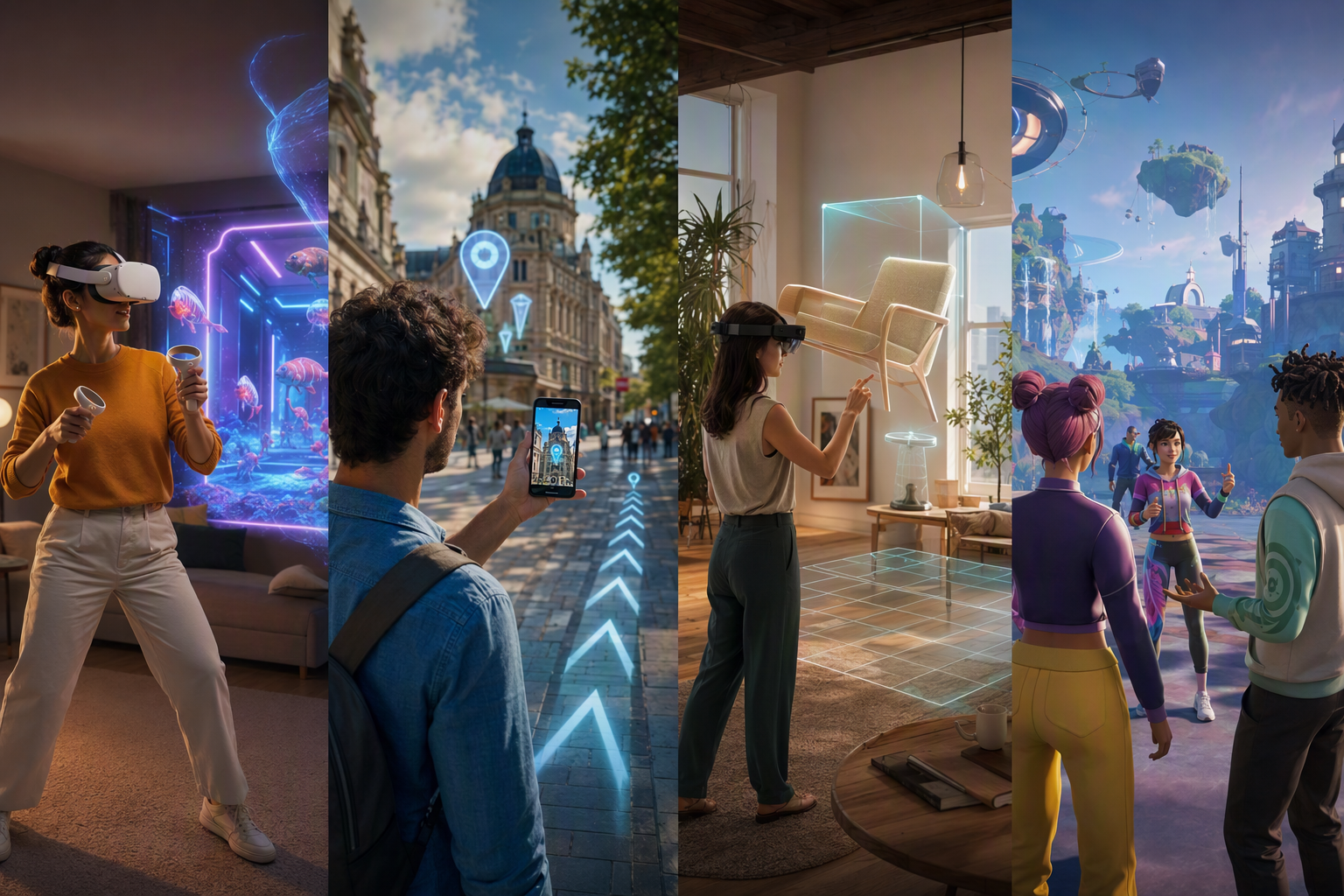
Virtual Reality vs Augmented Reality vs Virtual World: Know the Difference — experience it now in Alife Virtual
You have probably heard the terms virtual reality, augmented reality, mixed reality, and virtual world tossed around as if they all mean the same thing. They do not. And if you are dreaming about stepping into a digital life where you can explore, build, socialise, create a business, and shape your own identity, understanding the difference matters more than ever.
Here is the exciting part: while flashy headset demos grab attention, the immersive digital experience most people can actually access today is not always VR. In many cases, it is the virtual world experience on desktop — rich, social, creative, and available right now without expensive hardware. That is exactly where Alife Virtual shines.
Imagine logging in from your desktop and instantly entering a living 3D world. Your avatar is fully customisable. Music spills from a beach club in the distance. Shops glow with fashion displays. Builders are shaping homes, landscapes, and roleplay regions. Friends are chatting, dancing, teaching classes, scripting interactive objects, and launching businesses. This is not a concept video about “the future.” It is a practical, accessible virtual experience you can start today at Alife Virtual.
In this guide, we will break down exactly what VR, AR, MR, and virtual worlds are, how they differ, which one most people really use today, and why Alife Virtual is such a powerful way to live the dream of immersive digital life without needing a VR headset.
What Is the Difference Between VR, AR, MR, and a Virtual World?
Let us start with a clear, practical breakdown.
| Technology | What It Does | How You Access It | Main Use Case | Most Common Today? |
|---|---|---|---|---|
| Virtual Reality (VR) | Replaces your view of the real world with a fully digital environment | VR headset and controllers | Immersive gaming, training, simulations | Growing, but still limited by hardware |
| Augmented Reality (AR) | Adds digital elements on top of the real world | Phone, tablet, or AR glasses | Filters, navigation, shopping previews, games | Very common on smartphones |
| Mixed Reality (MR) | Blends digital objects into the real world so they can interact with it | Advanced headsets or specialised devices | Enterprise training, design, collaborative work | Less common for everyday users |
| Virtual World | A persistent online 3D world where people socialise, build, trade, and explore through avatars | Usually desktop viewer, sometimes other devices | Social life, creativity, business, roleplay, events | One of the most practical and accessible forms of immersion today |
Virtual Reality: Total Immersion
VR places you inside a fully digital environment. Put on a headset, and the room around you disappears. You look around and see a fantasy world, a game arena, a concert venue, or a training simulation. The appeal is obvious: presence. VR can feel intense, exciting, and deeply immersive.
But VR also comes with barriers. You typically need a headset, compatible hardware, enough space, and the tolerance for long sessions wearing the gear. For many people, that means VR remains something they try occasionally rather than use as their everyday digital home.
Augmented Reality: Digital Layers on Real Life
AR keeps you in the real world while adding digital content over it. Think of trying on glasses through a phone app, seeing directions overlaid on a street view, or using game features that place animated objects into your room. AR is everywhere because smartphones made it easy.
AR is practical, useful, and mainstream. But it is not usually where people go to live a second social life, build worlds, or create full communities. It enhances reality rather than replacing it.
Mixed Reality: A Smarter Blend
MR goes further than AR by allowing digital objects to behave as if they belong in your real space. A virtual screen might stay attached to your wall. A digital model might sit on your table and respond to movement around it. MR is powerful for training, education, design, and enterprise collaboration.
However, for most users, MR is still niche. The hardware and software ecosystem is developing, but it is not yet the easiest path into a rich everyday social metaverse-style experience.
Virtual Worlds: Persistent, Social, Creative 3D Life
A virtual world is different from all of the above. It is not just a visual effect or a short immersive session. It is an online place that keeps existing whether you are logged in or not. People enter it through avatars. They build homes, businesses, venues, communities, stories, and identities. They make friends, attend classes, host events, sell creations, and explore user-generated spaces.
This is where Alife Virtual stands out. It delivers the part people are truly searching for when they imagine “living online”: persistence, identity, creativity, ownership, and community. Better still, it works on any desktop — no VR headset required.
Which Technology Do Most People Actually Use Today?
If we are talking broad mainstream use, AR on smartphones is probably the most common in everyday life. People use face filters, navigation overlays, shopping previews, and mobile AR features without even thinking much about the label.
But if we are talking about the dream of an immersive digital lifestyle — meeting people, customising identity, building spaces, owning land, and participating in a persistent online society — then desktop virtual worlds remain one of the most practical and accessible technologies most people can genuinely use today.
That matters because there is a huge difference between seeing a cartoon sofa placed in your living room through your phone and actually entering a thriving 3D universe where you can own a region, design your environment, host events, and grow relationships over time.
Alife Virtual gives you the second experience, and it does so without the high hardware barrier that slows wider VR adoption.
The Virtual Experience: What It Actually Feels Like
Picture yourself arriving in a world that is always awake. Sunlight gleams across water on a coastal sim. Neon signs pulse above a nightlife district. A live DJ set drifts from one venue while the quieter sounds of nature surround a forest retreat somewhere else on the grid. Avatars move past in striking fashion — elegant gowns, cyberpunk streetwear, fantasy armour, sleek casual looks. Every person you see is not just playing a level. They are expressing a personality.
In a true virtual world, the experience is layered.
- Visually, you explore beaches, cities, galleries, clubs, homes, fantasy realms, roleplay regions, and business spaces built by residents.
- Socially, you can chat, dance, collaborate, flirt, teach, learn, and become part of communities that feel surprisingly real.
- Creatively, you can shape land, construct buildings, script interactions, style avatars, and launch experiences others can visit.
- Economically, you can sell designs, services, land experiences, and branded spaces.
What makes this special is persistence. Your favourite venue does not vanish when the app closes. Your home still stands. Your island still exists. Your store still has visitors. Your friends return. The world continues, and you become part of its ongoing story.
For many people, this is more compelling than isolated VR sessions because it feels less like a demo and more like a life extension — a place where imagination becomes architecture, fashion, entertainment, and connection.
How Alife Virtual Makes This Possible
Alife Virtual is built for people who want the virtual world experience without impossible costs or technical barriers. Instead of promising a distant future, it puts real creative power in your hands now.
A Fully Accessible Entry Point
One of the biggest advantages is simple: Alife Virtual works on any desktop. You do not need a VR headset. That means more people can join, socialise, build, and explore immediately.
Alife also uses the Firestorm Viewer, the same viewer familiar to many Second Life users. If you have used that ecosystem before, the transition feels comfortable. If you are new, you are entering with a tool that is already widely understood and supported.
Free Identity, Free Space, Real Creative Freedom
Alife Virtual lowers the barriers that often stop new users before they begin.
- FREE full-body mesh avatar with custom outfits, so you can look polished and expressive from the start.
- FREE private island for one month with 65,536 sqm of space and no monthly fees during that period.
- 10,000 prims for building, giving you room to create homes, venues, landscapes, galleries, shops, or roleplay scenes.
- Full LSL scripting support, so advanced users can add interaction, automation, games, doors, vendors, vehicles, and more.
For anyone comparing platforms, this is a huge deal. In Second Life, the same region size can cost $300 per month. In Alife Virtual, that same scale is available FREE for one month, giving creators and dreamers the chance to experiment without financial pressure.
Learning and Community Support
Building a life in a virtual world becomes much easier when help is built into the platform. Alife Virtual offers free daily classes covering:
- Building
- Scripting
- Fashion
- Business
This matters because the real magic of virtual worlds is not just visiting what others have made — it is discovering that you can make something too. Whether you dream of opening a club, designing clothes, launching a roleplay city, or learning how scripted objects work, Alife gives you pathways to grow those skills.
Ready-Made Spaces for Faster Immersion
Not everyone wants to build from a blank map. Alife Virtual also offers pre-made furnished sims from $20/month, ready to use immediately. That means you can step into a polished environment and begin hosting, socialising, or running a business without spending weeks constructing everything first.
With 1,148,000+ members, the platform already has the scale and activity that help a virtual world feel alive. You are not entering an empty concept. You are joining a population.
Why Alife Virtual Is Better for This Experience Than Second Life, IMVU, or VRChat
Every platform has its strengths, but if your goal is an accessible, buildable, social 3D world where you can truly establish a presence, Alife Virtual offers a compelling advantage.
Alife Virtual vs Second Life
Second Life is well-known and historically important, but land cost remains a major barrier. The comparison is stark: Second Life charges $300/month for the same region size that Alife gives you FREE for one month. That difference can completely change whether someone experiments boldly or never starts at all.
Because Alife uses the Firestorm Viewer, there is also a welcome sense of familiarity for users who know that environment. Add in free classes, a free full-body mesh avatar, and generous building capacity, and Alife becomes a more inviting launchpad for creators and communities.
Alife Virtual vs IMVU
IMVU is strong in avatar chat and social expression, but it is generally less focused on the deep world-building, land ownership, and open-region creativity that make a virtual world feel expansive and personal. If you want more than room-based socialising — if you want land, architecture, scripting, events, and immersive spaces — Alife offers a broader canvas.
Alife Virtual vs VRChat
VRChat excels at real-time social presence and is closely associated with VR culture, but it often leans heavily on headset-based immersion and spontaneous social encounters rather than persistent land-based world ownership in the classic virtual-world sense. Alife is ideal for people who want continuity: a lasting home, a business, a region, a buildable identity hub, and desktop accessibility.
| Platform | Best For | Barrier to Entry | Land/World Building Value |
|---|---|---|---|
| Alife Virtual | Persistent social world, building, business, accessible immersion | Low | Excellent — free island trial, 10,000 prims, LSL scripting |
| Second Life | Established virtual world ecosystem | Higher due to land cost | Strong, but expensive |
| IMVU | Avatar chat and social interaction | Moderate | Less expansive for full world creation |
| VRChat | Live social immersion, VR-centred experiences | Hardware can be a factor | Great social scenes, less focused on classic persistent land ownership |
How to Access or Build This Experience in Alife Virtual
If you are ready to stop comparing technologies and actually start living in a virtual world, here is the practical path.
- Visit the official website
Go to https://www.alifevirtual.com and create your account. - Set up the Firestorm Viewer
Since Alife uses the Firestorm Viewer, install it and log in with your Alife credentials. - Claim your avatar identity
Start with your FREE full-body mesh avatar and customise it with outfits that match your style, whether elegant, futuristic, fantasy, casual, or business-ready. - Explore the world first
Visit public regions, venues, shops, beaches, social hubs, and event spaces. Watch how people interact. Notice what kinds of environments inspire you. - Claim your free island
Take advantage of the FREE private island for one month. You get 65,536 sqm and 10,000 prims to start bringing your vision to life. - Choose your direction
Decide what you want to create: a home, club, fashion district, classroom, roleplay town, gallery, store, meditation island, or business headquarters. - Use daily classes to build skills
Join the free daily classes in building, scripting, fashion, and business. These can dramatically speed up your progress. - Add interaction with LSL scripting
Use full LSL scripting support to create moving doors, animated signs, vendors, teleport systems, games, and responsive objects. - Invite people in
Host an event, open a shop, arrange a class, start a social night, or collaborate with friends. A virtual world comes alive when people gather in your space. - Scale up if you want instant polish
If building from scratch is not your style, choose one of the pre-made furnished sims from $20/month and begin using it immediately.
The beauty of this process is that it can be casual or ambitious. You can simply explore, or you can build an entire digital destination.
Community Spotlight: What Real Players Are Doing
The most convincing proof of a virtual world is not a feature list. It is what residents actually do with it.
Across Alife Virtual, players are creating the kinds of experiences people once imagined only as futuristic possibilities. Social hosts have launched clubs and themed lounges where music and fashion drive lively events. Designers have built branded spaces to showcase outfits and avatar styles. Educators and mentors are using classes to help newcomers go from confused first-time visitors to confident creators. Builders are shaping private retreats, public venues, and roleplay spaces that feel handcrafted rather than generic.
In Alife Virtual, the world is not finished for you. The community keeps building it forward.
Some residents focus on business. Others focus on art. Some care most about friendship and social gatherings. Others are deep into scripting and technical design. That range is what makes a true virtual world so powerful: it supports many kinds of dreams at once.
And because the cost of entry is dramatically lower than on platforms with high land fees, more people can afford to experiment. That often leads to more surprising builds, bolder concepts, and more new creators taking their first step.
FAQ: Virtual Reality, Augmented Reality, Mixed Reality, and Virtual Worlds
1. Is a virtual world the same as virtual reality?
No. Virtual reality usually refers to fully immersive experiences through a headset. A virtual world is a persistent online 3D environment where people interact through avatars, often on desktop. Some virtual worlds can support VR, but they are not the same thing.
2. Do I need a VR headset to enjoy Alife Virtual?
No. Alife Virtual works on any desktop, which is one of its biggest advantages. You can experience a rich 3D social world without buying extra hardware.
3. What technology do most people actually use today?
In everyday mainstream life, AR on smartphones is the most common. But for people who want a deeper, persistent social and creative digital life, desktop virtual worlds are one of the most practical and accessible options available right now.
4. Can I build my own space in Alife Virtual even if I am new?
Yes. Alife Virtual makes this much easier with a FREE private island for one month, 10,000 prims, full LSL scripting support, and free daily classes in building, scripting, fashion, and business.
5. Why choose Alife Virtual over Second Life for world-building?
The biggest difference is value. Second Life charges $300/month for the same region size, while Alife gives you that region size FREE for one month. You also get a free full-body mesh avatar, desktop accessibility, Firestorm Viewer compatibility, and a growing member base of 1,148,000+.
The Real Difference Is Not Just Technical — It Is Personal
When people compare VR, AR, MR, and virtual worlds, they often focus only on hardware or definitions. But the real question is more emotional: where can you actually go to live the experience you have been imagining?
If you want quick mobile overlays, AR is already around you. If you want cutting-edge spatial computing, MR is exciting but still emerging. If you want intense headset immersion, VR can be spectacular. But if you want a place you can return to again and again — a place where your avatar matters, your land matters, your creativity matters, and your relationships matter — then a virtual world may be exactly what you are looking for.
Alife Virtual turns that possibility into something immediate and achievable. You can log in from your desktop. You can claim your identity. You can explore a community of 1,148,000+ members. You can start with a FREE full-body mesh avatar. You can experiment on a FREE private island with 65,536 sqm and 10,000 prims. You can learn through free classes. You can script, build, socialise, launch a venue, start a business, or simply discover what kind of digital life feels most like you.
The future of immersive living is not only about wearing a headset. Sometimes it is about entering a world that is open to you right now.
Ready to experience the difference for yourself? Visit Alife Virtual and start building your place in a free 3D virtual world today.
🎁 Ready to Live This Experience?
Claim your FREE island in Alife Virtual and start today!
Claim Your Free Island Now →No credit card required · Takes 2 minutes · for one month free