Virtual World vs Video Game: What Is the Difference?
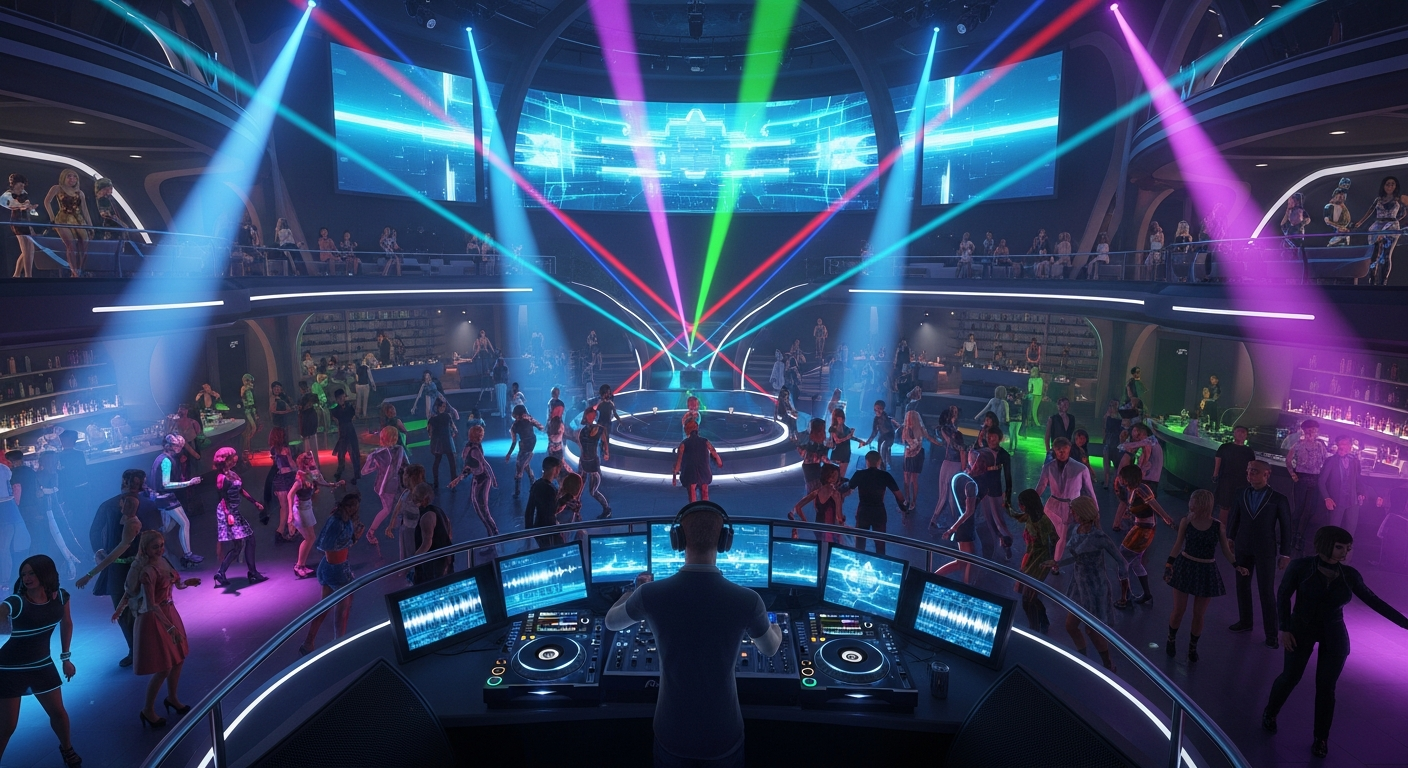
Virtual World vs Video Game: What Is the Difference? — experience it now in Alife Virtual
If you have ever wished you could step through your screen and live somewhere instead of simply playing through it, you are already close to understanding the difference between a video game and a virtual world. A game gives you a mission. A virtual world gives you a life. A game tells you what winning looks like. A virtual world asks a more exciting question: who do you want to become?
That is exactly where Alife Virtual stands out. It is not just another digital entertainment platform. It is a free 3D virtual world where you can explore, socialise, build, run events, create businesses, design fashion, learn scripting, own land, and shape an identity that feels uniquely yours. Instead of following a fixed story written by developers, you enter a living world created by people like you.
For anyone searching for a deeper online experience, the comparison of virtual world vs video game matters. Understanding that difference helps you see why open-ended social platforms are so magnetic, and why Alife Virtual is becoming such an appealing destination for creators, entrepreneurs, and dreamers. Whether you want to relax on your own island, host a nightclub, build an art gallery, sell custom outfits, or simply meet people from around the world, Alife makes that possible without the huge barriers many expect.
And perhaps the most thrilling part: you do not need expensive hardware or a VR headset to get started. Alife Virtual works on any desktop, uses the familiar Firestorm Viewer, and gives new users a rare opportunity: a FREE private island of 65,536 sqm for one month with no monthly fees, a FREE full-body mesh avatar with custom outfits, and 10,000 prims for building. In a digital landscape where similar land in Second Life costs around $300 per month, Alife opens the gates wide.
A Video Game Gives You Objectives. A Virtual World Gives You Freedom.
At first glance, video games and virtual worlds can look similar. Both are digital spaces with avatars, environments, and interactions. But once you step inside, the feeling is completely different.
Most video games are built around structure. They have levels, quests, rules, enemies, progression systems, and a final outcome. Even in open-world games, your freedom usually exists inside a framework designed by the developer. There is a map, a storyline, and a defined set of ways to interact with the world. You may choose how to complete a mission, but the missions still define your experience.
A virtual world works differently. The point is not to finish it. The point is to inhabit it.
In Alife Virtual, there is no single victory screen waiting at the end. Instead, there is a persistent social universe where people gather, build, perform, learn, trade, decorate, roleplay, teach, and express themselves. You are not just controlling a character in a designed experience. You are participating in a living network of people and places that continues to evolve every day.
| Video Game | Virtual World |
|---|---|
| Built around objectives and progression | Built around presence, creativity, and social interaction |
| Usually developer-created content | Heavily shaped by user-generated content |
| Ends when the story or session ends | Persists whether you are online or not |
| Winning matters | Belonging, expression, and creation matter |
| Limited tools for changing the world | Users can build, script, customise, and own spaces |
That distinction is why so many people who feel constrained by traditional gaming are drawn toward virtual social platforms. They are not looking for another scoreboard. They are looking for somewhere to arrive.
What the Virtual Experience Actually Feels Like
Imagine logging in after a long day. Your avatar appears in a beautifully styled home on your own island. The sky is painted in a warm sunset gradient. Light glitters across the water. Music from a nearby venue drifts through the air. A friend sends an invitation to a rooftop party. Another asks if you want to help test a scripted interactive build. Someone else is announcing a fashion showcase later tonight.
This is the emotional core of a virtual world: presence.
You are not rushing to complete a timed challenge. You are choosing how to spend your evening in a place shaped by people. Maybe you teleport to a beach club lined with glowing lanterns and animated dance floors. Maybe you wander through a fantasy forest where every tree was placed by a creator who wanted to tell a visual story. Maybe you stop at a shopping district full of user-made clothing, furniture, gestures, poses, and accessories. Maybe you attend a live class and finally learn how scripting works.
The experience is sensory even without a headset. On desktop, the world still feels vivid: detailed architecture, moving water, atmospheric lighting, avatar expressions, chat flowing in real time, and an endless variety of styles. Some spaces feel luxurious and modern. Others feel whimsical, romantic, futuristic, gothic, tropical, urban, or surreal. In a true virtual world, there is no single aesthetic because there is no single author. The community creates the mood.
And then there is the social aspect, the part that separates virtual worlds most dramatically from standard games.
In a video game, multiplayer often means cooperation or competition around mechanics. In a virtual world, social interaction itself becomes the event. You are there to talk, meet, flirt, host, perform, teach, shop, collaborate, or simply be seen. Friendships can start in a dance club and continue into business partnerships, building projects, photography collaborations, or regular hangouts in private homes and islands.
Because Alife Virtual supports user-generated spaces, people are not just visitors. They are world-builders. The places you explore often carry a personal touch that no developer-authored zone can replicate. A garden may represent someone’s dream retreat. A nightclub may be a carefully branded social business. A fashion store may be the expression of someone’s design talent. The world feels alive because it reflects human ambition and imagination.
How Alife Virtual Makes This Possible
Alife Virtual turns the idea of a digital life into something practical, accessible, and exciting. It lowers the barriers that often stop people from joining virtual worlds and gives creators real room to grow.
1. A Free Start That Feels Generous
Many platforms talk about creativity but immediately put land, identity, and customisation behind steep costs. Alife takes a different approach. New users can receive a FREE private island for one month, with a full 65,536 sqm region and no monthly fees during that period. That is not a tiny sandbox. It is a full region-sized space where you can imagine big ideas.
You also get a FREE full-body mesh avatar with custom outfits, which means you are not forced to begin as a generic placeholder. You can arrive looking polished, expressive, and ready to socialise from day one.
2. Serious Building Freedom
Alife gives you 10,000 prims for building, allowing you to create homes, venues, stores, roleplay environments, art installations, landscapes, and interactive spaces. For people who want to do more than consume content, this matters enormously. You are not trapped inside prebuilt templates. You can shape the environment around your vision.
With full LSL scripting support, your creations can become interactive. Doors can open automatically. Games can be embedded into social spaces. Vendors can sell products. Teleport systems, pose systems, animations, interactive décor, and custom experiences can all come alive. This is where a virtual world moves far beyond a static social chatroom.
3. Familiar Tools and Easy Access
Alife Virtual uses the Firestorm Viewer, the same viewer many Second Life users already know. That makes the transition smoother for experienced residents while keeping access straightforward for newcomers. And because it works on any desktop, there is no need to buy a VR headset or expensive specialised setup just to enter the world.
4. Learning Built Into the Community
One of Alife’s smartest strengths is that it supports not only exploration, but growth. The platform offers free daily classes in building, scripting, fashion, and business. That transforms the world from a place you merely visit into a place where you can develop valuable digital skills.
If you have ever looked at elaborate virtual builds and wondered, “How do people make this?” Alife gives you a path to learn. If you have dreamed of launching a store or brand, there are classes for that too. The world becomes more rewarding when it teaches you how to participate fully.
5. Ready-Made Regions for Fast Creativity
Not everyone wants to build from scratch. Some people want to move straight into hosting events, opening a venue, or running a social destination. For that, Alife offers pre-made furnished sims from $20 per month, ready to use immediately. That is ideal for DJs, community leaders, roleplay organisers, and anyone who wants instant atmosphere without weeks of setup.
6. A Large, Active Population
With 1,148,000+ members, Alife Virtual offers scale that matters. A virtual world thrives on activity, discovery, and new encounters. The more people who create, socialise, and explore, the more dynamic the experience becomes. Large membership means more events, more stores, more ideas, and more chances to find your niche.
Why Alife Virtual Beats Second Life, IMVU, and VRChat for This Experience
When people compare virtual worlds, they often mention Second Life, IMVU, and VRChat. Each has its own audience, but Alife Virtual offers a compelling balance of affordability, freedom, and creator-friendly tools.
Alife Virtual vs Second Life
Second Life is the obvious reference point because it helped define user-created virtual worlds. But cost is where many people hit a wall. A region of similar size in Second Life can cost around $300 per month. In Alife, that same region size is available FREE for one month. That is a dramatic difference.
Alife also uses Firestorm Viewer, which makes it comfortable for users already familiar with the Second Life ecosystem. You get the comfort of known tools with a far more welcoming entry point. For creators, event hosts, and entrepreneurs who want room to experiment without brutal overheads, Alife is simply more accessible.
Alife Virtual vs IMVU
IMVU is strong in avatar-based social interaction, but it is more limited when it comes to truly open, region-scale worldbuilding. Alife offers land, prim-based building, scripting, and persistent spaces that feel more like a world than a menu of chat rooms. If your dream is not just dressing an avatar but actually creating places people live in, Alife gives you much more freedom.
Alife Virtual vs VRChat
VRChat is energetic and highly social, but it often leans heavily on real-time voice culture and VR identity. Alife Virtual works beautifully on desktop and does not require a VR headset. That matters for accessibility and comfort. Alife also provides stronger land ownership culture, more traditional virtual economy possibilities, and the kind of long-term personal space that supports homes, businesses, and persistent communities.
- More affordable than Second Life
- More worldbuilding depth than IMVU
- More accessible on desktop than VRChat
- Combines social life, creativity, land, scripting, and identity in one place
How to Access or Build This Scenario in Alife Virtual
If you are ready to stop wondering and start living the experience, here is a simple path into Alife Virtual.
-
Visit the official website.
Go to https://www.alifevirtual.com and create your account.
-
Download the viewer.
Install the Firestorm Viewer, which Alife uses for world access. If you have used it before, the interface will feel familiar.
-
Choose and customise your avatar.
Claim your FREE full-body mesh avatar with custom outfits. Start with a look that feels like you, or invent someone entirely new.
-
Explore the world first.
Visit social venues, clubs, shopping areas, beaches, creative regions, and event hubs. Notice the difference between fixed game spaces and living user-created environments.
-
Claim your free island.
Use the FREE 65,536 sqm private island for one month to begin creating your own version of the virtual life you want. Think home, gallery, event venue, roleplay area, store, school, or retreat.
-
Start building with your 10,000 prims.
Lay out terrain, import or place structures, decorate interiors, create paths, gardens, stages, or meeting areas. This is where your world begins to feel personal.
-
Add interaction through scripting.
Use full LSL scripting support to make the space functional and memorable. Add lighting systems, vendors, teleporters, games, animated objects, or custom event tools.
-
Take free classes.
Join the free daily classes in building, scripting, fashion, and business to level up quickly.
-
Invite people in.
A virtual world becomes magical when others enter your space. Host a launch party, fashion showcase, class, discussion night, music event, or social gathering.
-
Scale up if you want speed.
If you prefer instant polish, choose one of the pre-made furnished sims from $20/month and start using it right away.
Community Spotlight: What Real Players Are Doing in Alife Virtual
The strongest proof that a virtual world is different from a video game is not found in a feature list. It is found in what people actually do there.
Across Alife Virtual, players have created the kinds of experiences that no quest system could ever fully script. Some build private island homes that serve as peaceful personal escapes, complete with landscaped beaches, outdoor lounges, and custom interiors. Others turn their land into event destinations: clubs with DJs, dance nights, themed parties, and social hangouts that attract regular crowds.
Fashion creators use the platform to showcase style, develop personal brands, and connect with customers who care about avatar identity. Builders experiment with architectural concepts, fantasy environments, urban districts, and immersive themed regions. Scripters bring interactive ideas to life, adding functionality that transforms a beautiful space into a living one.
There are also members using Alife in entrepreneurial ways. Because the platform supports business learning through daily classes, residents are not just decorating. They are learning how to market, brand, sell, host, and create value in a digital economy. For some, that means opening a boutique. For others, it means becoming a venue owner, event organiser, designer, teacher, or service provider.
In a video game, the most memorable moments are often the ones the developers planned. In a virtual world like Alife, the most memorable moments are often the ones real people create together.
That is the real magic. A birthday party on a custom island. A first store launch. A collaborative build project. A class that inspires someone to try scripting for the first time. A social circle that becomes a genuine routine. These moments feel personal because they are personal.
Frequently Asked Questions
1. Is Alife Virtual a game or a virtual world?
Alife Virtual is primarily a virtual world, not a traditional video game. It focuses on social interaction, user-generated content, land ownership, creativity, and persistent spaces rather than fixed missions or linear progression.
2. Do I need a VR headset to use Alife Virtual?
No. Alife Virtual works on any desktop, so you can explore, build, and socialise without needing a VR headset.
3. Can I really build my own place in Alife?
Yes. You can access a FREE private island of 65,536 sqm for one month and use 10,000 prims to create homes, venues, shops, roleplay regions, and more. You also have full LSL scripting support for interactive content.
4. How is Alife Virtual different from Second Life?
Alife uses the same Firestorm Viewer many users know, but it is much more affordable for land-based creativity. A similar region in Second Life can cost around $300/month, while Alife offers a FREE region for one month, making experimentation and building far more accessible.
5. Is Alife Virtual beginner-friendly?
Yes. New users receive a FREE full-body mesh avatar with custom outfits, and the platform offers free daily classes in building, scripting, fashion, and business. That makes it much easier to learn, improve, and become part of the community.
Final Thoughts: If You Want More Than a Game, Step Into a World
The difference between a video game and a virtual world is the difference between visiting a stage set and moving into a city. One is designed for you to complete. The other is waiting for you to contribute. One gives you content. The other gives you possibility.
If you have been craving a digital experience where you can socialise, create, express yourself, build meaningful spaces, and shape your own story, Alife Virtual deserves your attention. It combines the openness of a true virtual world with practical tools, generous free access, and a growing community of more than 1,148,000 members. You can start with a polished avatar, explore on desktop, learn through free classes, build with 10,000 prims, and even claim a FREE full-region private island that would cost vastly more elsewhere.
This is your chance to do more than play. This is your chance to belong, to build, to host, to invent, and to live a version of yourself in a world that keeps expanding with every new creator who arrives.
Ready to experience the difference for yourself? Visit https://www.alifevirtual.com, create your account, and step into a virtual world where your imagination matters more than a mission log.
🎁 Ready to Live This Experience?
Claim your FREE island in Alife Virtual and start today!
Claim Your Free Island Now →No credit card required · Takes 2 minutes · for one month free