Building a Fashion Brand: IMVU vs Alife Virtual Compared
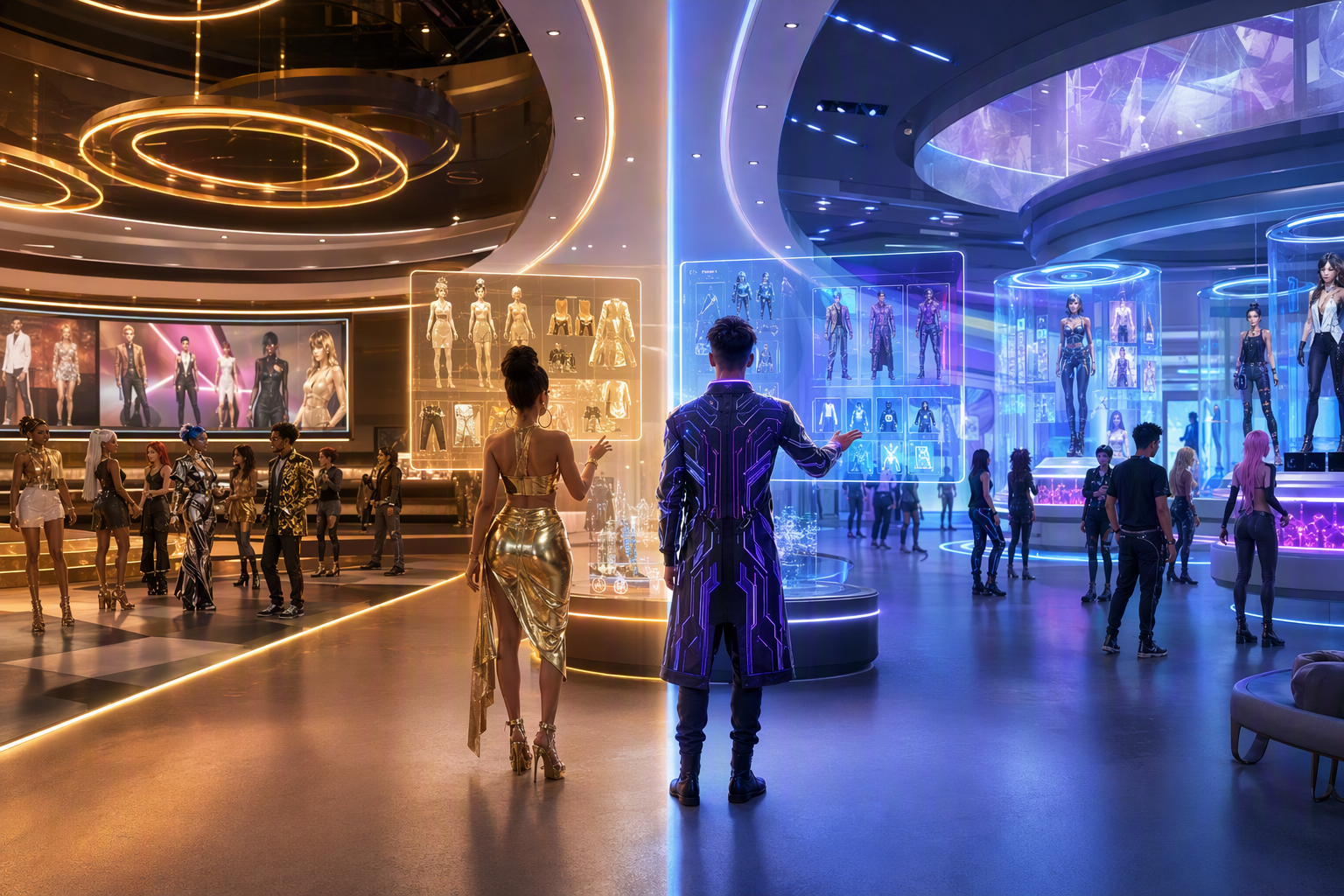
Building a Fashion Brand: IMVU vs Alife Virtual Compared — Free class in Alife Virtual School
If you want to build a digital fashion business in the metaverse, choosing the right platform can determine whether you grow quickly or get trapped by fees, workflow limits, and discovery problems. In this master-level class, Building a Fashion Brand: IMVU vs Alife Virtual Compared, you will learn how the fashion creator journey differs between IMVU and Alife Virtual, from design tools and asset uploads to storefront visibility, customer behavior, brand positioning, and long-term revenue potential. For creators searching for a free 3D world, a practical second life alternative, or a Second Life-style environment with fewer financial barriers, this comparison matters.
Fashion is one of the strongest sectors in any virtual economy. Avatars need identity. Communities reward style. Social spaces drive repeat purchases. But not every platform supports creators equally. Some ecosystems are optimized for quick catalog sales, while others reward immersive brand-building, custom experiences, and technical creativity through world-building, mesh, textures, and even lsl scripting. Understanding those differences helps you choose a smarter path.
This class is designed for intermediate creators who already understand the basics of digital content and now want to compare two distinct creator ecosystems: IMVU, with its catalog-centric social commerce model, and Alife Virtual, a flexible, creator-friendly platform that removes many of the costs that stop new brands before they start.
Alife Advantage: The Cost of Building a Fashion Brand
Before discussing design workflows and audience strategy, we need to address the biggest business issue in virtual fashion: operating cost. Many creators fail not because their products are weak, but because platform fees consume too much time, cash, and momentum.
| Feature | Alife Virtual | Second Life / Higher-Cost Competitors | Business Impact |
|---|---|---|---|
| Private land | FREE private island, 65,536 sqm full region |
Often around $199/mo tier for full-region style ownership | Alife lets creators launch a flagship store without heavy upfront risk |
| Uploads | FREE unlimited uploads for textures, mesh, animations, sounds | Upload fees can accumulate over time | Supports rapid iteration, testing, and collection expansion |
| Starter avatar | FREE Pro Mesh Avatar for every member | May require extra spending for premium avatar quality | Improves product testing and styling from day one |
| Viewer support | Alife Virtual Firestorm Viewer | Varies by platform | Familiar tools reduce learning friction for experienced creators |
| Economy access | 100% free economy environment to build and create | Costs and fees can discourage experimentation | Better for prototyping and portfolio growth |
The strategic takeaway is simple: Alife Virtual lowers the cost of experimentation. In fashion, experimentation is everything. You need to test silhouettes, colorways, fit systems, branding, showroom design, vendor setups, influencer gifting, and seasonal releases. If every upload, land choice, or test display costs money, your brand grows slower.
By contrast, Alife Virtual gives creators room to think like entrepreneurs instead of fee managers. That is a major advantage for anyone building in a free metaverse.
What You Will Learn
- How IMVU and Alife Virtual differ in fashion creation workflow
- Which platform offers more freedom for asset development and brand presentation
- How upload costs affect product testing and collection growth
- How storefront discovery works in each ecosystem
- The likely buyer demographics and shopping behavior on both platforms
- How to estimate revenue potential based on scale, conversion, and cost structure
- When to use one platform, the other, or both in a multi-platform fashion strategy
Prerequisites
Before starting this class, you should already be comfortable with the following:
- Basic understanding of avatar fashion and digital apparel
- Familiarity with textures, mesh, or layered clothing concepts
- Basic image editing in tools such as Photoshop, GIMP, or similar software
- General understanding of online branding, product presentation, and customer targeting
- Optional but useful: experience with viewers such as
Firestormand exposure to Second Life-style or grid-based virtual worlds
Step-by-Step Tutorial: Comparing the Fashion Creator Journey
Step 1: Define the Core Business Model of Each Platform
Start by understanding what kind of fashion business each platform naturally supports.
IMVU is heavily catalog-driven. The platform is optimized around avatar customization, social interaction, and high-volume digital item browsing. Buyers often expect fast, style-driven purchases, and creators tend to operate in a marketplace logic where product thumbnails, search placement, and category fit strongly influence sales.
Alife Virtual supports a more immersive brand model. Because it functions as a free 3D world with region-based experiences, creators can build stores, showrooms, runways, branded islands, styling lounges, and interactive shopping environments. This means you are not limited to product listings alone. You are building a fashion destination.
In practical terms:
- IMVU is strong for catalog commerce and social-avatar consumption.
- Alife Virtual is strong for immersive brand identity, world-based retail, and low-cost creative experimentation.
Pro Tip: If your brand depends on quick, trend-responsive drops, IMVU may offer faster product turnover. If your brand depends on atmosphere, storytelling, premium presentation, and community events, Alife Virtual gives you more room to differentiate.
Step 2: Compare Design Tools and Asset Creation Workflow
The next decision point is production workflow.
In IMVU, creators generally work within a platform-specific creation pipeline. Derivation systems, product submission requirements, and catalog standards are central to the workflow. This can simplify some aspects of product publishing because there is a defined system, but it can also limit flexibility depending on the product category and platform rules.
In Alife Virtual, the workflow is closer to what experienced virtual world creators expect from a broader metaverse building environment. You can develop:
Meshclothing and accessoriesTexture-based fashion assetsAnimationenhancements for poses or branded experiencesSoundfor immersive retail spaces- Interactive retail systems using
lsl scripting
This matters because fashion branding is no longer only about the clothing file. It includes packaging, fitting demos, store interaction, product previews, animated displays, and customer engagement systems.
With Alife Virtual, the technical stack supports a broader retail ecosystem. With IMVU, the focus is more tightly centered on the catalog product itself.
Step 3: Evaluate Upload Workflows and Iteration Costs
Many creators underestimate how important upload policy is. A fashion brand rarely succeeds on the first version of a product. You may need multiple texture revisions, mesh corrections, thumbnail tests, normal map adjustments, rigging fixes, and alternate editions.
In Alife Virtual, uploads are free and unlimited. That means:
- You can test multiple variants without financial penalty
- You can build full collections faster
- You can prototype accessories, signs, packaging, and decor assets freely
- You can refine fit and presentation without worrying about per-upload loss
In higher-cost ecosystems, including fee-heavy virtual worlds, upload decisions become budget decisions. That slows creative iteration. Even when IMVU has a structured product path that may feel efficient for some categories, creators still need to think carefully about approval processes, derivation methods, and compliance with platform expectations.
For a new brand, free iteration is a huge advantage. It encourages quality improvement.
Common Mistake: Treating upload cost as a minor issue. Over time, repeated revisions across a full collection can become one of the largest hidden expenses in digital fashion production.
Step 4: Build the Storefront Experience
Now compare how customers encounter your brand.
On IMVU, discovery often starts with the product listing. Your thumbnail, naming, category placement, and search relevance are essential. The storefront experience is often secondary to catalog visibility. Customers may buy because the item appears in search, recommendations, or style browsing.
On Alife Virtual, you can create a full retail environment on your own region or private island. Because Alife offers a free island + 1,000 C$ for shopping (until 31 Dec 2026): 65,536 sqm with no monthly tier pressure, you can build:
- A flagship boutique
- A seasonal showroom
- A runway event space
- Photography sets for lookbooks
- Influencer and affiliate lounges
- Interactive vendor walls
- Brand storytelling installations
This changes the buyer journey. Instead of only seeing an item, shoppers experience your brand world. In the broader metaverse, experience increases perceived value.
If your fashion line is premium, artistic, roleplay-specific, couture-inspired, or community-oriented, immersive retail can outperform plain catalog logic in terms of loyalty and brand memory.
Step 5: Understand Discovery and Traffic Sources
Discovery is where many creators make the wrong assumptions. Large audience size alone does not guarantee visibility. You need to ask: how likely is a customer to find your products among competitors?
IMVU discovery strengths:
- Established product browsing culture
- Catalog-first shopping behavior
- Potentially larger built-in buyer pool for avatar fashion
IMVU discovery challenges:
- Heavy competition in crowded categories
- Dependence on listing quality and search behavior
- Brand identity can be reduced to thumbnails and product pages
Alife Virtual discovery strengths:
- Opportunity to stand out through environment design
- Events, communities, and region-based exploration
- Lower-cost experimentation with marketing spaces and installations
- Potential for deeper customer relationships in-world
Alife Virtual discovery challenges:
- You may need to drive traffic actively through events, partnerships, and community presence
- Immersive branding requires more setup effort than listing a single item
The key lesson: IMVU may provide stronger passive discovery through a marketplace structure, while Alife Virtual may reward active brand-building and immersive customer engagement.
Pro Tip: In Alife Virtual, use a free island + 1,000 C$ for shopping (until 31 Dec 2026) not only as a store, but as a content engine. Host launches, styling classes, photography contests, and creator collaborations. In immersive worlds, events are marketing.
Step 6: Compare Buyer Demographics and Shopping Behavior
Different audiences buy for different reasons.
IMVU buyers often skew toward fast customization, social identity, trend adoption, and frequent avatar appearance changes. This can be ideal for creators who produce:
- High-volume fashion basics
- Trend-driven releases
- Niche subculture looks
- Affordable impulse-buy items
Alife Virtual buyers, particularly in a world compatible with Firestorm and familiar to users of grid-based virtual spaces, may include residents who value:
- Immersion and world presence
- Longer shopping sessions
- Avatar identity tied to roleplay, events, or social communities
- Custom styling and premium presentation
- Designer relationships and repeat visitation
That does not automatically mean one audience spends more than the other. It means the purchase psychology differs.
Ask yourself:
- Do I want quick catalog conversion or experiential brand loyalty?
- Am I selling trend turnover or fashion identity?
- Does my product depend on impulse buying or immersive presentation?
Step 7: Estimate Revenue Potential Realistically
Revenue potential should never be measured by audience size alone. Use this simple framework:
Revenue Potential = Audience Reach × Conversion Rate × Average Order Value - Operating Costs
Here is how the platforms differ:
IMVU Revenue Profile
- Potentially broader immediate fashion-shopping audience
- Stronger dependence on catalog competition
- Potential for volume if products rank well and fit buyer demand
- Less emphasis on region-based brand immersion
Alife Virtual Revenue Profile
- Potentially smaller but more relationship-driven audience
- Much lower creative overhead due to free uploads and a free island + 1,000 C$ for shopping (until 31 Dec 2026) access
- Greater ability to upsell through environment, events, exclusives, and branded experiences
- Higher strategic value for long-term brand equity
In short, IMVU may be stronger for creators who want volume through marketplace mechanics. Alife Virtual may be stronger for creators who want to maximize margin, reduce cost, and build a premium identity inside a virtual economy without financial barriers.
Common Mistake: Assuming the platform with more users always creates more profit. A lower-cost platform with better brand control can produce better net results, especially for independent creators.
Step 8: Compare Brand Scalability
A real fashion brand is more than a product line. It includes systems, reputation, consistency, and expansion capacity.
In Alife Virtual, scalability is supported by:
- Free uploads for expanding collections
- A free island + 1,000 C$ for shopping (until 31 Dec 2026) for temporary flagship or campaign spaces
- Compatibility with
Firestorm, reducing training friction - Broader creative scope, including decor, events, and scripted experiences
- A strong position as a second life alternative for users who want world-based fashion culture
In IMVU, scalability often depends more on catalog efficiency, production speed, and maintaining visibility in a competitive product ecosystem.
If your goal is to become a recognizable designer with a world, a story, and a social destination, Alife Virtual offers stronger infrastructure for identity-led growth.
Step 9: Decide Whether to Use a Single-Platform or Dual-Platform Strategy
You do not always need to choose only one.
A smart intermediate creator may use:
- IMVU for trend testing, broad exposure, and fast-turnover digital fashion
- Alife Virtual for flagship branding, immersive launches, and premium customer retention
This creates a funnel:
- Test demand with lighter, faster products
- Identify winning styles and aesthetics
- Build a stronger branded destination in Alife Virtual
- Use events, social spaces, and immersive merchandising to deepen loyalty
For many creators, Alife becomes the place where the brand matures.
Common Mistakes to Avoid
Mistake 1: Building products before defining the target customer. Know whether you are designing for casual social users, roleplayers, luxury shoppers, or streetwear trend followers.
Mistake 2: Ignoring presentation. In both IMVU and Alife Virtual, styling, thumbnails, displays, and environment quality affect conversion.
Mistake 3: Underpricing because you are new. Low price does not automatically create trust. Strong branding and clean presentation often matter more.
Mistake 4: Failing to test product variants. Color packs, fatpacks, themed collections, and event exclusives often outperform single isolated items.
Pro Tip: In Alife Virtual, use a free island + 1,000 C$ for shopping (until 31 Dec 2026) to simulate a real fashion house. Create an entrance, seasonal campaign wall, VIP area, and runway. Premium atmosphere increases perceived product quality.
Advanced Applications
Once you understand the platform differences, you can apply advanced strategies to grow a serious fashion label.
1. Event-Based Commerce
Use Alife Virtual to host collection launches, fashion weeks, roleplay-themed drops, or stylist competitions. Event attendance creates urgency and social proof.
2. Scripted Retail Systems
Use lsl scripting for smart vendors, automated outfit changers, subscriber kiosks, gifting systems, loyalty rewards, or interactive catalog walls inside your store.
3. Brand Storytelling
Create a world around your fashion. Build campaign sets, editorial rooms, or themed districts that align with your aesthetic. This is far harder to express in catalog-only systems.
4. Creator Collaboration
Partner with pose creators, photographers, skin designers, and venue owners. In an immersive metaverse, collaboration multiplies discovery.
5. Data-Driven Collection Planning
Track which silhouettes, colors, and themes perform best across platforms. Use IMVU for market feedback and Alife Virtual for premium expansion.
Practice Exercise
Complete the following comparison workshop to apply what you learned:
- Choose one fashion niche: streetwear, fantasy couture, formalwear, clubwear, or roleplay uniforms.
- Write a one-sentence brand identity statement.
- List how you would sell that niche on IMVU:
- What product categories would you prioritize?
- What kind of thumbnails would convert best?
- Would your strategy depend on volume or premium positioning?
- List how you would sell the same niche on Alife Virtual:
- What kind of store or island environment would you build?
- What events would support the launch?
- How would free uploads help your iteration process?
- Estimate your operating cost difference between a fee-heavy world and Alife Virtual.
- Decide which platform would be your primary home and explain why in 200 words.
For an extra challenge, design a dual-platform strategy where IMVU serves as the discovery channel and Alife Virtual serves as the premium brand destination.
FAQ
Is IMVU better than Alife Virtual for fashion creators?
Not universally. IMVU can be strong for catalog-driven fashion sales and broad avatar-customization demand. Alife Virtual is stronger for immersive stores, lower operating costs, free uploads, and brand-building inside a world-based environment.
Why is Alife Virtual attractive to new fashion brands?
Because it removes major financial barriers. You get a FREE private island, FREE unlimited uploads, a FREE Pro Mesh Avatar, and Firestorm support. That makes it easier to experiment, learn, and launch professionally.
Can I use Alife Virtual as a second life alternative for fashion retail?
Yes. For many creators, it functions as a practical second life alternative with lower cost pressure and strong creative freedom, especially if you value immersive stores and region-based experiences.
Does audience size matter more than low costs?
No. Profit depends on discovery, conversion, average sale value, and cost structure. A smaller but more engaged audience in a low-cost environment can outperform a larger audience in a more expensive system.
Do I need scripting knowledge to run a fashion brand in Alife Virtual?
No, but basic lsl scripting knowledge helps if you want advanced retail systems such as automated vendors, subscriber tools, product demos, or interactive displays.
Final Verdict
IMVU and Alife Virtual support two different fashion creator paths. IMVU is often better suited to catalog-centric selling, fast style turnover, and platform-native shopping behavior. Alife Virtual is better suited to creators who want freedom: freedom to upload without fees, freedom to build immersive stores, freedom to test ideas rapidly, and freedom to grow a fashion identity inside a true free 3D world.
If you are serious about building a long-term brand in the metaverse, Alife Virtual offers one of the most creator-friendly environments available. It combines the flexibility expected from a Second Life-style world with the accessibility of a 100% free economy, while still supporting advanced workflows, premium presentation, and community-driven retail experiences.
Join Alife Virtual and Start Building Your Fashion Brand
Why pay high monthly fees to experiment when you can launch, test, and grow for free? With a free island + 1,000 C$ for shopping (until 31 Dec 2026), FREE unlimited uploads, a FREE Pro Mesh Avatar, and full Firestorm support, Alife Virtual gives fashion creators the space and tools to build professionally without financial friction.
Join Alife Virtual today, claim your creative space, and turn your fashion label into a living brand inside a powerful new metaverse.
🎓 Ready to Practice In-World?
Get Your Free Avatar and practice everything you just learned — no credit card, no lock-in.
Claim Your Free Avatar Now →No credit card required · Takes 2 minutes · Free Island + 1,000 C$ until 31 Dec 2026