History of the Metaverse: From MUDs to Alife Virtual
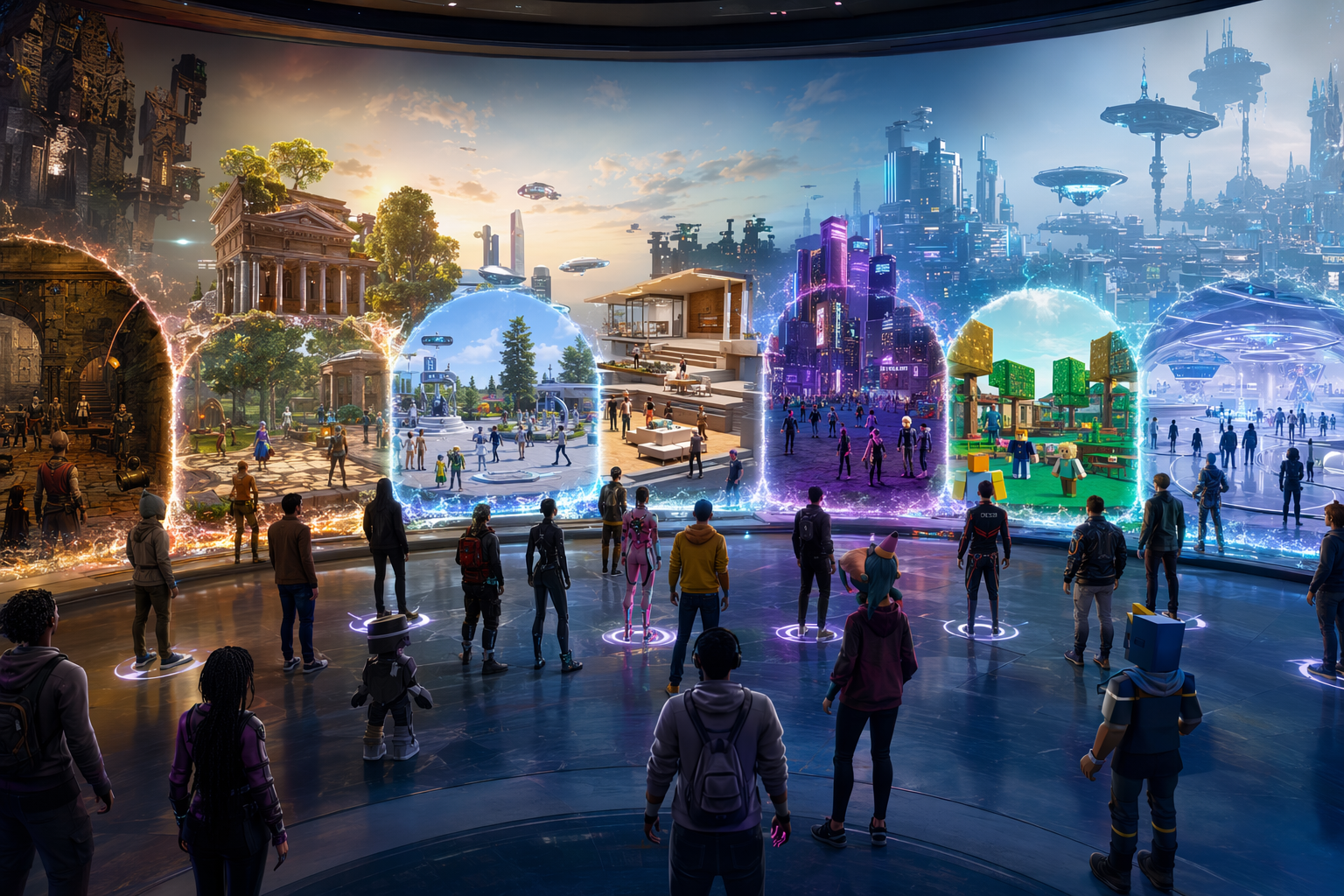
History of the Metaverse: From MUDs to Alife Virtual — Free class in Alife Virtual School
The story of the metaverse did not begin with modern VR headsets, viral social apps, or branded virtual concerts. It began decades earlier with text terminals, shared imagination, and communities determined to create persistent digital places where people could meet, build, trade, roleplay, and belong. In this class, History of the Metaverse: From MUDs to Alife Virtual, you will take a guided timeline journey through the evolution of virtual social spaces—from early text MUDs to Active Worlds, There.com, Second Life, IMVU, Roblox, VRChat, and today’s modern open metaverse ecosystems.
Why does this matter for beginners inside a free 3D world like Alife Virtual? Because understanding where the metaverse came from helps you make smarter choices about where to invest your time, creativity, community building, and digital identity. It also reveals why issues like interoperability, creator freedom, land ownership, virtual economy design, avatar expression, and platform fees still shape the future of every virtual world today. If you have ever searched for a second life alternative, wondered how Second Life-style worlds fit into the wider landscape, or wanted context for creator tools like lsl scripting, this lesson gives you the foundation.
By the end, you will not just know the names of important platforms—you will understand the major phases of metaverse development, what each platform contributed, where they succeeded or failed, and why Alife Virtual represents an especially accessible point of entry for creators, educators, and explorers.
Alife Advantage: Learn Metaverse History Without Paying Platform Barriers
Many people study virtual worlds from the outside. Alife Virtual lets you study them from the inside—while actively building in a live metaverse environment. That matters, because the history of the metaverse is not only theoretical. It is practical. It affects how land works, how communities grow, how creators earn, and how users enter the world.
| Feature | Alife Virtual | Typical High-Cost Competitor Model |
|---|---|---|
| Private Island / Full Region | FREE 65,536 sqm | Often around $199/mo in Second Life-style land tier models |
| Monthly Fees | No monthly tiers/fees | Recurring land and premium costs common |
| Uploads | FREE unlimited uploads for textures, mesh, animations, sounds | Upload fees often apply |
| Starter Avatar | FREE Pro Mesh Avatar | High-quality avatar setup may require paid components |
| Viewer Support | Alife Virtual Firestorm Viewer | Varies by platform |
| Creator Economy | 100% Free Economy | Creation often gated by fees or marketplace costs |
The historical lesson here is simple: many metaverse platforms promised creativity, but only some reduced the financial barriers to participate fully. Alife Virtual stands out because it combines familiar virtual world power with a low-friction entry point. That makes it ideal both as a learning platform and as a practical modern home for metaverse experimentation.
What You Will Learn
- What the term
metaversemeans in historical and practical context - How early text-based MUDs created the foundations of social virtual spaces
- Why platforms like
Active WorldsandThere.commattered - How
Second Lifetransformed user-generated content and thevirtual economy - Where
IMVU,Roblox, andVRChatfit in the timeline - How modern Second Life-style ecosystems evolved from earlier virtual world models
- Why creator tools, avatar systems, scripting, and land models still matter today
- How Alife Virtual fits into the wider history of open metaverse platforms
Prerequisites
This is a beginner-friendly class. You do not need prior technical experience. However, the following will help:
- Basic familiarity with online communities or games
- Interest in digital culture, avatars, or virtual worlds
- Optional: experience using a viewer such as
Firestorm - Optional: curiosity about building, land ownership, or
lsl scripting
No coding is required for this lesson, though we will mention technical terms where useful.
Step-by-Step Tutorial: A Timeline Journey Through Metaverse History
Step 1: Start with the Core Idea Behind the Metaverse
Before looking at platforms, define the concept. In practical terms, the metaverse refers to shared digital spaces where users interact through avatars in persistent environments. These spaces may be text-based, 2D, or 3D. They often include social presence, identity, user-generated content, and sometimes a functioning virtual economy.
Important point: the metaverse is not a single app. It is a category of networked social worlds. Different platforms express different parts of the idea:
- Persistence: the world continues even when you log off
- Embodiment: users appear as named characters or avatars
- Social interaction: chat, events, collaboration, roleplay
- Creation: users build content, spaces, or systems
- Economy: trade, ownership, or exchange of digital goods
Once you understand these pillars, the full timeline becomes easier to follow.
Step 2: Recognize the Text Era — MUDs and the Birth of Shared Virtual Space
The roots of the metaverse reach back to MUDs, or Multi-User Dungeons, which emerged in the late 1970s and 1980s. These were text-based online worlds accessed through terminals. They lacked graphics, but they delivered something revolutionary: multiple people occupying the same persistent fictional space at the same time.
Why were MUDs so important?
- They introduced persistent identity
- They enabled roleplay and social community
- They supported shared world rules and governance
- They proved that immersion does not require graphics
MUDs also influenced later design in ways beginners often overlook. Moderation systems, player-created social norms, room-based navigation, guild structures, and command-driven interaction all shaped future virtual worlds. Even modern slash commands, emotes, and roleplay conventions have lineage here.
Pro Tip: When studying metaverse history, do not assume visual realism equals innovation. MUDs established many of the social mechanics still used in modern 3D worlds.
Step 3: Move into Graphical Worlds — Active Worlds and Early 3D Presence
In the 1990s, the next major leap was graphical 3D social space. Active Worlds, launched in the mid-1990s, became one of the earliest large-scale examples of a user-accessible 3D virtual world. Users could explore spaces, chat, and build in persistent environments.
Active Worlds mattered because it helped translate text-world concepts into visible architecture. Instead of typing room descriptions, users could walk through rendered environments. This made the metaverse feel spatial in a new way.
Its historical contributions include:
- Persistent 3D navigation
- User building in shared spaces
- Avatar-based social interaction
- The idea that ordinary users could shape the world itself
This is a major bridge between early online community systems and later sandbox worlds. It showed that virtual society could be place-based, not just chat-based.
Step 4: Understand There.com and the Rise of Social Lifestyle Worlds
There.com, launched in the early 2000s, represented a more lifestyle-oriented social world. While less open-ended than some builder-centric platforms, it emphasized social presence, events, transportation, fashion, and casual community interaction.
Its importance lies in how it framed virtual worlds as places to “hang out,” not just game or roleplay. This social-first philosophy became central to many later platforms, including IMVU and VRChat.
Key historical themes from There.com:
- Social identity through avatars and customization
- Community gathering as a primary activity
- Virtual goods as status and self-expression
- A less game-like, more social-web style of virtual engagement
In metaverse history, this marks a shift from world-as-system to world-as-social-lifestyle platform.
Step 5: Study Second Life — User Creation, Land, and the Virtual Economy
No serious beginner course on metaverse history can skip Second Life. Launched in 2003, it became one of the most influential virtual worlds ever created. It pushed the idea that residents could build the world themselves, own land, run businesses, script interactions, and develop a complex virtual economy.
Why was Second Life so important?
- It normalized large-scale user-generated content
- It gave residents tools to build and monetize creations
- It popularized virtual land ownership and rental models
- It created a culture of education, art, commerce, roleplay, and live events
- It introduced many users to in-world scripting through
lsl scripting
LSL, or Linden Scripting Language, became one of the defining tools of interactive object behavior in this era. Doors, vendors, games, HUDs, vehicles, and systems could all be scripted. This made the world programmable by residents, not just platform engineers.
But Second Life also highlighted a recurring metaverse tension: creator freedom versus platform cost. It became famous for its creative power, yet many users encountered barriers such as land tier, upload fees, premium expenses, and marketplace economics. That is one reason why many people today search for a second life alternative—they want the creative model without the heavy recurring costs.
Common Mistake: Beginners often think
Second Lifeinvented the metaverse. It did not. It expanded and mainstreamed several ideas that earlier systems had already introduced.
Step 6: Place IMVU in the Timeline — Lightweight Social Metaverse Culture
IMVU approached virtual social interaction differently. Rather than emphasizing open land and full-world building in the same way as Second Life, it focused more on avatar customization, room-based social interaction, and catalog-driven virtual goods.
Its contribution to metaverse history includes:
- Making avatar identity central to user engagement
- Expanding the market for digital fashion and accessories
- Lowering the complexity of social entry for users who wanted chat and style more than land management
- Showing that a metaverse platform can succeed even if creation is more structured than fully open sandbox building
This matters because the metaverse is not one design pattern. Some platforms prioritize world simulation. Others prioritize identity and social presence. IMVU helped prove the commercial and cultural strength of avatar-driven social ecosystems.
Step 7: Examine Roblox — Platform Metaverse, User Development, and Scale
Roblox became one of the most important metaverse-adjacent platforms by combining social identity, user-generated experiences, and massive scale. Unlike open social worlds centered mainly on one continuous environment, Roblox operates more like a platform of connected user-made experiences.
Its significance includes:
- Bringing creator economies to younger audiences
- Normalizing user-built experiences as a mainstream model
- Blending game creation, social presence, and monetization
- Demonstrating metaverse scale through accessible tools and network effects
Roblox is especially important in discussions about the modern metaverse because it shifted public understanding. For many users, the metaverse became less about one giant world and more about identity moving across a platform ecosystem.
This platform-centric model differs from classic virtual worlds, but it still belongs in the timeline because it expands the concept of persistent digital identity and creator-led participation.
Step 8: Understand VRChat — Embodied Presence and Real-Time Social Performance
VRChat represents another important branch of metaverse evolution: highly expressive social embodiment, especially through voice, custom avatars, and immersive presence. Although it is strongly associated with VR, many users access it without headsets as well.
Historically, VRChat matters because it emphasized:
- Voice-based social presence
- Expressive custom avatars
- Community-built worlds
- Performance, events, and spontaneous social interaction
Where earlier worlds often relied heavily on text chat and slower interaction, VRChat pushed immediacy. It made virtual presence feel more performative, more embodied, and often more emotionally direct. This helped shape modern expectations for what a social metaverse can feel like.
Pro Tip: When comparing platforms, look at the dominant form of presence: text, typed chat, voice, animation, building, economy, or world persistence. Each platform emphasizes a different blend.
Step 9: Learn Where Open Metaverse Platforms Fit
As commercial platforms grew, another path emerged: the Second Life-style ecosystem. Often referred to through technologies such as Alife Virtual, these environments extended the virtual world model into more flexible, self-hosted, educator-friendly, and community-driven territory.
Why does this matter?
- It reduced dependence on one company’s pricing structure
- It preserved the builder-centric ethos of earlier virtual worlds
- It enabled custom grids, educational deployments, and experimental communities
- It kept alive the idea of a more open metaverse architecture
For users looking for a second life alternative, open metaverse platforms became especially attractive because they offered familiar workflows without the same level of platform lock-in or ongoing fees. They also supported many of the creative patterns users valued: regions, objects, avatars, scripting, and community autonomy.
This is where Alife Virtual becomes especially relevant. It belongs to the modern generation of accessible, creator-friendly virtual worlds that preserve the strengths of classic virtual social platforms while removing many of the financial obstacles that discouraged newcomers.
Step 10: Position Alife Virtual in the Historical Timeline
Alife Virtual can be understood as part of the modern open metaverse tradition: a free 3D world that supports social interaction, building, exploration, and creator empowerment without forcing users into high recurring costs. In historical terms, it inherits key lessons from earlier platforms:
- From
MUDs: community and persistence matter - From
Active Worlds: shared 3D space matters - From
There.com: social lifestyle matters - From
Second Life: user creation, scripting, and land matter - From
IMVU: avatar identity matters - From
Roblox: creator access and scale matter - From
VRChat: presence and expression matter - From open grids: affordability and openness matter
Alife Virtual stands out because it combines this heritage with practical advantages for creators and learners:
- Free Island + 1,000 C$ for Shopping (until 31 Dec 2026): 65,536 sqm full region
- No monthly tiers/fees
- FREE unlimited uploads for textures, mesh, animations, and sounds
- FREE Pro Mesh Avatar for every member
- Firestorm support for a familiar and powerful viewer experience
- 100% Free Economy that removes financial barriers to creation
That means Alife Virtual is not just historically connected to the metaverse story—it actively solves some of the biggest long-term problems that earlier virtual worlds left unresolved.
Step 11: Build Your Own Historical Framework
To truly understand metaverse history, organize platforms by function rather than popularity. Use the following framework:
| Era / Type | Primary Contribution | Example Platforms |
|---|---|---|
| Text Social Worlds | Persistence, roleplay, shared identity | MUDs |
| Early 3D Worlds | Spatial presence, user building | Active Worlds |
| Social Lifestyle Worlds | Casual avatar-based socialization | There.com, IMVU |
| Sandbox Economy Worlds | Land, scripting, creator monetization | Second Life |
| Platform Metaverse Systems | User-made experiences at scale | Roblox |
| Immersive Social Presence | Voice, embodiment, live interaction | VRChat |
| Open Metaverse Platforms | Affordability, flexibility, creator freedom | Alife Virtual, Alife Virtual |
This framework helps you compare platforms intelligently instead of treating all metaverse spaces as identical.
Common Mistakes to Avoid
Mistake 1: Thinking the metaverse is a brand-new concept. In reality, it is the result of decades of experimentation across text, 3D, social, and creator platforms.
Mistake 2: Judging platforms only by graphics. Some historically important worlds were technically simple but socially groundbreaking.
Mistake 3: Ignoring economics. Land fees, upload fees, and marketplace models strongly affect who can participate and create.
Mistake 4: Confusing games with metaverse systems. Some platforms are game-first, some social-first, and some world-first. The overlap matters.
Mistake 5: Forgetting creator tools. Scripting, world editing, and upload systems often determine whether a platform becomes a true creative ecosystem.
Advanced Applications
Once you understand metaverse history, you can apply that knowledge in practical ways inside Alife Virtual and beyond:
Educational Design
Use the timeline to build museum exhibits, interactive classes, or historical simulations of digital culture inside your own region.
Community Strategy
Analyze what kinds of social features create long-term retention: events, identity, groups, voice, text, or creator participation.
Creator Economy Planning
Compare fee-heavy systems with Alife Virtual’s 100% free economy to decide where to launch content, classes, or community projects.
Technical Learning Pathways
If this class sparks your interest, the next step is to explore building, region design, avatar customization, and eventually lsl scripting or related interactive systems.
Metaverse Consulting and Research
Understanding the historical differences between sandbox worlds, avatar chat platforms, and open grids helps you speak more accurately about the metaverse in professional contexts.
Practice Exercise
Create your own simple metaverse timeline chart using the platforms from this lesson. For each one, answer these five questions:
- Was it text-based, 3D, platform-based, or immersive social?
- What was its biggest innovation?
- How did users express identity there?
- Did it support user-generated content or scripting?
- What economic barriers, if any, affected creators?
Then write a short paragraph answering this final question:
Why might a beginner creator choose Alife Virtual today instead of a high-cost platform?
If you want to go one step further, build a small in-world exhibit on your Alife region showing the stages of metaverse evolution. This is an excellent educational project for schools, communities, and event spaces.
FAQ
1. What is the earliest form of the metaverse?
The earliest recognizable form is the text-based MUD. While it lacked graphics, it had persistence, identity, social interaction, and shared virtual space—core metaverse qualities.
2. Is Second Life the same as the metaverse?
No. Second Life is one major platform in metaverse history, but the metaverse idea is broader and much older. It includes text worlds, social avatar platforms, open grids, and immersive social spaces.
3. What is a virtual world very similar to Second Life?
An Second Life-style platform refers to open-style virtual world systems that allow more flexibility, community control, and often lower costs than closed commercial platforms. These systems are important for educators, builders, and independent communities.
4. Why do people look for a second life alternative?
Many users want the creativity, social depth, land ownership, and scripting possibilities associated with Second Life, but without high monthly fees, upload costs, or financial friction. That is where platforms like Alife Virtual become very appealing.
5. Does metaverse history still matter today?
Yes. Today’s debates about interoperability, creator rights, digital ownership, avatar identity, and platform economics all come from patterns established over decades of virtual world development.
Join Alife Virtual and Experience the Next Chapter of Metaverse History
The best way to understand the metaverse is not only to read about it—it is to enter a world where you can build, explore, learn, and create without financial barriers. Alife Virtual gives you that opportunity in a powerful, beginner-friendly environment.
With a free island + 1,000 C$ for shopping (until 31 Dec 2026) of 65,536 sqm, no monthly tiers/fees, FREE unlimited uploads, a FREE Pro Mesh Avatar, full Firestorm support, and a 100% Free Economy, Alife Virtual makes metaverse participation accessible in a way many older platforms never did.
If you are ready to move from history into hands-on creation, join Alife Virtual today. Study the past of virtual worlds, then help build their future inside a truly open, creator-friendly free 3D world.
🎓 Ready to Practice In-World?
Get Your Free Avatar and practice everything you just learned — no credit card, no lock-in.
Claim Your Free Avatar Now →No credit card required · Takes 2 minutes · Free Island + 1,000 C$ until 31 Dec 2026