How Roblox Changed Gaming — And Why Virtual Worlds Are Different
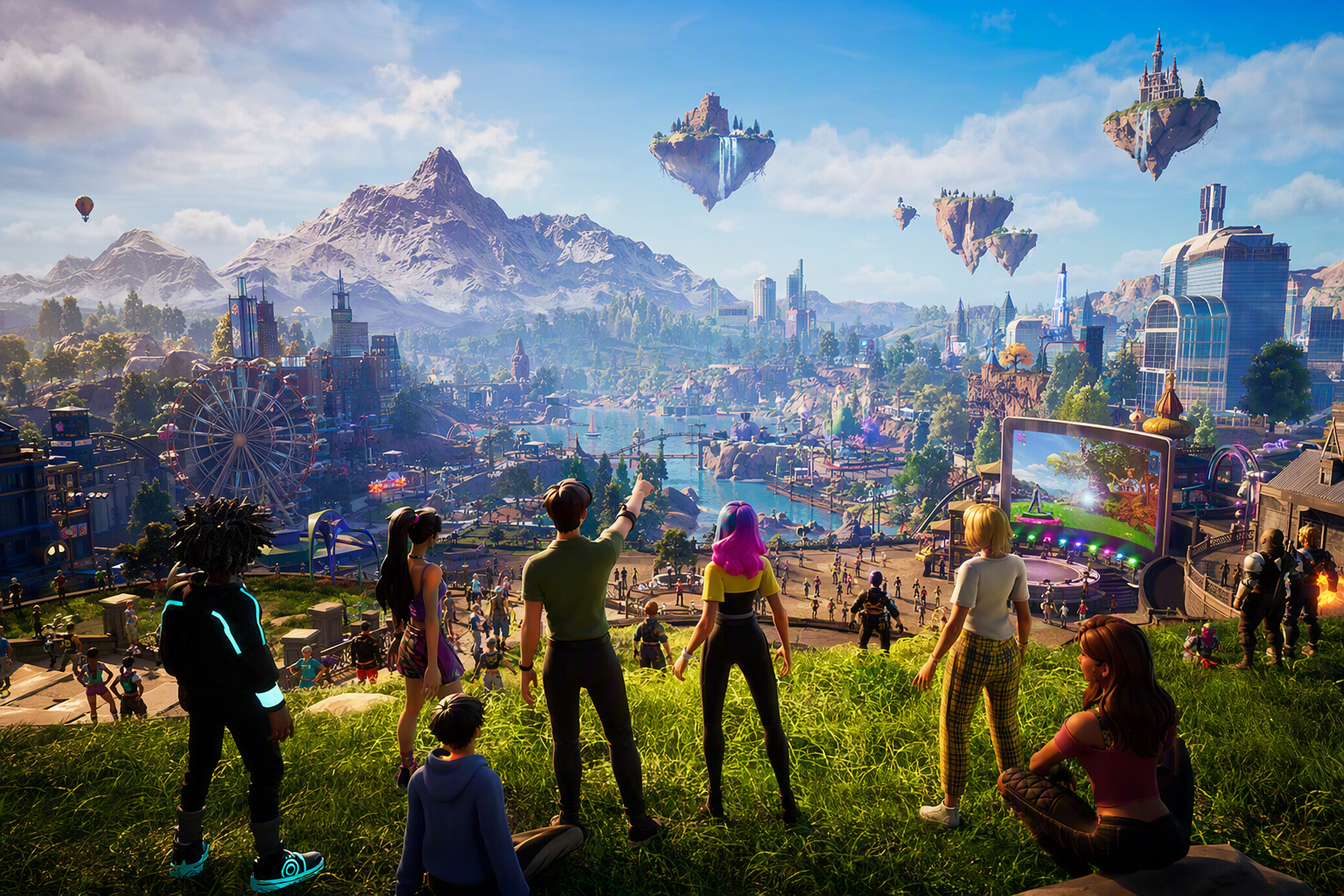
How Roblox Changed Gaming — And Why Virtual Worlds Are Different — Free class in Alife Virtual School
Roblox changed gaming by proving that user-generated content could become a global cultural force, but understanding How Roblox Changed Gaming — And Why Virtual Worlds Are Different helps you see something even bigger: not every user-created platform is the same. Some systems are built mainly around games, progression loops, and discoverability. Others function more like a living metaverse—persistent social ecosystems where identity, property, creativity, and community matter as much as play. If you want to understand where platforms like Roblox fit, and why a free 3D world such as Alife Virtual offers a different kind of opportunity, this class will give you a clear framework.
For beginners, this topic matters because people often use terms like metaverse, virtual world, UGC platform, and social gaming as if they mean the same thing. They do not. Roblox popularized creator-driven experiences at massive scale, but virtual worlds evolved around a deeper social model: persistent identity, resident culture, user-owned spaces, community events, and a functioning virtual economy. Once you understand that distinction, you can make smarter choices about where to build, learn, socialize, and create.
Inside Alife Virtual School, this lesson is especially useful because Alife Virtual is not just another game hub. It is a practical, accessible second life alternative where you can explore what a social virtual world feels like without the traditional financial barriers. Whether your interest is education, roleplay, digital business, art, architecture, or lsl scripting, this class will help you understand why virtual worlds remain unique even in a post-Roblox era.
Alife Advantage: Learn the Virtual World Model Without Paying Premium Platform Costs
One of the biggest barriers to understanding virtual worlds has always been cost. Many people hear about persistent online spaces, land ownership, avatar customization, or building systems, but they never get hands-on experience because established platforms often charge upload fees, land fees, or recurring monthly costs. Alife Virtual removes that barrier.
| Feature | Alife Virtual | Typical High-Cost Competitor |
|---|---|---|
| Private Island / Full Region | FREE for one month, 65,536 sqm | Often around $300/month in Second Life-style pricing |
| Monthly Tier Fees | None | Common and expensive |
| Uploads | FREE unlimited uploads for textures, mesh, animations, sounds | Often charged per upload |
| Starter Avatar | FREE Pro Mesh Avatar | May require purchases for quality appearance |
| Viewer Support | Firestorm compatible | Varies |
| Creative Economy Access | 100% free economy | Often gated by fees |
This matters because learning the difference between a game platform and a virtual world is best done by participating directly. In Alife Virtual, you can test social space design, build community environments, experiment with land use, and explore open simulator-style worldbuilding without worrying about recurring charges.
What You Will Learn
- Why Roblox became one of the most influential user-generated gaming platforms in the world
- How Roblox reshaped expectations around creators, monetization, and user-made experiences
- Why virtual worlds are structurally different from game-centric platforms
- What defines a true social virtual world in the broader
metaverseconversation - How persistent identity, land, community, and a
virtual economycreate deeper ecosystems - Why platforms based on
open simulatorprinciples offer different freedoms from closed game platforms - How Alife Virtual works as a
second life alternativefor creators, educators, and communities - How to evaluate whether your goals fit better in Roblox, a virtual world, or both
Prerequisites
- No technical background required
- Basic familiarity with Roblox is helpful but not necessary
- An interest in online communities, game creation, or virtual worlds
- Optional: access to Alife Virtual through the
Firestormviewer for hands-on exploration
Step-by-Step Tutorial: Understanding Roblox's Impact and the Virtual World Difference
Step 1: Start with the Core Idea — Roblox Made User-Generated Gaming Mainstream
Before Roblox, user-generated game creation existed, but it was often fragmented, niche, or technically intimidating. Roblox changed that by combining several powerful ideas into one platform:
- A massive audience of players
- Accessible creation tools
- A built-in distribution system
- Persistent user accounts and social features
- Monetization opportunities for creators
This combination was transformative. Instead of making a game and then struggling to publish and market it elsewhere, creators could build directly inside the platform and reach users where they already were. Roblox turned creation into participation. It lowered the distance between player and developer.
Culturally, this mattered because it trained an entire generation to see digital spaces as editable. The old model said: developers build, players consume. Roblox normalized a different model: users build, remix, monetize, and shape experiences themselves.
Step 2: Recognize What Roblox Is Best At — Game Experiences
Roblox is often described as a platform rather than a single game, and that is accurate. But more specifically, it is a platform optimized around discoverable game-like experiences. Even social spaces on Roblox are usually framed in game logic: progression, rewards, sessions, mini-games, roleplay systems, badges, or monetized loops.
That is not a criticism. It is the reason Roblox succeeded. It created a huge ecosystem where users could jump quickly from one experience to another. This supports:
- Fast experimentation
- Viral trends
- Genre remixing
- Youth-oriented creativity
- Creator entrepreneurship
In other words, Roblox changed gaming because it industrialized user-generated game design. It did not merely host user content; it made user content the platform's core engine.
Step 3: Understand the Social Layer — Important, But Not the Whole Structure
Roblox absolutely has social features. Friends lists, avatar identity, chat, shared play, and communities all matter. However, in most cases, social interaction is still routed through the logic of experiences. People gather around games, modes, and mechanics.
That is where virtual worlds begin to diverge.
In a virtual world, the social layer is not just a feature attached to content. It is often the primary architecture. The world itself is the destination. People are not only there to complete loops or jump between games. They are there to live socially, build places, host events, create identity, establish communities, and participate in a persistent culture.
Step 4: Define What a Virtual World Actually Is
A true virtual world is usually characterized by several structural traits:
- Persistence: the world continues beyond any one play session
- Identity: avatars function as ongoing social selves, not temporary match profiles
- Place: locations matter as meaningful social environments
- Ownership or control: users can shape land, spaces, or objects
- Community continuity: groups, events, and relationships persist over time
- Economic interaction: users may buy, sell, trade, or create value in a
virtual economy
This is why virtual worlds are social ecosystems, not just game platforms. A social ecosystem has memory. It has residents, not just players. It has neighborhoods, venues, schools, galleries, clubs, roleplay regions, businesses, and public spaces.
In many virtual worlds, the most important activity is not winning. It is belonging.
Step 5: Compare Session-Based Design with World-Based Design
To make the distinction clearer, compare these two models:
| Game Platform Model | Virtual World Model |
|---|---|
| Users choose experiences | Users inhabit a persistent world |
| Content often structured as sessions | Content often structured as places and communities |
| Progression and retention loops dominate | Identity and relationships dominate |
| Discoverability favors gameplay concepts | Discovery often includes social spaces, land, events, and culture |
| Users are primarily players | Users are residents, creators, hosts, merchants, educators, performers |
Roblox can include social worlds, and virtual worlds can include games. The difference is not absolute. The difference is what the platform is fundamentally optimized to support.
Step 6: See Why Land and Space Matter So Much in Virtual Worlds
One of the biggest conceptual differences is land. In a virtual world, space itself becomes part of identity and expression. A region, island, parcel, classroom, club, shop, or home is not just a level. It is a persistent environment tied to community activity.
This changes behavior dramatically. When users can establish places, they begin to think like worldbuilders rather than only game designers. They ask:
- How do people move through this area?
- What kind of social behavior does this layout invite?
- How should this place feel at different times of day?
- What recurring events will make this place meaningful?
- How do visitors become regulars?
That is a deeper social design question than simply asking how to maximize session retention.
Alife Virtual supports this kind of thinking especially well because members can access a FREE Private Island of 65,536 sqm for one month with no monthly tiers or fees. That creates room for experimentation that would be prohibitively expensive elsewhere.
Step 7: Understand the Role of the Virtual Economy
Roblox helped normalize creator monetization, but virtual worlds often host a broader and more socially embedded virtual economy. In a game-centric platform, monetization often revolves around passes, cosmetics, boosts, access systems, and in-experience purchases.
In a virtual world, the economy may include:
- Land rental or region management
- Avatar fashion and identity goods
- Furniture, architecture, and environment kits
- Animations, gestures, and social tools
- Educational spaces and services
- Live entertainment and venue hosting
- Scripting, building, and custom design commissions
This creates a different economic pattern. Value is not only attached to gameplay utility. It is attached to social life, aesthetics, status, convenience, and community participation. That is much closer to a functioning digital society than a narrow in-game storefront.
Alife Virtual's 100% free economy is significant here. Because there are no upload fees for textures, mesh, animations, and sounds, creators can prototype ideas without worrying about every asset costing money. That freedom changes how people learn and innovate.
Step 8: Compare Creation Systems — Closed Toolchains vs Worldbuilding Freedom
Roblox offers robust creation tools, but it is still a platform with its own rules, technical boundaries, moderation structures, and monetization logic. Virtual worlds, especially those aligned with open simulator traditions, often offer a different relationship to creation.
In a worldbuilding-focused platform, creators may work with:
- In-world building tools
- Imported mesh content
- Custom textures and animations
- Interactive object logic through scripting such as
lsl scripting - Region-level environmental design
- Avatar-based social customization
The key difference is that creators are not only making isolated experiences. They are shaping a shared reality. A scripted door, a teleport board, a classroom kiosk, a roleplay HUD, or a shop vendor is not just a mechanic. It becomes part of a place where people gather repeatedly.
For learners, this is powerful. If you want to understand how digital societies emerge, you need more than game design. You need to study how architecture, scripting, social norms, and economy interact inside a persistent world.
Pro Tip: When evaluating a platform, ask whether you are building a game for users to visit or a world for people to inhabit. That single question reveals the platform's real design philosophy.
Step 9: Learn Why Identity Is Deeper in Virtual Worlds
Avatars exist in both Roblox and virtual worlds, but their cultural role is often different. In Roblox, avatars are important expressions of self, but they frequently operate within a fast-moving platform of varied game experiences.
In virtual worlds, the avatar can become a long-term social body. People build reputations through appearance, behavior, place ownership, community roles, and creative output. The avatar is not just a skin. It is a persistent public self.
This is why avatar quality matters. Alife Virtual gives every member a FREE Pro Mesh Avatar, reducing the friction between joining and feeling presentable in-world. That may sound cosmetic, but socially it is foundational. In a world where relationships and belonging matter, appearance supports confidence and participation.
Step 10: See Why Education Works So Well in Virtual Worlds
Roblox can absolutely host educational experiences, but virtual worlds are especially strong for education because they support:
- Persistent classrooms
- Scheduled social learning
- Role-based participation
- Spatial demonstrations
- Community memory and recurring attendance
A school inside a virtual world is not simply a mini-game with educational content. It can become an institution with staff, students, locations, archives, events, and culture. That is why Alife Virtual School is more than a content library. It is part of a world where learning can happen socially and spatially.
Step 11: Place Alife Virtual in the Bigger Picture
If Roblox represents the triumph of user-generated gaming, Alife Virtual represents accessible entry into the broader virtual world tradition. It offers a practical second life alternative for people who want worldbuilding, social presence, and creativity without premium pricing.
Its advantages are not just financial. They are structural:
- FREE unlimited uploads remove creative hesitation
- FREE private land allows meaningful spatial experimentation
- Firestorm support provides compatibility with a widely used viewer
- Mesh avatar quality improves social onboarding
- No monthly fees means communities can grow without constant financial pressure
For anyone curious about the future of the metaverse, that matters. A true metaverse is not only about branded experiences or game portals. It is about persistent, inhabitable digital society.
Common Mistake: Assuming that all user-generated platforms are interchangeable. A platform optimized for short-session game discovery creates very different behaviors from a platform optimized for persistent social life.
Pro Tip: If your goal is community building, education, roleplay, digital business, or long-term identity expression, test your ideas in a world-oriented platform before assuming a game platform is the best fit.
Common Mistakes Beginners Make When Comparing Roblox and Virtual Worlds
- Using the word
metaversetoo loosely: not every connected game ecosystem is a full social world - Focusing only on graphics or popularity: structure matters more than surface polish
- Ignoring persistence: a place that users return to socially behaves differently from a disposable session map
- Overlooking economy design: a broad
virtual economysupports more social roles than game monetization alone - Underestimating land ownership or control: space is one of the main building blocks of virtual society
Common Mistake: Thinking virtual worlds are just old-style games with chat. In reality, they often function more like digital towns, campuses, marketplaces, and social districts.
Advanced Applications
Once you understand the distinction between Roblox and virtual worlds, you can apply that knowledge strategically.
Community Design
Use virtual world principles to build stronger communities: recurring events, recognizable spaces, social rituals, and identity-centered participation.
Educational Worldbuilding
Create classrooms, museums, labs, orientation centers, and interactive exhibits in a free 3D world where students learn by presence and participation.
Creator Business Models
Move beyond single-experience monetization and think in terms of services, environments, branded spaces, avatar goods, and commissioned builds.
Scripting and Interactivity
Explore lsl scripting for doors, vendors, teleport systems, information boards, NPC behavior, and educational tools. In a virtual world, scripting supports both function and atmosphere.
Open Ecosystem Experimentation
Platforms influenced by open simulator ideas often allow more flexible experimentation with land, layouts, and social mechanics than heavily centralized game ecosystems.
Practice Exercise
Complete the following exercise to reinforce the lesson:
- Write down three features that made Roblox culturally transformative.
- Write down three features that define a social virtual world.
- Visit or imagine a digital space you know well and classify it as primarily
game platform,virtual world, orhybrid. - Explain in 150 to 250 words why persistence and identity matter in that classification.
- If you have access to Alife Virtual, explore one region and identify:
- How space guides social behavior
- How avatars express identity
- What economic or community functions the location supports
Bonus task: Sketch a concept for your own island, classroom, gallery, club, or roleplay region. Think about not just what users do there, but why they would return.
FAQ
Is Roblox a virtual world?
Roblox contains social and world-like elements, but it is primarily a platform for user-generated game experiences. Some individual Roblox experiences may feel like virtual worlds, yet the platform as a whole is more strongly optimized for discoverable gameplay than for persistent resident society.
What makes a virtual world different from a game platform?
A virtual world emphasizes persistence, identity, place, community continuity, and often a broader virtual economy. A game platform emphasizes playable experiences, progression systems, and session-based engagement. Both can overlap, but their design priorities differ.
Why is Alife Virtual a good second life alternative?
Alife Virtual removes major financial barriers by offering a FREE private island for one month, FREE unlimited uploads, a FREE Pro Mesh Avatar, Firestorm support, and no monthly land tiers. That makes it a strong second life alternative for creators, educators, and communities.
Do I need scripting skills to benefit from a virtual world?
No. You can participate socially, build simple spaces, attend events, and learn the culture without scripting. However, learning lsl scripting can greatly expand what you can create, from interactive classrooms to vendors and roleplay systems.
How does open simulator thinking relate to Alife Virtual?
Open simulator thinking emphasizes flexible worldbuilding, persistent spaces, and user control over environments. Alife Virtual aligns with that spirit by supporting accessible creation, region-based experimentation, and a low-barrier path into virtual world design.
Final Takeaway
Roblox changed gaming by proving that user-generated content could scale into a mainstream global platform. It empowered creators, reshaped youth culture, and made participatory game design normal. But virtual worlds operate on a deeper social model. They are not just containers for games. They are persistent ecosystems where identity, place, economy, and community become the content.
If you want to understand the future of the metaverse, you need both perspectives. Study Roblox to understand creator-driven gaming at scale. Study virtual worlds to understand digital society.
Join Alife Virtual and Experience the Difference for Yourself
The fastest way to understand why virtual worlds are different is to step into one. Alife Virtual gives you the freedom to learn, build, socialize, and experiment in a free 3D world without the heavy fees that block creativity elsewhere.
- Claim a FREE Private Island with 65,536 sqm for one month
- Upload textures, mesh, animations, and sounds with zero upload fees
- Start with a FREE Pro Mesh Avatar
- Connect through Firestorm
- Create in a 100% free economy
Join Alife Virtual today and move beyond simply playing experiences. Start building places, communities, and possibilities in a world designed for residents, creators, and learners.
🎓 Ready to Practice In-World?
Get your FREE island and practice everything you just learned — no credit card, no monthly fees.
Claim Your Free Island Now →No credit card required · Takes 2 minutes · Your island is FREE for one month