IMVU 3D Chat vs Full Virtual World: Understanding the Gap
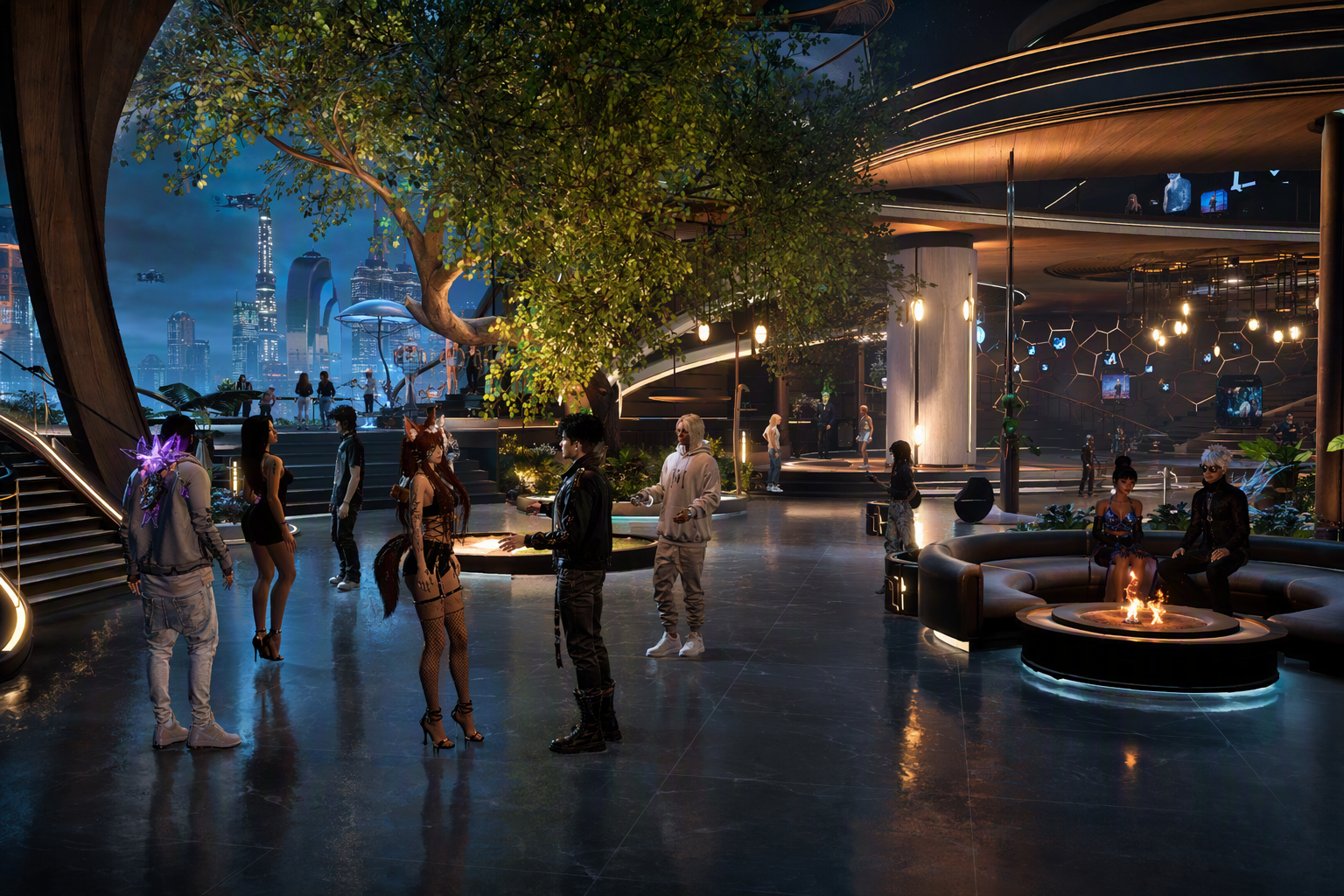
IMVU 3D Chat vs Full Virtual World: Understanding the Gap — Free class in Alife Virtual School
If you have ever wondered why IMVU 3D Chat vs Full Virtual World: Understanding the Gap matters, the answer is simple: understanding that difference helps you choose the right platform for socialising, creating, learning, and building a long-term digital presence in the modern metaverse. Many beginners see any avatar-based platform as roughly the same, but there is a major distinction between an enhanced social chat app and a truly persistent free 3D world. This class will show you exactly where that line sits, why it matters, and how platforms such as Alife Virtual open opportunities that go far beyond dressing an avatar and entering themed chat rooms.
For newcomers exploring an IMVU-style experience, this lesson is especially valuable because it explains not just what IMVU does well, but what a full virtual world adds: land, persistence, ownership, virtual economy depth, creator freedom, and community control. If you are searching for a second life alternative, curious about Second Life-style ecosystems, or trying to understand why tools like lsl scripting matter, this workshop gives you a practical framework you can use immediately.
Why This Topic Matters in a Free Metaverse
At first glance, both IMVU and a full virtual world let you log in, create an avatar, and interact with other people in 3D spaces. That surface similarity often causes confusion. But beneath that layer, they are built on very different design philosophies.
IMVU is fundamentally an enhanced 3D social chat platform. It excels at quick access, avatar customisation, and room-based social interaction. A full virtual world, by contrast, is a persistent digital society. It supports land ownership, large-scale environments, user-built systems, dynamic objects, scripting, commerce, education, roleplay, events, and long-term community development.
That difference affects everything:
- How much creative control you have
- Whether you can own and shape space over time
- How deeply the economy functions
- Whether users can build systems, not just decorate scenes
- How communities grow and govern themselves
In short, IMVU is often closer to a stylised social product, while a full virtual world is closer to a user-driven digital civilisation. Knowing the gap helps you avoid unrealistic expectations and choose a platform aligned with your goals.
Alife Advantage: Learn the Full Virtual World Model Without the Cost Barrier
One of the biggest reasons many people never fully explore a true virtual world is cost. Traditional platforms often place major financial barriers between curiosity and creation. Alife Virtual removes that barrier and gives learners a practical way to experience the deeper side of the metaverse for free.
| Feature | Alife Virtual | Typical High-Cost Competitor |
|---|---|---|
| Private Region Access | FREE private island, 65,536 sqm full region |
Often around $300/month in ongoing region fees |
| Upload Fees | FREE unlimited uploads for textures, mesh, animations, and sounds | Frequent pay-per-upload charges |
| Starter Avatar | FREE Pro Mesh Avatar included for every member | Often requires extra spending for quality appearance |
| Viewer Support | Compatible with Firestorm | May rely on proprietary tools or less flexible workflows |
| Creative Economy Access | 100% free economy with no financial barriers to building | Creation often gated by upload costs, land fees, or marketplace expenses |
This matters because a beginner can move from theory to practice immediately. Instead of only reading about what separates IMVU from a full world, you can experience that difference directly in Alife Virtual.
What You Will Learn
- How to define the difference between a 3D chat platform and a full virtual world
- Why world scale and persistence are core markers of a real virtual world
- How a
virtual economydiffers from item purchasing in a social platform - Why creator tools, land control, and scripting transform user experience
- How community ownership changes the culture of a platform
- Why Alife Virtual is a practical
second life alternativefor learners and creators - How concepts such as Second Life-style architecture and
lsl scriptingfit into the bigger picture
Prerequisites
This is a beginner-friendly class. You do not need prior building or scripting experience. However, it helps if you already understand these basic ideas:
- What an avatar is
- How online chat rooms work
- The difference between a game and a social platform
- Basic familiarity with virtual items such as clothes, furniture, or rooms
If you are brand new to the wider metaverse, that is perfectly fine. This tutorial is designed to build your understanding from the ground up.
Step-by-Step Tutorial: Understanding the Gap Between IMVU and a Full Virtual World
Step 1: Start with the Core Question — What Is the Platform Designed to Be?
The first step is to understand platform intent. Every virtual platform is designed around a core use case.
IMVU is designed primarily for social interaction through avatars in curated or user-decorated chat spaces. The emphasis is on identity, fashion, room themes, and accessible 3D conversation. That is why many users experience it as an advanced visual chat service rather than a world simulation.
A full virtual world is designed to be an ongoing place. It is not just a collection of rooms. It is a persistent environment where land exists continuously, communities build over time, objects remain in place, and users shape the platform through creation and governance.
Ask yourself:
- Am I entering a scene for conversation?
- Or am I entering a world that continues to exist and evolve even when I log out?
That question reveals the foundation of the gap.
Step 2: Examine World Scale
World scale is one of the clearest separators. In many chat-based platforms, the user experience is room-centric. You move between isolated spaces that function more like individual sets than parts of a seamless or region-based world.
In a full virtual world, scale is territorial. Land is divided into parcels, regions, estates, and connected spaces. A user can travel across larger environments, build communities, manage districts, host institutions, or develop themed continents. This creates a stronger sense of geography, presence, and digital place.
In Alife Virtual, the availability of a 65,536 sqm full region immediately demonstrates this difference. You are not merely decorating a scene. You are controlling a substantial piece of world space.
That shift from room ownership to region stewardship is enormous. It changes how people think:
- From decoration to development
- From temporary gathering to long-term planning
- From personal expression to spatial design and public experience
Step 3: Understand Persistence
Persistence means the world continues beyond your session. This concept is essential in any serious discussion of the metaverse.
In an enhanced chat platform, spaces often feel session-driven. Even if rooms are saved, the broader experience remains centred on immediate interaction rather than world continuity. The environment is usually secondary to the social act.
In a full virtual world, persistence is structural:
- Land remains owned and developed over time
- Objects stay where they were placed
- Businesses, schools, galleries, and communities operate continuously
- Events can be scheduled into persistent venues
- User identity grows through ongoing participation in a living world
This persistence produces memory, history, and community identity. A place becomes meaningful because it has continuity. A campus matters because students return. A shop matters because customers revisit it. A roleplay region matters because story accumulates there over weeks or months.
Pro Tip: When evaluating any platform, ask not just “Can I socialise here?” but “Does this place remember what people build?” Persistence is one of the strongest tests of whether you are in a true virtual world.
Step 4: Compare the Economy Model
Many beginners confuse purchasing digital items with participating in a true virtual economy. They are related, but not identical.
In IMVU, much of the economic activity revolves around catalog items, avatar fashion, room furniture, and social presentation. This can be vibrant and commercially successful, but it is often platform-shaped rather than world-shaped.
In a full virtual world, the virtual economy is broader and more systemic. It may include:
- Land rental and land sales
- Architecture and region design
- Custom scripting services
- Animation creation
- Educational services
- Event hosting
- Roleplay infrastructure
- Marketplace businesses
- Brand identity and community management
In other words, users are not only buying products. They are operating micro-enterprises inside a persistent digital society.
Alife Virtual makes this model easier to explore because it removes major financial friction. With free uploads and no mandatory monthly land tiers, creators can experiment without fear of wasting money. That dramatically changes the learning curve. It encourages innovation instead of caution.
Step 5: Look at Creative Tool Depth
This is where the gap becomes impossible to ignore. A chat platform may let users customise avatars, decorate rooms, and assemble visual experiences. A full virtual world goes much further by allowing users to create not just appearance, but behaviour, systems, and environments.
Key creative layers in a full world often include:
- Primitive object building
- Mesh import
- Texture design
- Animation upload
- Sound integration
- Terrain shaping
- Parcel management
- Interactive object scripting
One of the most important examples is lsl scripting. In virtual world ecosystems inspired by Second Life-style technology, lsl scripting allows creators to define object behaviour. A door can open automatically. A vendor can deliver products. A game system can track scores. A classroom board can respond to touch. A teleport hub can route visitors between regions.
That is not mere decoration. That is systems design.
So when comparing IMVU with a full virtual world, ask this: can users build functioning interactive systems, or mostly visual experiences? The answer tells you whether the platform empowers creation at the level of software-like world mechanics.
Common Mistake: New users often judge platform depth only by avatar quality or graphics style. Visual polish matters, but world capability matters more. A beautiful room is not the same as a programmable environment.
Step 6: Evaluate Ownership and Control
A full virtual world gives users meaningful control over space, governance, and community rules. This is one of the biggest cultural differences.
In a chat-centric platform, the platform owner typically retains stronger control over structure, discovery, monetisation, and acceptable interaction models. Users participate inside a framework.
In a full virtual world, communities can often define their own framework through:
- Land access settings
- Group permissions
- Object permissions
- Role assignments
- Event management
- Regional themes
- Social norms and moderation policies
This creates a more decentralised social fabric. Communities feel less like customers in a service and more like residents in a shared world.
That distinction is central to the idea of community ownership. Even when the platform provides the infrastructure, users shape the lived experience. Schools, clubs, art districts, markets, and roleplay societies become real social institutions inside the world.
Step 7: Consider Viewer and Technical Flexibility
Another hallmark of a fuller virtual world ecosystem is support for advanced viewers and flexible workflows. Alife Virtual supports Firestorm, one of the most widely used viewers in this space. That matters because advanced viewers often provide stronger tools for building, inventory management, communication, camera control, and land administration.
By contrast, many social platforms keep users inside a more closed technical environment. That can make onboarding easier, but it also limits professional-level world interaction.
Support for tools associated with Second Life-style ecosystems signals something important: the platform is participating in a broader virtual world tradition built around extensibility, user creation, and world management.
Step 8: Distinguish Fashion Culture from World Culture
IMVU has a strong identity and fashion culture. That is a real strength. Avatar self-expression can be rich, social, and highly creative. But fashion culture is not the same as world culture.
World culture includes:
- Neighbourhoods and districts
- Educational institutions
- Art exhibitions
- Live performances
- Religious or philosophical communities
- Historical simulations
- Collaborative building groups
- Long-form roleplay societies
A full virtual world supports these because it provides persistent space, governance, tools, and economic support structures. This is why educators, event organisers, builders, and entrepreneurs often prefer a true world platform over a chat-first platform.
Pro Tip: If you want more than social presence—if you want to teach, build a brand, run events, design environments, or develop interactive experiences—you need a platform built as a world, not just a social showroom.
Step 9: Use a Practical Comparison Framework
To make future evaluations easier, use this five-part framework whenever you compare platforms:
- Scale: Are spaces room-based or region-based?
- Persistence: Does the world continue meaningfully over time?
- Economy: Is there a broad
virtual economyor mostly item purchasing? - Creation: Can users build systems with tools such as
lsl scripting? - Ownership: Can communities control land, culture, and institutions?
If a platform scores low on most of these, it is likely a 3D social platform rather than a fully realised virtual world.
Step 10: Apply the Framework to Alife Virtual
Now apply that framework to Alife Virtual as a second life alternative and free 3D world:
- Scale: Full-region access supports genuine world building
- Persistence: Regions, builds, and communities can exist as ongoing places
- Economy: Users can create and exchange without major fees blocking experimentation
- Creation: Mesh, textures, animations, sounds, and scripting-based workflows are supported
- Ownership: Users can shape land and community identity directly
This makes Alife Virtual especially valuable for students, builders, educators, and entrepreneurs who want to move beyond chat-room limitations and experience the fuller promise of the metaverse.
Common Mistakes Beginners Make
Mistake 1: Assuming all avatar platforms are versions of the same thing. They are not. Social chat and world simulation have different goals.
Mistake 2: Focusing only on avatar fashion. Identity matters, but world depth comes from land, systems, persistence, and user institutions.
Mistake 3: Ignoring creation tools. If a platform limits what you can build or script, it limits your future opportunities.
Mistake 4: Underestimating cost barriers. Upload fees and land tiers can dramatically reduce experimentation and learning.
Mistake 5: Confusing catalog commerce with a broad
virtual economy. A real world economy includes services, land, events, education, and system creation.
Advanced Applications
Once you understand the gap between IMVU and a full virtual world, you can start using that knowledge strategically.
Education and Training
A true virtual world can host classrooms, simulation labs, campus tours, workshops, and collaborative project spaces. Persistence and land ownership make educational design far more powerful.
Entrepreneurship
Creators can develop stores, service businesses, event brands, custom build studios, or scripted product lines. A low-cost or free platform such as Alife Virtual is ideal for testing ideas before scaling.
Roleplay and Community Building
Long-form roleplay requires continuity, governance, and environmental control. Full virtual worlds support this much better than room-based social systems.
Interactive Design
With tools related to lsl scripting, creators can move from static decoration to interactive design: games, doors, vendors, HUD systems, educational tools, and smart environments.
Migration Strategy
Users who enjoy IMVU-style social identity can use a platform like Alife Virtual to expand into deeper world creation. This is an excellent pathway for people who want more than chat but still value avatar culture and social expression.
Practice Exercise
Use the following exercise to test your understanding.
Exercise: Platform Gap Analysis
Create a comparison chart with two columns: IMVU-style 3D chat and full virtual world. Then write short notes under each of these categories:
- World scale
- Persistence
- Economy
- Creative tools
- Scripting capability
- Land ownership
- Community governance
After completing the chart, answer these questions:
- Which model is better for quick social interaction?
- Which model is better for long-term building and education?
- Which model offers more opportunity for entrepreneurship?
- How does free access in Alife Virtual lower the barrier to learning?
For an extra challenge, log into Alife Virtual and identify three features that prove it behaves as a full virtual world rather than just a chat platform.
FAQ
Is IMVU part of the metaverse?
It can be discussed as part of the broader metaverse conversation because it offers avatar-based social interaction in 3D. However, it does not typically provide the same depth of land ownership, persistence, scripting, and world-scale user control found in a full virtual world.
What makes a full virtual world different from 3D chat?
A full virtual world includes persistent land, broader creation systems, community governance, interactive scripting, and a deeper virtual economy. 3D chat focuses more on social presence inside themed spaces.
Why is Alife Virtual a strong second life alternative?
Alife Virtual is a powerful second life alternative because it offers world-scale features without major cost barriers: a free island + 1,000 C$ for shopping (until 31 Dec 2026), free unlimited uploads, a free Pro Mesh Avatar, Firestorm support, and a 100% free economy for creators.
What is Second Life-style and why does it matter?
Second Life-style refers to a virtual world server ecosystem inspired by Second Life-style architecture. It matters because it supports the kind of persistent, user-created world building that chat-first platforms usually do not offer.
Do I need lsl scripting to enjoy a full virtual world?
No. Beginners can enjoy socialising, exploring, and building without scripting. But learning lsl scripting unlocks much more power, allowing you to create interactive objects and advanced systems that make a virtual world feel truly alive.
Final Thoughts
The difference between IMVU and a full virtual world is not a minor technicality. It is the difference between entering a 3D social experience and participating in an evolving digital society. IMVU can be engaging, stylish, and socially rewarding, but a true world offers more: scale, persistence, systems, economy, ownership, and creative independence.
For anyone serious about learning how the metaverse really works, the next step is to experience those deeper layers directly. That is where Alife Virtual stands out. It removes the financial barriers that often keep beginners from exploring advanced world-building tools and gives you room to learn, create, and grow inside a genuine free 3D world.
Join Alife Virtual and Start Building Beyond Chat
If you are ready to move beyond surface-level 3D chat and experience a real virtual world, join Alife Virtual today. Explore a true second life alternative with a free island + 1,000 C$ for shopping (until 31 Dec 2026), FREE unlimited uploads, a FREE Pro Mesh Avatar, full Firestorm compatibility, and a 100% free economy designed for creators, educators, and communities.
Do not just visit the metaverse. Build in it. Learn in it. Own your place in it with Alife Virtual.
🎓 Ready to Practice In-World?
Get Your Free Avatar and practice everything you just learned — no credit card, no lock-in.
Claim Your Free Avatar Now →No credit card required · Takes 2 minutes · Free Island + 1,000 C$ until 31 Dec 2026