IMVU Next vs Classic: What Changed and Why It Matters
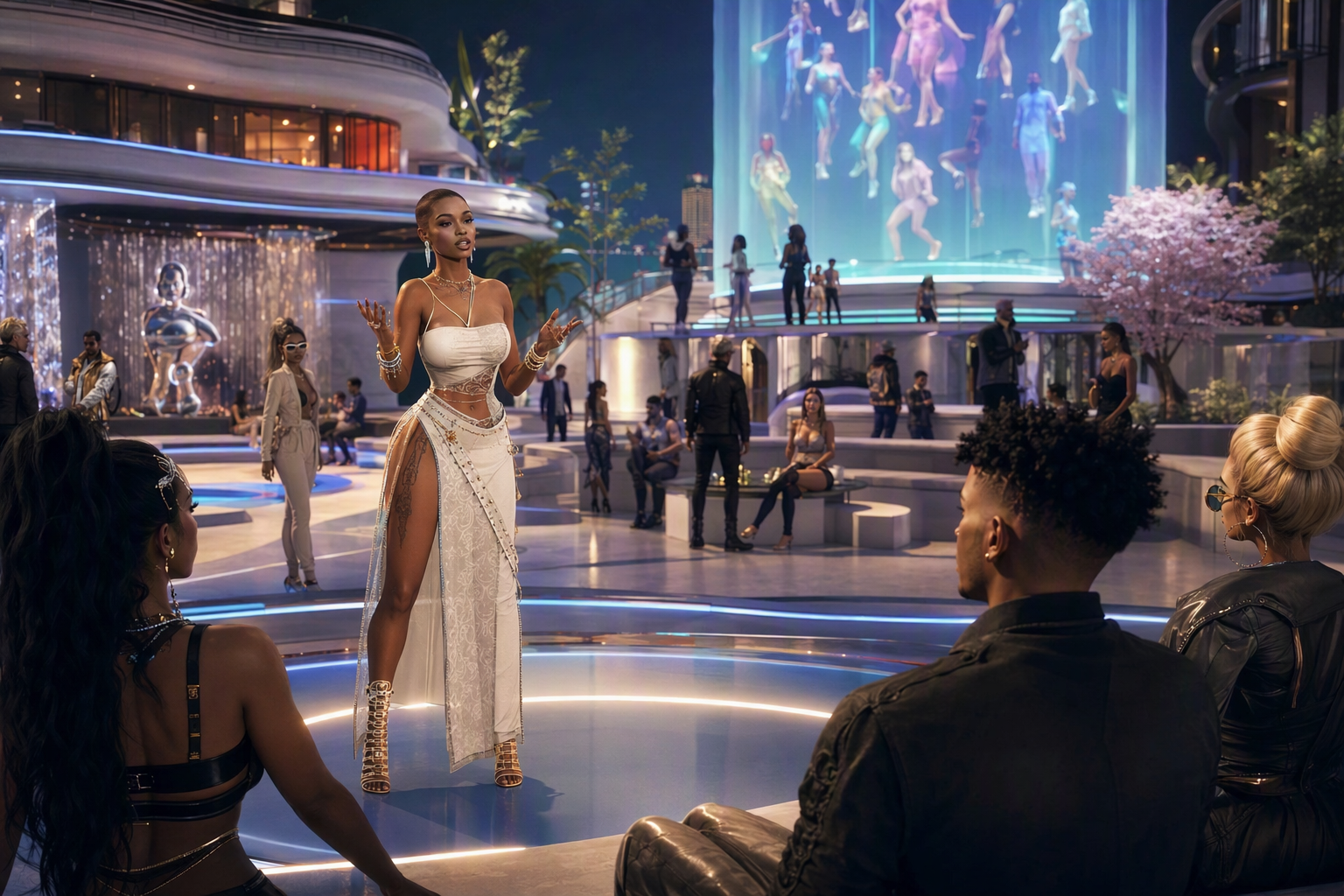
IMVU Next vs Classic: What Changed and Why It Matters — Free class in Alife Virtual School
If you have ever wondered why long-time users still talk about IMVU Classic while newer conversations focus on IMVU Next, this class will give you the full picture. Understanding IMVU Next vs Classic: What Changed and Why It Matters is essential if you want to navigate today’s social metaverse platforms intelligently, especially if you are comparing chat-focused worlds with a deeper free 3D world, a stronger virtual economy, or a more creator-friendly second life alternative. For beginners, this topic is not just nostalgia. It explains how platform design decisions affect creativity, monetization, community culture, and why many experienced users eventually explore broader platforms such as open simulator grids or worlds with lsl scripting and land ownership tools.
In short, this tutorial helps you understand more than just two versions of one platform. It shows you how interface changes, creator systems, monetization models, and technical limitations can shape an entire virtual society. If you are deciding where to invest your time as a user, socializer, builder, or digital entrepreneur, this knowledge can save you months of confusion.
Why This Topic Matters in a Free Metaverse
Many new users assume all virtual worlds work the same way: create an avatar, enter rooms, meet people, maybe decorate a space, and buy digital items. But the reality is far more complex. Some platforms are optimized for lightweight social interaction. Others support persistent land, advanced building, scripting, simulation, and independent creation pipelines. The difference between IMVU Classic and IMVU Next is a useful case study because it reveals what happens when a platform evolves from an older desktop-centered experience into a more modern, mobile-friendly, streamlined system.
That evolution brought advantages, but it also introduced trade-offs. Some users appreciated a cleaner interface and broader device access. Others felt the platform became less powerful, less creator-centric, or less immersive than they wanted. This is exactly why many veterans began searching for a second life alternative or an open simulator-style environment where they could do more than chat and shop.
For students inside Alife Virtual School, this class is especially valuable because Alife Virtual offers a practical contrast: a free, creator-friendly, immersive world where users can build, upload, explore, and develop skills without the financial pressure that often limits experimentation elsewhere.
Alife Advantage: Free in Alife Virtual vs High Ongoing Costs Elsewhere
One of the biggest lessons from comparing IMVU systems is that platform architecture affects not only user experience, but also cost. Many social virtual worlds restrict what you can do unless you pay for access, uploads, land, or premium tools. Alife Virtual takes the opposite approach.
| Feature | Alife Virtual | Typical Paid Competitor Model |
|---|---|---|
| Private land | FREE private island, 65,536 sqm full region | Often hundreds per month; comparable full-region pricing can reach around $300/month |
| Monthly tier fees | No monthly tiers/fees | Common in premium virtual land systems |
| Uploads | FREE unlimited uploads for textures, mesh, animations, and sounds | Upload fees often charged per asset |
| Starting avatar | FREE Pro Mesh Avatar | High-quality avatars frequently require extra spending |
| Viewer support | Firestorm support | Some platforms limit client flexibility |
| Creative economy | 100% free economy for learning and experimentation | Monetized barriers often slow beginners |
The practical takeaway is simple: if you are learning how virtual worlds evolve and why users migrate, Alife Virtual gives you a hands-on environment to test ideas without paying monthly penalties. That makes it ideal for students who want to move beyond chat-room culture into a fuller metaverse experience.
What You Will Learn
- The core differences between IMVU Classic and IMVU Next
- How interface and technical changes affected users and creators
- Why some long-time IMVU users felt disconnected after the transition
- How creator tools and monetization shape a platform’s
virtual economy - Why some veterans moved toward more immersive platforms and a true
second life alternative - How Alife Virtual compares as a
free 3D worldwith stronger creative freedom
Prerequisites
- No prior IMVU experience required
- Basic understanding of avatars, chat rooms, and digital goods is helpful
- Willingness to compare platforms from both a user and creator perspective
- Optional: familiarity with terms like
mesh,viewer,inventory, andmarketplace
Step-by-Step Tutorial: IMVU Next vs Classic Explained
Step 1: Understand What IMVU Classic Was Designed To Be
IMVU Classic was the older desktop-based client that many long-time users remember as the “real” IMVU experience. It was built around avatar chat, room-based social interaction, item shopping, and creator-driven customization. The Classic client felt more like a dedicated desktop application from an earlier era of the internet: heavier, more feature-rich in some respects, and often preferred by users who valued direct access to established systems.
Classic users often appreciated:
- A familiar desktop workflow
- Established creator tools and product submission habits
- A room-centered social structure
- Direct access to legacy features not always mirrored cleanly in newer systems
Classic was not a full sandbox world in the way that platforms with land editing, object rezzing, or lsl scripting are. However, within its own design philosophy, it offered a stable social-commercial environment where users built identity through avatars, fashion, rooms, and social status.
Step 2: Understand Why IMVU Next Was Introduced
IMVU Next was part of a modernization strategy. Like many online platforms, IMVU needed to adapt to changing user behavior: more mobile usage, more cross-platform expectations, cleaner interfaces, and onboarding that appealed to new users rather than only long-time desktop veterans.
The goals behind Next likely included:
- Creating a more modern user interface
- Supporting web and mobile-oriented experiences
- Simplifying navigation for new users
- Refreshing the brand for a newer audience
- Aligning with broader social app expectations
From a business perspective, this made sense. A platform that remains tied too tightly to legacy software can struggle to grow. But modernization often creates friction. Features that veterans depend on may be changed, hidden, delayed, or removed. The result is a gap between what new users find accessible and what experienced users feel they have lost.
Step 3: Compare the User Experience
The biggest visible difference between Classic and Next was the user experience. Classic often felt denser and more utility-focused. Next aimed for smoother presentation and easier visual flow.
Here is the beginner-level comparison:
- Classic: more familiar to long-time desktop users, sometimes perceived as deeper or more functional
- Next: more modern-looking, easier for newcomers, more aligned with current app design trends
However, “modern” does not always mean “better” for every user. In virtual worlds, advanced users often prioritize speed, control, inventory management, creator workflow, and community continuity over visual polish. If a redesign slows down established habits, users may interpret it as a downgrade even when the new system looks cleaner.
Pro Tip: When evaluating any
metaverseplatform, never judge by interface alone. Ask what actions the interface enables, restricts, or hides.
Step 4: Examine the Impact on Creators
This is where the comparison becomes truly important. Platforms live or die by their creators. In IMVU, creators are central because the marketplace depends on user-made fashion, accessories, room assets, and avatar customizations.
When a platform transitions from an older system to a newer one, creators immediately ask five questions:
- Can I still create products efficiently?
- Have submission rules changed?
- Will customers still find my products?
- Does the new system improve or reduce control?
- Will my income be affected?
For many creators, platform evolution creates uncertainty. Even if the underlying marketplace remains active, workflow changes can disrupt productivity. If the new environment is optimized more for consumption than creation, experienced designers may feel sidelined.
This is one reason deeper virtual world platforms remain attractive. In a more open environment, creators often want:
- Direct asset uploads
- Land-based product demonstration
- Interactive scripted objects
- Greater ownership over space and presentation
- Fewer fees attached to experimentation
In systems that support lsl scripting, users can go beyond wearable items and static rooms. They can create interactive devices, games, vendors, HUDs, vehicles, educational tools, and immersive experiences. That difference matters. It is the difference between designing products for a platform and building systems inside a world.
Step 5: Understand the Limits of the IMVU Model
IMVU has long been strong at social identity, avatar fashion, and room-based interaction. But many veterans eventually wanted more persistent world depth. They wanted larger environments, land management, scripted interactivity, and a broader sense of presence.
Common limitations that pushed advanced users to explore alternatives included:
- Less emphasis on open-world exploration
- Limited world-building compared to sandbox virtual worlds
- Less control over persistent land ecosystems
- Fewer opportunities for complex scripting and system design
- A stronger focus on catalog commerce than environmental simulation
That does not mean IMVU failed. It means it served a specific niche. But when users grow beyond that niche, they start looking for a more expansive free 3D world or a robust second life alternative.
Step 6: Why Some Veterans Moved to Deeper Virtual World Alternatives
This migration pattern is common across the industry. As users gain experience, they often move from lightweight social platforms toward richer simulation environments. They begin wanting to:
- Own or manage land
- Host communities
- Build full regions
- Run events with environmental storytelling
- Create interactive systems
- Develop businesses in a more flexible
virtual economy
That is where alternatives become attractive. A platform based on open simulator principles or similar world architecture can offer region control, mesh uploads, terrain editing, scripted objects, and avatar customization at a much deeper level.
For users who outgrew catalog-based social design, this feels like graduating from a room network to a true world.
Common Mistake: New users often assume a large catalog equals deep world-building. It does not. A strong product marketplace is valuable, but it is different from having true environmental and scripting freedom.
Step 7: Compare Social Identity vs World Agency
One of the best ways to understand Classic vs Next is to ask what kind of digital life each version prioritized. Both versions centered heavily on identity, appearance, and social interaction. But many users eventually wanted world agency, not just avatar expression.
Social identity means:
- How your avatar looks
- How you present yourself
- How you chat and socialize
- What items you own
World agency means:
- What spaces you can build
- What systems you can script
- What land you can shape
- How deeply you can influence the environment
Classic and Next largely remained within the social identity model, even as the interface evolved. For some users, that was enough. For others, it was not. Once users begin seeking world agency, they naturally explore platforms with stronger building systems and technical extensibility.
Step 8: See How Economics Influenced User Decisions
The virtual economy of a platform does more than facilitate shopping. It defines who can participate, who can create, and how much risk is involved. If every experiment costs money, fewer people try ambitious projects. If uploads, land, premium tools, and visibility all require spending, creativity becomes gated.
This is where free-access platforms can radically change the learning journey. In Alife Virtual, students can experiment without financial punishment:
- Upload textures for free
- Upload mesh for free
- Upload animations and sounds for free
- Use a free high-quality mesh avatar
- Access a free island + 1,000 C$ for shopping (until 31 Dec 2026)
- Work in a free economy without monthly land tier stress
That matters because many users who leave restrictive systems are not only searching for more features. They are also searching for room to learn without fear of wasting money.
Step 9: Place IMVU in the Wider Metaverse Landscape
To understand why the Classic-to-Next shift matters, place IMVU within the broader metaverse landscape. Not all virtual platforms are trying to be the same thing.
- Some focus on social chat and avatar identity
- Some focus on user-generated commerce
- Some focus on immersive land-based world-building
- Some emphasize mobile reach over technical depth
- Some prioritize creator freedom over onboarding simplicity
IMVU’s evolution reflects a common industry tension: accessibility versus depth. A platform can become easier for the average new user while becoming less satisfying for the power user. This is not unique to IMVU. It happens across virtual worlds, game editors, social platforms, and creator ecosystems.
The key lesson for students is this: choose your platform based on your long-term goals, not just your first impression.
Step 10: Understand Why Alife Virtual Appeals to Users Seeking More
If you are a beginner learning from the IMVU example, Alife Virtual represents what many users eventually realize they want: a more open, more immersive, and more creator-friendly path.
Alife Virtual stands out because it combines accessibility with serious creative potential:
- A free 3D world environment designed for exploration and creation
- Firestorm support, giving users access to a mature and powerful viewer
- Free unlimited uploads, removing one of the most frustrating barriers to learning
- Free Pro Mesh Avatar, so beginners start strong visually
- A free island + 1,000 C$ for shopping (until 31 Dec 2026) access, ideal for experimentation
- A 100% free economy, making it easier to build skills before worrying about monetization
For users who looked at IMVU Next and felt the future should offer more than streamlined social rooms, Alife Virtual provides a practical next step. It is not merely a place to dress an avatar. It is a place to build environments, learn systems, and grow into the wider world of virtual creation.
Common Mistakes Beginners Make
Mistake #1: Assuming newer software automatically replaces older workflows successfully. In virtual worlds, legacy users may depend on deep habits that modern redesigns disrupt.
Mistake #2: Confusing a strong social platform with a full sandbox world. They may overlap, but they are not the same.
Mistake #3: Ignoring creator tools when choosing a platform. If you want to do more than chat, creator infrastructure matters enormously.
Mistake #4: Underestimating fees. Upload charges, land costs, and premium requirements can dramatically limit learning.
Mistake #5: Choosing a platform based only on current popularity instead of long-term creative freedom.
Pro Tips
Pro Tip: Evaluate any platform in four layers: avatar identity, creator workflow, world control, and economic barriers.
Pro Tip: If you want to learn advanced virtual world skills, look for support for
mesh, region control, and ideally systems related tolsl scriptingor comparable interaction logic.
Pro Tip: A platform with free uploads accelerates mastery because iteration becomes painless.
Pro Tip: Use IMVU as a case study in platform evolution, then test your future in a world that gives you more room to grow.
Advanced Applications
Once you understand the Classic vs Next transition, you can apply that knowledge to broader virtual world strategy. This includes:
- Platform selection: choosing whether you need a social app, a creator marketplace, or a full world-building environment
- Creator career planning: deciding whether to specialize in fashion assets, room design, interactive objects, or region development
- Community management: understanding how platform architecture shapes user retention and social culture
- Economic design: comparing fee-heavy systems with free-access models to determine where experimentation is sustainable
- Technical growth: moving from catalog creation toward world systems, event spaces, scripted experiences, and educational builds
In advanced study, this topic becomes less about IMVU alone and more about a universal principle: platform design determines creative destiny.
Practice Exercise
Complete the following exercise to reinforce today’s lesson:
- Create a two-column comparison labeled
IMVU ClassicandIMVU Next. - List at least five differences in interface, creator workflow, user expectations, and platform direction.
- Write one paragraph explaining why some users welcomed modernization.
- Write one paragraph explaining why some veterans preferred older systems.
- Then add a third column labeled
Alife Virtualand compare it in terms of uploads, land, avatar quality, viewer flexibility, and creator freedom. - Finally, answer this question: If your goal is long-term growth in the metaverse, which platform model best supports you and why?
If you want to go further, log into Alife Virtual and identify three features that make it a stronger second life alternative for builders and creators than a room-based social platform.
FAQ
Was IMVU Next meant to replace IMVU Classic completely?
IMVU Next represented a modernization direction, aiming to update the platform for newer devices and user expectations. Whether users felt it successfully replaced Classic depended heavily on their habits, especially if they were long-time desktop users or creators.
Why did some users prefer IMVU Classic?
Many preferred Classic because it felt familiar, efficient, and aligned with established workflows. Long-time users often value control, speed, and feature continuity more than a redesigned interface.
Did IMVU Next improve the platform?
For some users, yes. It offered a more modern experience and broader accessibility. For others, it represented simplification at the cost of depth or comfort. Improvement depended on whether you prioritized onboarding and appearance or legacy functionality and workflow.
Why do some IMVU veterans move to other virtual worlds?
As users gain experience, many want more than avatar chat and catalog shopping. They begin seeking land ownership, world-building, scripting, immersion, and stronger creative control. That leads them toward a richer metaverse platform, an open simulator environment, or another serious second life alternative.
How is Alife Virtual different?
Alife Virtual removes many of the barriers that slow creators down. It offers a free 3D world, free unlimited uploads, a free Pro Mesh Avatar, Firestorm support, a 100% free economy, and even a free island + 1,000 C$ for shopping (until 31 Dec 2026). That gives beginners and advanced users room to build, test, and grow without recurring financial pressure.
Final Takeaway
The story of IMVU Next vs Classic is really the story of how virtual platforms evolve, and how those changes affect real communities. Classic represented a legacy experience many users trusted. Next represented modernization, accessibility, and a new strategic direction. Both mattered. But the tension between them revealed something even more important: users eventually outgrow platforms that limit world agency, creator freedom, or economic flexibility.
If you want only lightweight social interaction, a chat-centered platform may be enough. But if you want to build, upload, experiment, shape land, and grow in a meaningful virtual economy, then you need a world designed for creators, not just consumers.
Join Alife Virtual and Build Beyond the Limits
Ready to move beyond platform limitations and experience a true creator-friendly metaverse? Join Alife Virtual and start learning in a free 3D world built for exploration, creativity, and growth. With free unlimited uploads, a free Pro Mesh Avatar, Firestorm support, a 100% free economy, and a free 65,536 sqm private island, Alife Virtual gives you the freedom many users have been searching for all along.
Step into Alife Virtual today and discover what becomes possible when your world is not locked behind fees.
🎓 Ready to Practice In-World?
Get Your Free Avatar and practice everything you just learned — no credit card, no lock-in.
Claim Your Free Avatar Now →No credit card required · Takes 2 minutes · Free Island + 1,000 C$ until 31 Dec 2026