IMVU Rooms vs Virtual World Islands: What's the Difference?
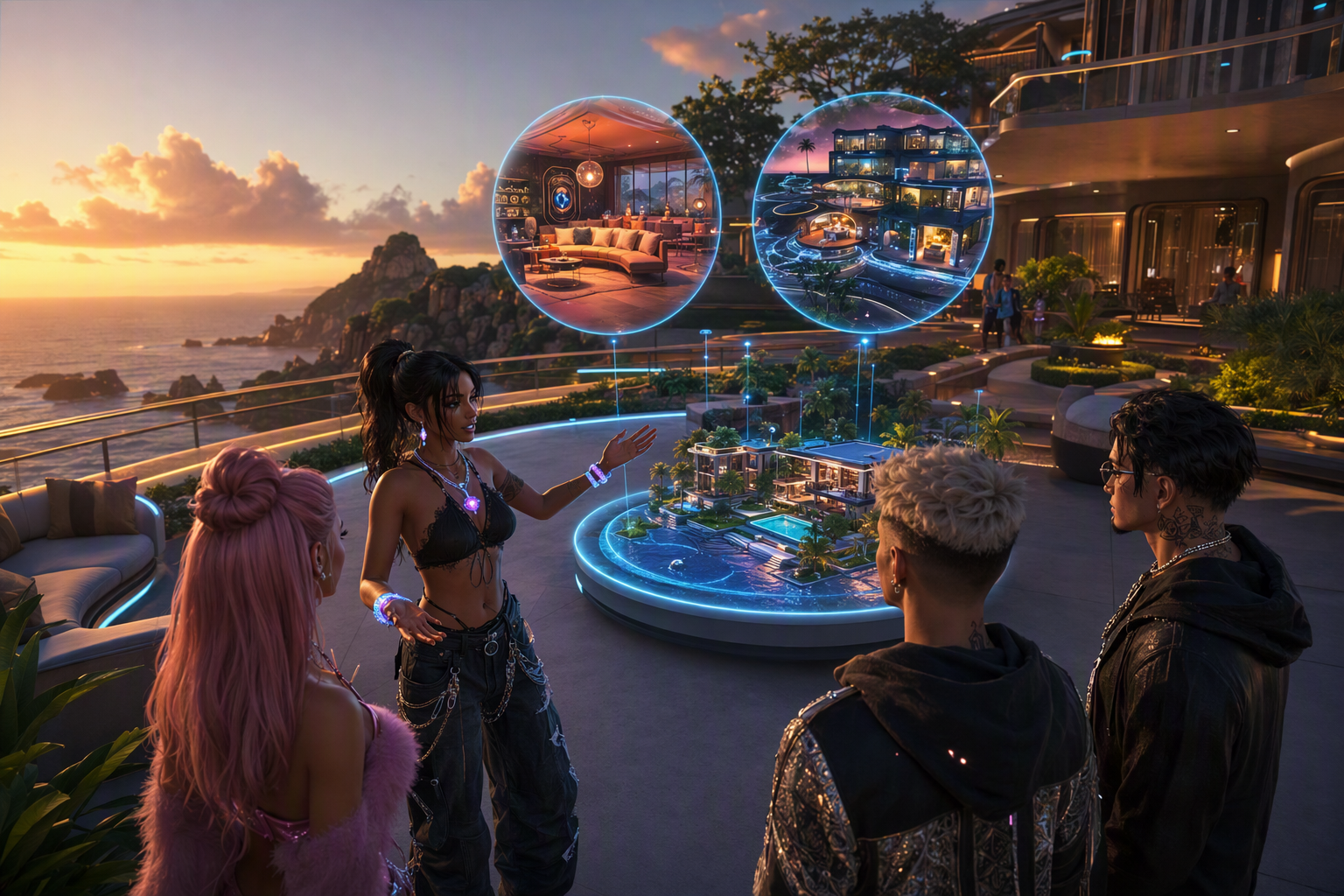
IMVU Rooms vs Virtual World Islands: What's the Difference? — Free class in Alife Virtual School
If you have ever wondered why an IMVU-style room feels very different from owning land in a true virtual world, this class will give you the answer with clarity and precision. IMVU Rooms vs Virtual World Islands: What's the Difference? is one of the most important beginner topics for anyone moving from simple chat spaces into a real metaverse experience. In Alife Virtual, you are not limited to a decorative room scene for social chat. You can own, shape, build, script, and grow a full island-scale environment inside a free 3D world that behaves more like an open simulator-style world than a static room platform.
This matters because the platform model changes everything: your creative freedom, your social possibilities, your building workflow, and your long-term identity in the world. A room-based system is often about entering a contained scene for a quick interaction. A full island system is about establishing presence, permanence, community, events, commerce, education, roleplay, and large-scale design. If you are looking for a second life alternative with serious creative potential and no financial barrier, understanding this distinction will save you time and help you choose the right platform for your goals.
In this Alife Virtual School class, you will learn the fundamental difference between room-based chat environments and island-based virtual world ownership, including scale, permanence, building tools, social depth, and how these systems support a real virtual economy. We will also explain where lsl scripting, mesh uploads, region planning, and viewer-based creation fit into the picture so you can make informed decisions as a beginner.
Why This Skill Matters in a Free Metaverse
Many new users assume all 3D social platforms work the same way. They do not. The difference between a room and an island is not just “size.” It is a difference in platform philosophy.
In a room-based platform, you typically enter a pre-defined or lightly customized social scene. The room exists primarily as a container for avatars, chat, and visual presentation. In a full virtual world, land is part of a persistent geography. It supports movement, building, scripting, permissions, ownership, events, and often a broader creator economy. That means your digital presence can expand from “I visit spaces” to “I run spaces.”
For creators, educators, community leaders, DJs, roleplayers, merchants, and world-builders, that difference is enormous. A room may be enough for casual socializing. An island becomes infrastructure. It can host a school, city, gallery, shopping district, roleplay sim, game arena, or private estate. When you understand this distinction, you stop thinking like a guest and start thinking like an owner, designer, and metaverse participant.
Alife Advantage: Free in Alife vs High Monthly Costs Elsewhere
One of the biggest barriers to entering a true island-based world has traditionally been cost. Competitor platforms often charge substantial setup fees, monthly region tiers, and upload fees. Alife Virtual removes those barriers and makes advanced virtual world ownership accessible to beginners.
| Feature | Alife Virtual | Typical Competitor Model |
|---|---|---|
| Private island access | FREE full region for 7 days (free trial) | Often expensive setup plus monthly tier |
| Region size | 65,536 sqm full region | Comparable size often costs heavily |
| Monthly fees | No monthly tiers/fees | Can be around $199/mo in Second Life-style models |
| Uploads | FREE unlimited uploads for textures, mesh, animations, sounds | Per-upload fees are common |
| Starter avatar | FREE Pro Mesh Avatar | High-quality avatar upgrades may cost extra |
| Viewer support | Firestorm compatible | May require custom or limited clients |
| Creative economy | 100% free economy | Creation often gated by fees |
The practical result is simple: in Alife Virtual, beginners can learn island ownership and full-world building without risking hundreds of dollars. That makes it a strong second life alternative and a welcoming entry point into the broader metaverse.
What You Will Learn
- The core difference between an
IMVU-style room and a persistent virtual world island - How scale changes what you can build, host, and manage
- Why permanence matters for identity, community, and long-term projects
- How building tools in Alife Virtual go beyond room decoration
- How
lsl scriptingand object permissions create interactive environments - Why islands support deeper social structures than isolated chat rooms
- How island ownership fits into a real
virtual economy - How to evaluate whether you need a room, parcel, or full region for your goals
Prerequisites
- A basic understanding of avatars, chat, and moving in a 3D world
- An Alife Virtual account
- A compatible viewer, ideally
Firestorm - Willingness to think beyond “decorating a scene” and toward “building a world”
No advanced building experience is required. This is a beginner-friendly class.
Step-by-Step Tutorial: Understanding the Difference
Step 1: Define the Room-Based Model
An IMVU-style room is best understood as a contained social scene. Users enter the room, chat, pose, socialize, and sometimes interact with furniture or decorative items. The room is usually the main unit of experience.
Key characteristics of the room model include:
- A fixed or semi-fixed scene size
- Social interaction centered inside one enclosed space
- Limited environmental expansion
- Decorative customization rather than world-scale development
- Experiences that are often session-based rather than geographically persistent
This model is excellent for lightweight socializing. It is approachable, visually immediate, and easy to understand. But it is not the same as owning part of a persistent world.
Step 2: Define the Island-Based Virtual World Model
A virtual world island in Alife Virtual is a region-scale environment inside a persistent world framework. Instead of one decorative room, you control a large area of virtual land that can contain terrain, buildings, roads, water, sky settings, interactive systems, event spaces, stores, roleplay zones, and more.
In Alife Virtual, a private island can be a full 65,536 sqm region. That is not just “a bigger room.” It is land with structure, layout, governance, access controls, and development potential.
Key characteristics of the island model include:
- Persistent geography
- Large-scale spatial planning
- Terrain and environment control
- Object placement at world scale
- Interactive content through
lsl scripting - Community hosting and event management
- Long-term identity and place-building
This is why island ownership is central to the idea of a true metaverse. You are not just entering a scene. You are shaping a world.
Step 3: Compare Scale
Scale is the first major distinction. A room is usually optimized for a handful of avatars interacting in a compact setting. An island is designed for movement, exploration, zoning, and multiple functions.
Ask yourself these questions:
- Can the space include roads, districts, beaches, forests, clubs, shops, and homes?
- Can visitors explore rather than simply stand or sit in one scene?
- Can the land be divided into thematic or functional areas?
In a room model, the answer is often limited. In an island model, the answer is yes. You can create arrival points, event venues, residential zones, classrooms, and immersive environments all within one region.
Pro Tip: Beginners often underestimate how much scale affects user behavior. A larger environment encourages discovery, repeat visits, and stronger emotional attachment because people remember places, not just conversations.
Step 4: Compare Permanence
Permanence is the second major distinction. A room may function like a temporary social container. An island functions like owned digital territory in a persistent world.
Permanence creates:
- A recognizable home base
- Brand identity for creators and communities
- Repeatable event hosting
- Long-term design investment
- Land-based reputation inside the world
When your environment is persistent, your work accumulates value over time. A gallery can become known. A school can establish a campus. A club can build a following. A roleplay sim can maintain continuity. This is a foundational difference between room chat and virtual world settlement.
Step 5: Compare Building Tools
In room-based systems, customization often focuses on selecting products, placing furniture, choosing decor, and arranging scene elements. That can be enjoyable, but it is usually bounded by the room format.
In Alife Virtual, building tools are much broader. You can:
- Rez primitives and construct structures
- Import mesh models
- Upload textures, sounds, and animations for free
- Use linked objects and permissions
- Apply scripts to create doors, vendors, teleporters, HUD systems, games, and interactive devices
- Terraform or plan region-scale layouts depending on land controls
This is where a true open simulator-style workflow becomes visible. Building is not just decoration. It is systems design.
Because Alife Virtual offers free unlimited uploads, beginners can experiment without worrying about upload fees. That dramatically changes learning speed. In fee-based systems, every test can feel expensive. In Alife, iteration is encouraged.
Common Mistake: New users sometimes treat a full island like a giant room and fill one corner with furniture while leaving the rest empty. Think in zones: arrival, social, scenic, commercial, private, and interactive. World planning matters.
Step 6: Understand LSL Scripting and Interactivity
A major difference between static scene customization and a true virtual world is scripting. In Alife Virtual, lsl scripting allows objects to react, communicate, animate, move, sell, grant access, detect avatars, or trigger events.
Examples include:
- Doors that open on touch
- Teleport boards that move visitors around a region
- Vendors for digital goods
- Game systems and scoreboards
- Roleplay tools
- Security systems and group access controls
- Educational quiz objects
This transforms land into a functional environment rather than a visual backdrop. A room may look attractive, but an island can behave like a living system.
Even if you are not a scripter yet, it is important to understand that island ownership supports growth. You can begin with simple builds and later add lsl scripting for advanced interactivity.
Step 7: Compare Social Depth
Social depth is often overlooked. A room supports conversation. An island supports society.
Here is the difference:
- A room hosts a gathering.
- An island can host a community.
Why? Because social depth emerges from repeated use of persistent places with multiple functions. On an island, visitors do not just arrive and chat. They explore, shop, attend events, join groups, return for roleplay sessions, work on collaborative builds, or become residents. Space design affects social complexity.
A full region can support:
- Scheduled classes
- Music venues
- Markets and creator showcases
- Adventure areas
- Private residential sections
- Community hubs
- Immersive roleplay environments
This is one reason island ownership is so important in any serious metaverse discussion. Social worlds become richer when they are spatially meaningful and persist over time.
Step 8: Compare the Creator and Economic Model
The room model often emphasizes consumption of pre-made content. The island model supports creation, management, and commerce. That is where the virtual economy becomes more significant.
With island ownership, users can create value through:
- Building venues
- Renting parcels or homes
- Selling decor, avatars, scripts, and accessories
- Hosting ticketed or branded events
- Operating services such as design, landscaping, or scripting
In Alife Virtual, the 100% free economy lowers the barrier to becoming a creator. Combined with free uploads and a free Pro Mesh Avatar, this gives beginners a practical launchpad. You can build first, refine later, and grow without platform costs eating your budget.
Step 9: Use the Right Viewer and Workflow
Because Alife Virtual supports Firestorm, you can access a mature viewer workflow familiar to many users of open simulator and Second Life-style platforms. This matters because the viewer is not just a chat client. It is also a building and land management tool.
With Firestorm, beginners can learn:
- Camera control
- Object editing
- Linking and positioning
- Inventory management
- Land settings
- Access permissions
- Script insertion and testing
This workflow is fundamentally different from simply selecting room decor from a catalog. It is closer to managing a worldspace.
Step 10: Decide Which Model Fits Your Goal
Not everyone needs a full island immediately. The right choice depends on your purpose.
| Your Goal | Room Model | Island Model |
|---|---|---|
| Casual chat with minimal setup | Strong fit | Possible, but more than necessary |
| Persistent branded space | Limited | Excellent fit |
| Large events | Limited | Excellent fit |
| Roleplay region | Weak fit | Excellent fit |
| Education campus | Limited | Excellent fit |
| Interactive scripted systems | Basic or limited | Strong fit |
| Creator business in a virtual economy | Limited | Strong fit |
If your vision includes growth, identity, community, and creation, the island model is usually the better long-term foundation.
Common Mistakes Beginners Make
Common Mistake: Assuming “bigger room” equals “island.” It does not. An island is not merely a larger scene; it is persistent land within a broader world system.
Common Mistake: Ignoring land planning. New owners often build randomly. Start with a map, define zones, and think about visitor flow from landing point to destination.
Common Mistake: Focusing only on visuals. Beautiful builds are valuable, but islands become memorable through interaction, navigation, events, and community use.
Common Mistake: Forgetting performance. A region filled with heavy assets can become difficult to navigate. Optimize textures, mesh, and scripts as your build grows.
Pro Tips for New Island Owners
Pro Tip: Use your free month on a private island to experiment boldly. Build a welcome area, a scenic zone, and one interactive project. Treat the region as a learning laboratory.
Pro Tip: Start with your use case. Ask: Is this island for socializing, education, commerce, roleplay, or branding? Good regions are purpose-driven.
Pro Tip: Learn a few basic
lsl scriptingfunctions early. Even simple scripts can dramatically improve immersion and usability.
Pro Tip: Take advantage of free uploads. Test multiple textures, meshes, sounds, and animations until your environment feels polished.
Pro Tip: Use the free Pro Mesh Avatar as part of your presentation strategy. In a professional or public-facing region, avatar quality contributes to trust and first impressions.
Advanced Applications
Once you understand the room-versus-island distinction, you can begin thinking beyond beginner use. Full islands in Alife Virtual support advanced applications that are difficult or impossible in a simple room model.
Educational Campuses
Create classrooms, lecture halls, exhibit spaces, labs, and orientation zones across a single region. This is ideal for schools, workshops, and training communities.
Immersive Roleplay Regions
Design towns, kingdoms, cyberpunk districts, space colonies, or historical reconstructions with scripted objects and geographically meaningful zones.
Commercial Districts
Build shopping streets, creator malls, product demo spaces, and branded experiences that support a real virtual economy.
Event Ecosystems
Instead of one venue, build an event campus with entry plaza, stage, VIP areas, vendor booths, and afterparty spaces.
Interactive Games and Attractions
Use lsl scripting to create hunts, quests, rides, puzzles, combat systems, score tracking, or guided experiences.
This is where Alife Virtual truly shines as a second life alternative for creators who want freedom without platform fees.
Practice Exercise
To make this lesson practical, complete the following beginner exercise in Alife Virtual.
- Open your viewer and explore one social room-like space and one full region-scale environment.
- Create a comparison list using these headings:
Scale,Permanence,Building Tools,Interactivity,Community Potential. - Sketch a simple island plan with three zones:
- Arrival area
- Main social or learning area
- Interactive or scenic area
- Identify one object that would benefit from
lsl scripting, such as a teleporter, information board, or door. - Write one paragraph answering this question: Why would my goal work better on an island than in a room?
If you can clearly explain your answer, you have understood the heart of this class.
FAQ
1. Is an island just a larger version of an IMVU room?
No. A room is usually a contained social scene. An island is persistent land within a broader virtual world framework, with building, permissions, scripting, and community potential at region scale.
2. Why does permanence matter so much?
Permanence allows you to build a recognizable place over time. That supports repeat visitors, branding, events, education, roleplay continuity, and stronger community identity.
3. Do I need scripting knowledge to benefit from an island?
No. Beginners can start with layout, building, and decoration. However, learning basic lsl scripting will greatly expand what your island can do.
4. How is Alife Virtual different from more expensive platforms?
Alife Virtual removes major financial barriers. You get a 7-day free private island trial, free unlimited uploads, a free Pro Mesh Avatar, Firestorm support, and no monthly tier fees that can reach around $199/mo elsewhere.
5. Is Alife Virtual a good second life alternative for creators?
Yes. If you want a free 3D world with region-scale building, viewer-based creation tools, and support for a creator-driven virtual economy, Alife Virtual is an excellent second life alternative.
Final Thoughts
The simplest way to remember this lesson is this: a room is a place to meet, but an island is a place to build a world. That is the real difference. Room-based platforms are useful for contained social interaction, but island-based worlds unlock scale, permanence, systems, creativity, and meaningful social architecture.
For beginners entering the metaverse, this distinction is powerful. It changes how you think about identity, ownership, community, and creation. And because Alife Virtual removes the usual financial barriers, you can learn these world-building skills in a truly accessible environment.
Join Alife Virtual and Start Building Bigger
If you are ready to move beyond room-based chat and experience full virtual world ownership, now is the perfect time to join Alife Virtual. Claim the benefits that make serious creation possible: a 7-day free private island trial, 65,536 sqm of region-scale space, FREE unlimited uploads, a FREE Pro Mesh Avatar, full Firestorm support, and a 100% free economy.
Do not just visit the world. Shape it. Join Alife Virtual today and discover what a real island-based free 3D world can do for your creativity, your community, and your future in the metaverse.
🎓 Ready to Practice In-World?
Get your 7-day free island trial and practice everything you just learned — no credit card, no lock-in.
Claim Your 7-Day Free Island Trial Now →No credit card required · Takes 2 minutes · Your island is FREE FOR 7 DAYS