IMVU Social Features vs Virtual World Community Tools
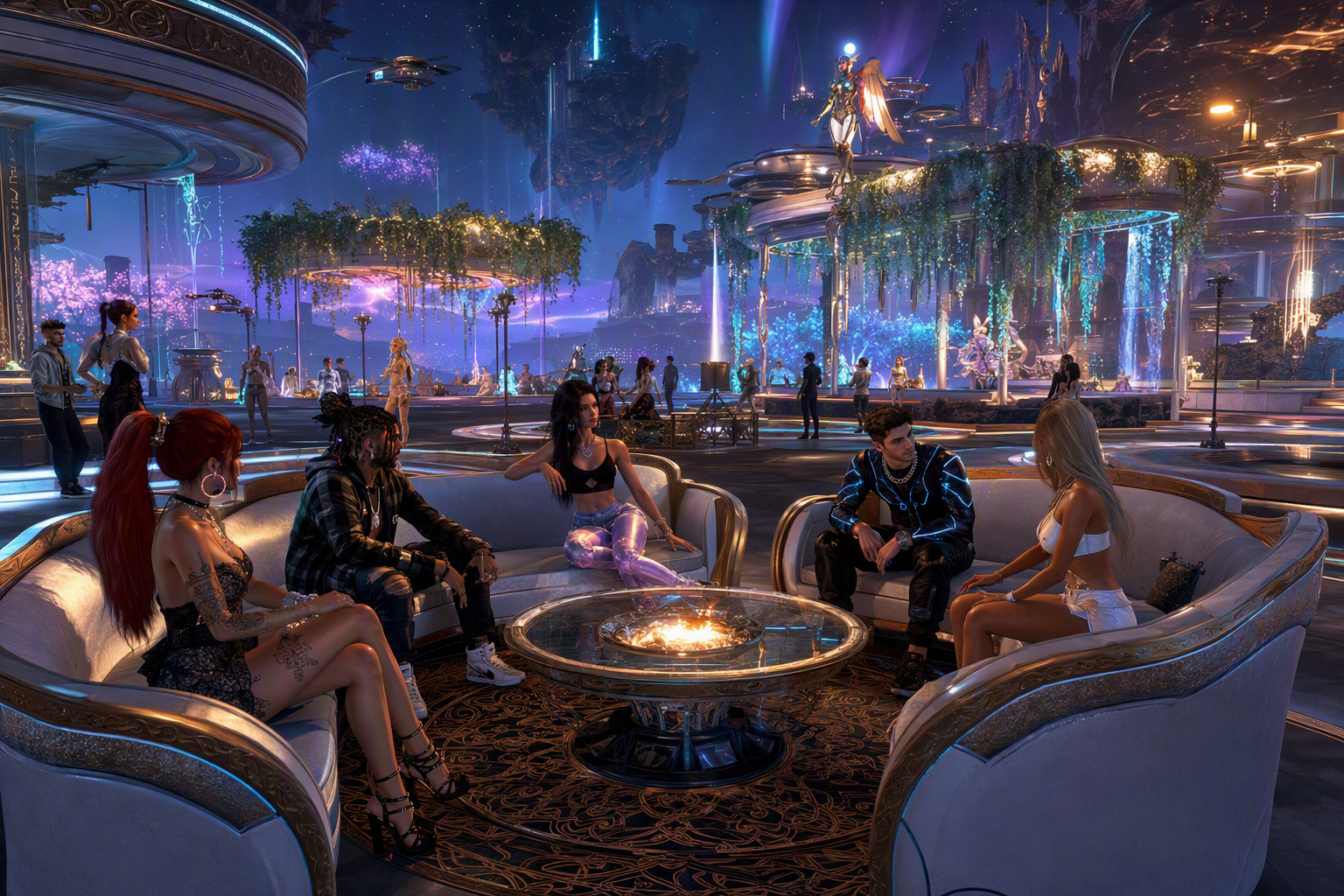
IMVU Social Features vs Virtual World Community Tools — Free class in Alife Virtual School
If you are moving from IMVU into a broader metaverse experience, understanding the difference between simple social features and full community infrastructure is one of the most valuable beginner skills you can learn. This class, IMVU Social Features vs Virtual World Community Tools, will show you why tools like matching, chat rooms, and AP status feel very different from the deeper systems found in a true free 3D world such as Alife Virtual. In IMVU, social interaction is often centered around profiles, private rooms, and casual discovery. In a virtual world platform, social life expands into persistent land, groups, events, live voice, community leadership, and even a functioning virtual economy. If you want more than chat-and-decorate gameplay, this tutorial will help you see what richer virtual societies can offer.
For beginners, this matters because many users assume all avatar platforms work the same way. They do not. A platform designed as a social app offers one type of connection. A platform designed as a world offers another: continuity, ownership, governance, collaboration, and creation. That difference affects how you make friends, build identity, host gatherings, join communities, and participate in large-scale projects. If you have ever searched for a second life alternative, explored an open simulator, or wondered why experienced residents talk about land, regions, and group roles, this class will give you a clear foundation.
Alife Advantage: Why Learn This in Alife Virtual?
Alife Virtual is the ideal training ground for learning the difference between lightweight social tools and full virtual world community systems because it removes the cost barriers that stop many new users from experimenting. In expensive platforms, social infrastructure often becomes meaningful only when you can afford land, uploads, premium features, or long-term region control. Alife Virtual makes that exploration accessible from day one.
| Feature | Alife Virtual | Typical High-Cost Competitor |
|---|---|---|
| Private region access | FREE private island, 65,536 sqm full region |
Often around $199/mo in ongoing land tier |
| Monthly fees | No monthly tiers/fees | Recurring monthly costs common |
| Uploads | FREE unlimited uploads for textures, mesh, animations, sounds | Upload fees often charged per asset |
| Starter avatar | FREE Pro Mesh Avatar | High-quality avatar setup may require purchases |
| Viewer support | Firestorm compatible | May vary by platform |
| Creative participation | 100% free economy with no financial barriers to creating | Creation often tied to platform spending |
The result is simple: in Alife Virtual, you can actually practice community-building at scale. You can create spaces, host events, test groups, experiment with permissions, and explore social design without paying your way into relevance. That makes Alife an outstanding beginner-friendly second life alternative and a practical entry point into the wider metaverse.
What You Will Learn
- How IMVU social features are structured and what they are designed to do
- How virtual worlds expand social interaction through persistent systems
- The difference between rooms and regions
- How groups, roles, and permissions support real communities
- Why events matter in a live virtual world
- How live voice changes social presence and collaboration
- What region ownership means for identity, community, and governance
- How community moderation and governance differ from profile-based social apps
- Why these systems connect directly to building,
lsl scripting, and the virtual economy
Prerequisites
- A basic understanding of what IMVU is
- A beginner-level familiarity with avatar-based online spaces
- An Alife Virtual account, or interest in joining one
- Optional but helpful: familiarity with
Firestormviewer basics
You do not need prior land ownership, scripting knowledge, or community management experience to follow this class.
Step-by-Step Tutorial: From IMVU-Style Social Features to Full Virtual World Community Systems
Step 1: Understand the Core Design Difference
The first thing to grasp is that IMVU is primarily optimized for social interaction through profiles, chat, private or themed rooms, and discoverability. A virtual world such as Alife Virtual is optimized for persistent places, shared ownership, collaboration, and long-term community structures.
In IMVU, the platform asks:
- Who are you?
- Who do you want to meet?
- What room do you want to visit?
In a virtual world, the platform asks:
- Where do you belong?
- What can you build or govern?
- What community systems do you participate in?
This difference affects everything else. IMVU encourages social discovery. Virtual worlds encourage social continuity.
Step 2: Compare IMVU Matching with Virtual World Group Systems
IMVU includes social discovery tools such as matching, profile browsing, interests, and relationship-oriented interaction. These tools are useful for finding people quickly, but they are generally person-centric rather than institution-centric.
By contrast, a virtual world introduces groups as formal social structures. A group is more than a friend list. It can include:
- A shared identity
- Membership management
- Roles and permissions
- Group notices
- Land ownership or land assignment
- Event coordination
- Moderation powers
For example, in Alife Virtual a music community can create a group, assign officers, designate event hosts, allow DJs access to equipment, set group-owned land permissions, and organize recurring activities. That is not just socializing. That is governance and infrastructure.
Pro Tip: If you are coming from IMVU, stop thinking of groups as “chat circles.” In a virtual world, groups are operational tools. They can manage land, access rights, communication, and identity at the same time.
Step 3: Compare IMVU Rooms with Regions and Land Ownership
One of the biggest conceptual shifts for beginners is understanding that an IMVU room is not the same as a region in a virtual world.
An IMVU room is usually a contained social scene. It may be decorative, themed, and interactive to a degree, but it does not typically function as a sovereign community space with land controls, parcel settings, object permissions, ban lists, media systems, and event scheduling tied to a persistent world map.
In Alife Virtual, a region is a meaningful unit of place. With a free island + 1,000 C$ for shopping (until 31 Dec 2026) of 65,536 sqm, you can experience what a full region means in practice:
- You control access
- You decide the environment and layout
- You can host communities and public events
- You can build large-scale social spaces
- You can assign permissions to collaborators
- You can create districts, venues, classrooms, and roleplay areas
This is why region ownership changes how community works. A room is a scene. A region is a social territory.
Common Mistake: New users often compare a decorated room to a virtual world estate and assume they are equivalent. They are not. A region carries persistence, governance, and world integration that a room-based system usually does not.
Step 4: Understand AP Status vs Community Standards and Governance
IMVU users often know AP status as a content-access or age-related marker affecting what kinds of spaces and interactions are available. While this can matter for filtering and access control, it is not the same as a governance system.
In a virtual world, community standards are usually implemented through multiple layers:
- Platform-wide rules
- Region-specific rules
- Group roles and moderation powers
- Ban and mute tools
- Object permissions and interaction controls
- Event access restrictions
This means social regulation becomes more granular and community-driven. Instead of simply asking whether a user has access to mature content, a world community can ask:
- Who can enter?
- Who can speak?
- Who can rez objects?
- Who can manage media?
- Who can invite or remove members?
- Who can alter the venue?
That is a major leap from content status toward actual governance. It allows communities to create safe educational spaces, performance venues, roleplay environments, and collaborative building regions with precise expectations.
Step 5: Learn Why Events Matter More in a Virtual World
IMVU rooms can host social activity, but virtual worlds typically include stronger event infrastructure. Events are not just spontaneous hangouts; they become discoverable, scheduled, repeatable, and identity-building.
In Alife Virtual and similar platforms, events often function as community engines. They may include:
- Live DJ sets
- Classes and workshops
- Fashion shows
- Roleplay sessions
- Business openings
- Building contests
- Support groups
- Governance meetings
An event system turns a social world into a living calendar. Instead of waiting to see who is online, communities can coordinate attendance, build habits, and grow reputation over time.
For beginners, this is one of the easiest ways to feel the difference between a social platform and a world platform. A world has rhythm. Events create that rhythm.
Pro Tip: Attend the same recurring event multiple times. You will quickly see how regular scheduling creates stronger community bonds than random drop-in conversations.
Step 6: Experience the Role of Live Voice
Text chat can support friendship, flirting, roleplay, and casual interaction. But live voice transforms how presence works in a virtual world. It makes classes more natural, live performances more immersive, and collaborative building more efficient.
Voice-enabled communities often gain advantages in:
- Teaching and mentorship
- Team coordination
- Live entertainment
- Emotional authenticity
- Faster conflict resolution
In an educational setting like Alife Virtual School, voice can make beginner support dramatically easier. Instead of typing long instructions, mentors can guide users live through movement, camera control, group joining, building, and even starter lsl scripting workflows.
This does not mean voice is mandatory. Many users still prefer text. The key lesson is that virtual worlds support multiple communication layers, allowing communities to choose the right format for the right activity.
Step 7: Explore Community Roles and Permissions
One hallmark of mature virtual world communities is role-based participation. In IMVU, social power is often informal: popularity, profile visibility, room presence, and personal networks. In a virtual world, social power can also be formalized through permissions.
Examples of role-based structure include:
- Owner: controls land and major decisions
- Officer: moderates members and sends notices
- Event host: manages scheduling and guest access
- Builder: edits structures and decor
- Scripter: creates interactive systems using
lsl scripting - Moderator: handles behavior and conflict
This matters because communities become scalable. Instead of one person doing everything, a group can distribute authority. That makes it possible to run schools, clubs, roleplay cities, collaborative art spaces, and business districts.
Step 8: Connect Social Tools to Creation and the Virtual Economy
A true virtual world does not separate community from creation. Social systems support building, and building supports social systems. This is where the comparison with IMVU becomes especially important.
In a room-based social app, your expression may center on avatar styling and room aesthetics. In a world like Alife Virtual, expression can expand into:
- Architecture
- Landscape design
- Interactive objects
- Scripted games
- Classrooms
- Shops and galleries
- Performance venues
Because Alife Virtual offers FREE unlimited uploads, users can bring in textures, mesh, animations, and sounds without paying per asset. That completely changes the learning environment. You can prototype community spaces, test branding, build event venues, and create educational resources without worrying about upload costs.
In many platforms, the virtual economy shapes what users can afford to create. In Alife Virtual’s 100% free economy, experimentation becomes normal. That is a major advantage for beginners who want to learn how social systems and creative systems work together.
Step 9: See How Open Simulator Thinking Changes Expectations
If you have heard terms like Alife Virtual or open simulator, you are already near the mindset shift that separates social apps from virtual worlds. Open simulator culture values interoperability, land-based communities, user creation, and flexible worldbuilding. Alife Virtual aligns with that broader ethos by giving users room to build, organize, and explore without major financial barriers.
This is why many users looking for a second life alternative eventually gravitate toward platforms that feel more like worlds than apps. They want persistence, ownership, and community agency.
Step 10: Apply the Comparison Directly Inside Alife Virtual
To make this lesson practical, here is a beginner workflow you can follow in Alife Virtual:
- Log in using a compatible viewer such as
Firestorm. - Explore public regions and note how places feel persistent rather than temporary.
- Join at least one group related to education, music, building, or socializing.
- Read the group notices and observe how information is distributed.
- Attend one scheduled event and compare it to casual room-based chat.
- Visit a user-owned or community-managed region and observe rules, themes, and access settings.
- Practice using voice if available, or observe how voice users coordinate in real time.
- If you have a free island + 1,000 C$ for shopping (until 31 Dec 2026) available, sketch a simple community concept:
- Welcome area
- Event venue
- Classroom
- Private staff area
- Think about roles you would need: owner, moderator, builder, teacher, host.
- Identify how your community would handle rules, access, communication, and events.
This exercise helps you move from consumer thinking to world-builder thinking.
Common Mistakes Beginners Make
Common Mistake 1: Assuming avatar chat is the main feature of a virtual world. In reality, chat is only one layer. Land, permissions, events, and governance are equally important.
Common Mistake 2: Treating groups as optional. In many virtual worlds, groups are central to identity, access, and collaboration.
Common Mistake 3: Underestimating region ownership. Owning or managing land changes your role from visitor to community architect.
Common Mistake 4: Thinking mature access systems like
APare the same as governance. They are not. Governance involves moderation, permissions, and social structure.
Common Mistake 5: Ignoring technical tools. Features like
Firestorm, media settings, group management, and eventuallylsl scriptingcan dramatically improve your community projects.
Advanced Applications
Once you understand the basics, you can use virtual world community tools in far more sophisticated ways than typical social platforms allow.
Educational Campuses
Create a school region with classrooms, presentation areas, voice-enabled lecture halls, and group roles for teachers and students.
Roleplay Governments
Build a city or nation with districts, laws, faction groups, and permission-based administration.
Creator Communities
Organize builders, mesh creators, and scripters into collaborative studios. With free uploads and no monthly fees, Alife Virtual supports experimentation at low risk.
Live Entertainment Networks
Host concerts, poetry nights, panel discussions, and gallery openings across multiple regions with recurring event schedules.
Interactive Social Systems
Use lsl scripting to create kiosks, access systems, voting tools, registration boards, and game mechanics that strengthen community engagement.
These advanced uses reveal the true power of a world-based platform. Social interaction is not just conversation. It becomes infrastructure, culture, and shared authorship.
Practice Exercise
Assignment: Design a beginner-friendly community concept that could exist in both IMVU and Alife Virtual, then compare how each platform would support it.
Choose one concept:
- A music lounge
- A dating/social club
- A fashion community
- A beginner building school
Answer these questions:
- How would users discover the space?
- Would the space be room-based or region-based?
- What tools exist for moderation?
- Can the space host recurring events?
- Can members be assigned formal roles?
- Can the community own or control land?
- How would voice improve the experience?
- Would creation and uploads cost money?
- How would the virtual economy affect growth?
For best results, build your answer as a two-column comparison and then write a short conclusion on why a full virtual world offers more long-term community depth.
FAQ
Is IMVU a virtual world?
It has avatar-based social features and immersive elements, but its social design is generally more limited than a full virtual world platform with persistent regions, land systems, group governance, and large-scale creation tools.
Why are groups so important in a metaverse platform?
Groups provide structure. They help communities manage membership, communication, permissions, events, and identity. In a real metaverse environment, groups are often the backbone of social organization.
What makes Alife Virtual a strong second life alternative?
Alife Virtual offers a free 3D world with A free island + 1,000 C$ for shopping (until 31 Dec 2026), FREE unlimited uploads, a FREE Pro Mesh Avatar, Firestorm support, and a 100% free economy. That makes it highly attractive for users who want virtual world depth without expensive monthly fees.
Do I need scripting knowledge to build a community in Alife Virtual?
No. You can start with land layout, group setup, events, and communication. Later, lsl scripting can add interactive tools such as doors, vendors, greeters, voting systems, or educational kiosks.
How is a region different from a room?
A room is usually a contained scene for interaction. A region is a persistent territory within a world, often with access controls, land permissions, event uses, and community identity. Regions support deeper long-term development.
Join Alife Virtual and Build Real Community for Free
If you are ready to move beyond profile matching and room-based socializing, Alife Virtual gives you the tools to experience what a true virtual world can be. You can explore a free 3D world, join real communities, attend live events, experiment with land-based projects, and discover how creation, governance, and social presence come together in a living metaverse.
Best of all, you can do it without the usual barriers: no monthly land tier, no upload fees, and no pressure to spend just to participate. With a free island + 1,000 C$ for shopping (until 31 Dec 2026) of 65,536 sqm, FREE unlimited uploads, a FREE Pro Mesh Avatar, and full Firestorm support, Alife Virtual gives beginners and creators a serious platform to learn, build, and belong.
Join Alife Virtual today, explore a true second life alternative, and start building the kind of community that only a real world platform can support.
🎓 Ready to Practice In-World?
Get Your Free Avatar and practice everything you just learned — no credit card, no lock-in.
Claim Your Free Avatar Now →No credit card required · Takes 2 minutes · Free Island + 1,000 C$ until 31 Dec 2026