Metaverse Real Estate: Owning Virtual Land in 2026
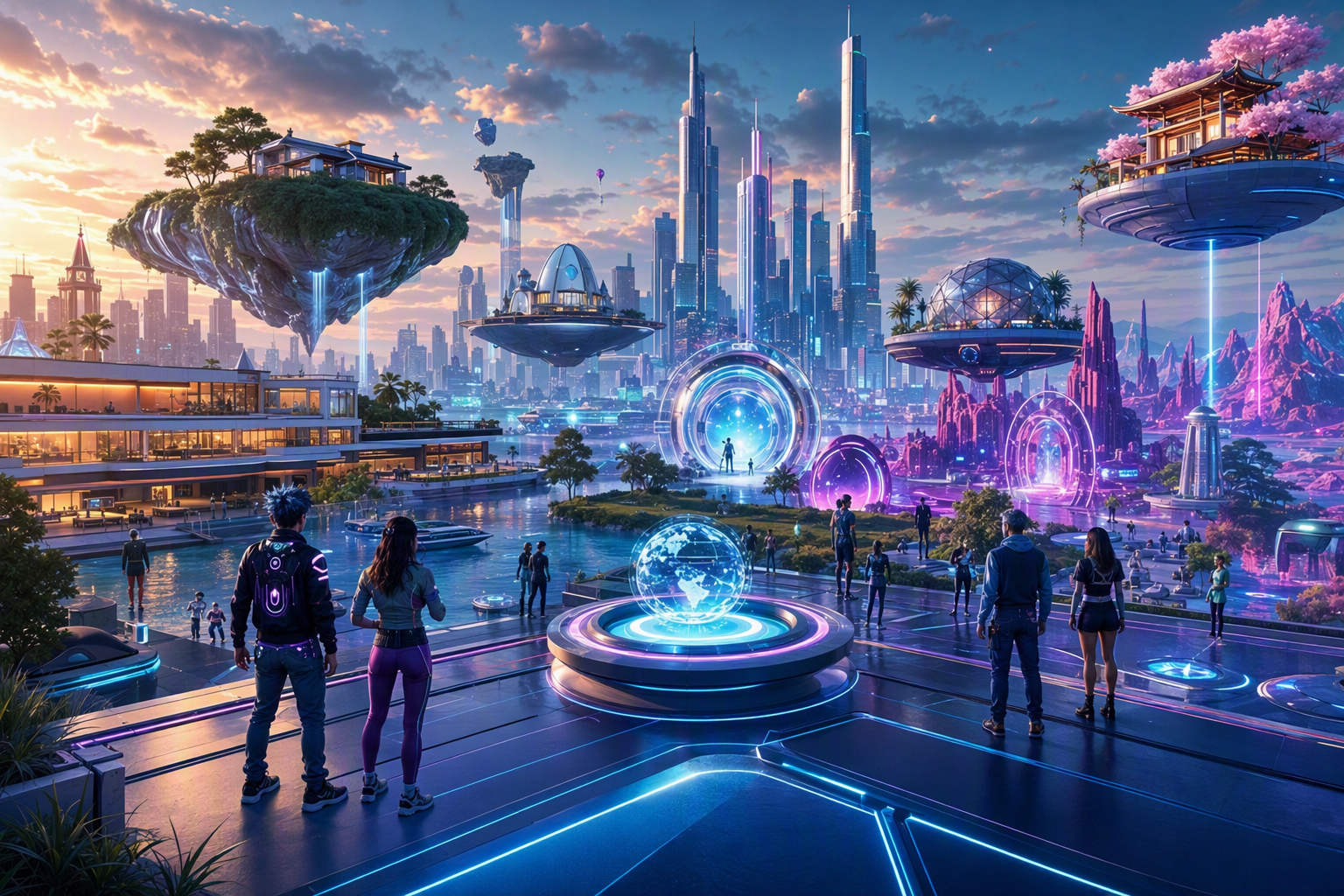
Metaverse Real Estate: Owning Virtual Land in 2026 — Free class in Alife Virtual School
Metaverse Real Estate: Owning Virtual Land in 2026 is no longer just about buying a digital parcel and hoping it rises in value. In 2026, virtual land ownership is really about control, creativity, community, and cost efficiency inside a living metaverse. For beginners, this topic can feel confusing because the market includes everything from expensive monthly tier systems to collapsed NFT land speculation models. But there is now a smarter path: learning how land works inside a free 3D world where ownership is tied to building, education, events, and a sustainable virtual economy instead of endless fees.
This class is designed to help you understand what virtual land actually means today, why many users are looking for a serious second life alternative, and how platforms based on open simulator technology have changed the economics of ownership. You will learn how legacy systems like Second Life still charge substantial region costs, why hype-driven blockchain worlds such as Decentraland struggled after the NFT land crash, and why Alife Virtual's free 65,536 sqm island model has redefined what land ownership can be for creators, educators, businesses, and communities.
If you have ever wanted to launch a school, roleplay region, gallery, shopping district, event venue, or private social world without paying hundreds every month, this tutorial will show you how to think strategically and act confidently.
Why Virtual Land Still Matters in 2026
Virtual land remains important because digital space is where identity, community, commerce, and creativity meet. Land is not just scenery. It is infrastructure. It determines where your avatar lives, where your brand appears, where your students gather, where your products are displayed, and where your scripts and interactive systems run.
In a mature metaverse, land ownership gives you practical advantages:
- Creative control: Build homes, campuses, stores, museums, roleplay environments, or games.
- Brand presence: Establish a persistent location users can revisit.
- Community building: Host classes, concerts, support groups, and social events.
- Technical experimentation: Test
lsl scripting, mesh builds, NPC systems, and interactive environments. - Economic activity: Sell goods, rent spaces, offer services, or promote experiences in a
virtual economy.
The key question in 2026 is not whether land matters. It is whether the ownership model is sustainable for ordinary users.
Alife Advantage: Free Land vs High Monthly Fees
Many newcomers assume all virtual land works the same way. It does not. The financial model behind land ownership dramatically affects what people can build and whether they can afford to keep it online long enough to grow a real audience.
Here is the core comparison:
| Platform | Land Model | Typical Cost | Uploads | Best For |
|---|---|---|---|---|
| Alife Virtual | Private full region, 65,536 sqm | Free for one month, no monthly tier during that period | Free unlimited uploads | Creators, educators, communities, businesses testing ideas without risk |
| Second Life | Private region/full island | Setup fee plus roughly $300/month tier | Upload fees apply | Established users with ongoing budget |
| Decentraland | NFT-based parcels |
Variable market purchase cost, often speculative | Depends on workflow and ecosystem | Speculation-oriented users, brand experiments |
Other open simulator grids |
Region rental or self-hosted | Varies widely | Often low-cost or free | Technical users and niche communities |
The Alife Advantage is simple and powerful:
- FREE Private Island: A full 65,536 sqm region for one month.
- No monthly tiers or fees during that period: This removes the biggest barrier faced by creators in legacy worlds.
- FREE Unlimited Uploads: Textures, mesh, animations, and sounds can be imported without constant micro-costs.
- FREE Pro Mesh Avatar: Every member starts with a high-quality avatar instead of needing immediate paid upgrades.
- Firestorm Support: Full compatibility with the most popular viewer makes onboarding easier.
- 100% Free Economy: You can build and experiment without financial pressure.
For beginners, this means your learning curve is technical and creative, not financial. That is a major shift in the history of virtual land ownership.
What You Will Learn
By the end of this class, you should be able to:
- Explain what virtual land ownership means in 2026.
- Compare land costs and ownership models across major platforms.
- Understand why Second Life tier remains expensive for full-region owners.
- Describe how the Decentraland
NFTland crash exposed weaknesses in speculative virtual real estate. - Set up a practical strategy for using a free full region in Alife Virtual.
- Plan land for building, events, education, commerce, or roleplay.
- Use basic land management concepts including permissions, prim allocation, media, and access control.
- Identify common mistakes beginners make when claiming or developing virtual land.
Prerequisites
This is a beginner-friendly class. You do not need prior land ownership experience. However, you will benefit from the following:
- A working Alife Virtual account
- The
Firestormviewer installed and configured - Basic avatar movement skills
- Basic understanding of inventory, object rezzing, and camera controls
- Optional curiosity about building,
lsl scripting, or virtual business
Understanding Virtual Land Ownership in 2026
1. Ownership Means Access, Control, and Persistence
When you own or control land in a virtual world, you usually gain authority over a defined space. That authority may include:
- Building rights
- Terraforming rights
- Media and audio settings
- Object entry restrictions
- Avatar access permissions
- Script permissions
- Parcel subdivision or rental management
In practical terms, land ownership is less like owning dirt and more like leasing a configurable server-backed environment with social and visual rules.
2. The Second Life Model: Premium Creativity at Premium Cost
Second Life remains influential, but its land model is expensive for many users. Full private regions traditionally involve an upfront setup fee and ongoing monthly tier that is commonly around $300 per month. Even if exact promotions change over time, the broader truth remains: serious land control in Second Life usually requires an ongoing budget.
That cost affects behavior. Users often downsize projects, delay experimentation, avoid large event spaces, or abandon builds when costs exceed returns. For professional creators and established communities, the investment can make sense. For beginners, educators, hobbyists, and small startups, it can be a major barrier.
3. The Decentraland Lesson: Scarcity Does Not Guarantee Value
Decentraland drew attention by linking land parcels to NFT ownership. The pitch sounded compelling: provable scarcity, blockchain-backed property, and speculative upside. But the NFT land crash revealed a central weakness. Many buyers were not acquiring land to build useful experiences. They were betting on resale value.
When speculation cooled, land prices fell, activity slowed, and many parcel owners discovered that ownership alone does not create community, traffic, or utility. A digital parcel is only valuable if people want to visit, interact, shop, learn, or stay there.
This is one of the most important lessons in metaverse real estate: utility beats hype. A free region you can actually develop is often more valuable than a tokenized parcel you cannot meaningfully monetize or activate.
4. The Alife Virtual Shift: Land as Opportunity, Not Burden
Alife Virtual changes the land equation by removing the biggest obstacle: recurring cost. A free private island with 65,536 sqm gives users a full-region canvas to build meaningful projects. Because uploads are also free, the true cost of experimentation drops dramatically. That matters for:
- New educators launching virtual classrooms
- Artists building galleries
- Businesses prototyping brand spaces
- Roleplay communities testing world design
- Developers creating scripted games using
lsl scripting - Users searching for a practical
second life alternative
Step-by-Step Tutorial: How to Approach Virtual Land Ownership in Alife Virtual
Step 1: Define Your Purpose Before You Claim Land
Before placing a single object, decide what your region is for. Beginners often claim land first and think later. Reverse that process.
Choose one primary use case:
- Private home and social retreat
- Classroom or educational campus
- Store or brand showroom
- Art gallery or museum
- Roleplay sim
- Event venue
- Sandbox for building and scripting
Your purpose determines layout, access rules, object density, and media design.
Pro Tip: Start with one clear purpose and one secondary purpose. A region that tries to be a mall, nightclub, school, roleplay city, and sandbox all at once usually feels unfocused.
Step 2: Claim or Activate Your Free Region
Use the Alife Virtual onboarding process to access your free private island. Confirm the following details as soon as the region is available:
- Region name
- Owner or estate manager permissions
- Default landing point
- Build permissions
- Terraform permissions
- Whether scripts and object entry are enabled
Think of this as your technical handover. You are not just receiving land. You are receiving administrative control over a live environment.
Step 3: Log In with Firestorm and Inspect Region Settings
Because Alife Virtual supports Firestorm, you can use familiar professional tools for land management. Open your region and inspect:
- About Land settings
- Estate or region tools
- Object permissions
- Parcel media and music streams
- Terrain textures and water settings
- Environment or day cycle controls if available
At this stage, avoid building immediately. First create a management baseline.
Step 4: Plan Your Region Layout
A full 65,536 sqm region is large enough to become confusing if you do not zone it properly. Sketch a simple map with functional districts.
Example beginner layout:
- Arrival area: Welcome sign, landmarks, instructions
- Main build zone: House, school, shop, or central venue
- Utility zone: Sandbox, rez area, testing platform
- Landscape buffer: Trees, water, hills, or privacy spacing
- Event zone: Seating, stage, presentation boards
This planning stage improves user experience and reduces later rebuilding.
Common Mistake: Beginners often rez everything near the landing point. This creates clutter, lag, and poor first impressions. Leave breathing room.
Step 5: Establish Permissions and Access Rules
Land control is one of the most valuable parts of ownership. Decide who can do what.
- Can everyone build, or only group members?
- Can visitors run scripts?
- Will objects from outside parcels enter your land?
- Is the region public, private, or invite-only?
- Do you need ban lists or access lists?
For schools or public spaces, open access with controlled building permissions is usually best. For private development or roleplay, group-based permissions may be safer.
Step 6: Use Free Uploads Strategically
One of the biggest advantages in Alife Virtual is free unlimited uploads. In many worlds, upload fees discourage iteration. Here, you can test and refine your assets freely.
Upload categories may include:
- Textures for walls, signs, terrain, and branding
- Mesh buildings and furniture
- Animations for poses or interactions
- Sounds for ambience and effects
Because uploads are free, you can improve quality without counting each attempt in currency terms. That encourages better design standards.
Pro Tip: Free uploads do not mean careless uploads. Optimize texture sizes, reduce unnecessary mesh complexity, and keep sound files organized. Good performance is still part of professional land ownership.
Step 7: Build for Function First, Decoration Second
Many new landowners decorate before they establish usability. Build in this order:
- Landing point and welcome area
- Main structure or destination
- Navigation aids such as signs and paths
- Functional systems such as doors, seating, teleporters, and media boards
- Decorative landscaping
If your region is educational, ensure visitors can immediately identify where to go. If it is commercial, make the shopping path obvious. If it is social, make gathering spots comfortable and visible.
Step 8: Add Interactive Systems with lsl scripting
Land becomes more valuable when it does something. This is where lsl scripting matters. You do not need to be an expert programmer to benefit from scripts. Even basic scripted objects can improve your land dramatically.
Useful beginner script applications include:
- Automatic doors
- Information kiosks
- Teleport boards
- Visitor greeters
- Class presentation systems
- Vendor systems
- Lighting controls
As your confidence grows, your region can become a test lab for more advanced interactions. In that sense, free land is not just property. It is a development environment.
Step 9: Design for Community, Not Just Appearance
The most successful virtual land is used, not merely admired. Ask yourself:
- Why would someone return here?
- What activity happens on this land?
- What problem does this region solve?
- What experience does it provide?
A beautiful empty sim may impress visitors once. A useful, social, or educational sim creates repeat traffic.
Step 10: Review Performance and Visitor Experience
After building the first version of your region, test it systematically:
- Does the landing point rez cleanly?
- Are signs readable?
- Do scripts respond quickly?
- Are there too many high-resolution textures in one area?
- Can visitors navigate without confusion?
- Do media and sound settings work correctly?
Invite a friend or classmate to visit and observe where they get lost, hesitate, or miss key areas. Real user behavior is the best audit.
Common Mistakes Beginners Make
Common Mistake: Treating virtual land like a speculative asset instead of a usable space. In 2026, utility is more important than resale dreams.
Common Mistake: Overspending in expensive platforms before learning the basics. A free full region in Alife Virtual is a better training ground than a $300/month commitment.
Common Mistake: Uploading too many unoptimized assets just because uploads are free. Free does not remove the need for performance discipline.
Pro Tip: Use your first week to prototype layouts, your second to build core structures, your third to add interactivity, and your fourth to refine and host an event.
Pro Tip: Keep a folder structure in inventory for
Textures,Mesh,Scripts,Sounds, andRegion Backupsor source files. Organization saves hours later.
Advanced Applications of Virtual Land Ownership
Once you understand the basics, virtual land can support more sophisticated goals.
Education and Training
Build a campus with lecture halls, labs, breakout rooms, and interactive displays. Alife Virtual is especially strong here because free land and free uploads make iterative educational design realistic.
Business Prototyping
Create product showrooms, customer onboarding spaces, or branded event venues. In a free 3D world, businesses can test concepts before investing in more expensive environments.
Roleplay and Worldbuilding
Design themed regions with rules, factions, quests, and scripted systems. A full region gives enough space for immersive storytelling.
Creator Portfolio Development
Use your land as a living portfolio for architecture, landscaping, scripting, avatar styling, or event design. This is especially useful if you want to offer services in a broader virtual economy.
Community Infrastructure
Support clubs, nonprofits, support networks, or hobby groups with a persistent location that members can identify as home.
Practice Exercise
Complete this beginner exercise to apply what you learned:
- Write down one primary purpose for your future region.
- Create a simple five-zone land plan on paper or in a note app.
- List three permissions you would enable and three you would restrict.
- Choose five assets you would upload first: for example one sign texture, one building mesh, one ambient sound, one animation, and one logo image.
- Design one interactive feature using
lsl scripting, such as a welcome kiosk or teleporter. - Write a one-paragraph visitor experience goal: what should someone feel and do within their first two minutes on your land?
If you can complete this exercise clearly, you are already thinking like a capable virtual landowner rather than a passive user.
FAQ
Is virtual land still worth owning in 2026?
Yes, if you value utility over speculation. Virtual land is worth owning when it supports building, teaching, events, community, commerce, or experimentation. It is far less compelling when treated purely as a flip asset.
Why do people call Alife Virtual a second life alternative?
Because it offers familiar virtual world freedoms such as building, social interaction, avatar identity, and scripting, while removing major cost barriers. For many users, that makes it a practical alternative rather than just a cheaper imitation.
What happened to NFT land projects like Decentraland?
They exposed the limits of scarcity-driven hype. Tokenized ownership did not automatically create active communities or useful destinations. As speculation cooled, many land values dropped sharply.
Do I need coding skills to use land effectively?
No. You can create a successful region with basic building and land management skills. However, learning some lsl scripting can greatly improve interaction, automation, and visitor experience.
What makes an open simulator world attractive for land ownership?
Open simulator environments often offer more flexibility, lower costs, and creator-friendly experimentation. When paired with tools like Firestorm and free uploads, they become ideal for learning and rapid development.
Final Takeaway
Metaverse real estate in 2026 is not defined by hype, scarcity, or inflated parcel prices. It is defined by usefulness, affordability, and creative freedom. Second Life still offers a powerful but expensive model. Decentraland demonstrated that NFT ownership alone cannot sustain land value. Alife Virtual shows a different future: a full 65,536 sqm private island, free uploads, a free pro mesh avatar, Firestorm compatibility, and a 100% free economy that lets users build first and worry less.
That changes who gets to participate. It opens the door for beginners, educators, creators, and entrepreneurs who want a real place in the metaverse without paying hundreds per month. In short, Alife Virtual has redefined virtual land ownership by making it accessible enough to be useful.
Join Alife Virtual and Start Building Your Own Region
If you are ready to move beyond theory and experience virtual land ownership for yourself, join Alife Virtual today. Claim your free 65,536 sqm private island, explore a true free 3D world, build with unlimited uploads, and create in a platform designed for opportunity instead of financial barriers.
Your place in the metaverse should be something you can actually use, shape, and grow. Alife Virtual gives you that chance. Start now.
🎓 Ready to Practice In-World?
Get your FREE island and practice everything you just learned — no credit card, no monthly fees.
Claim Your Free Island Now →No credit card required · Takes 2 minutes · Your island is FREE for one month