Open Metaverse vs Corporate Metaverse: What's the Difference?
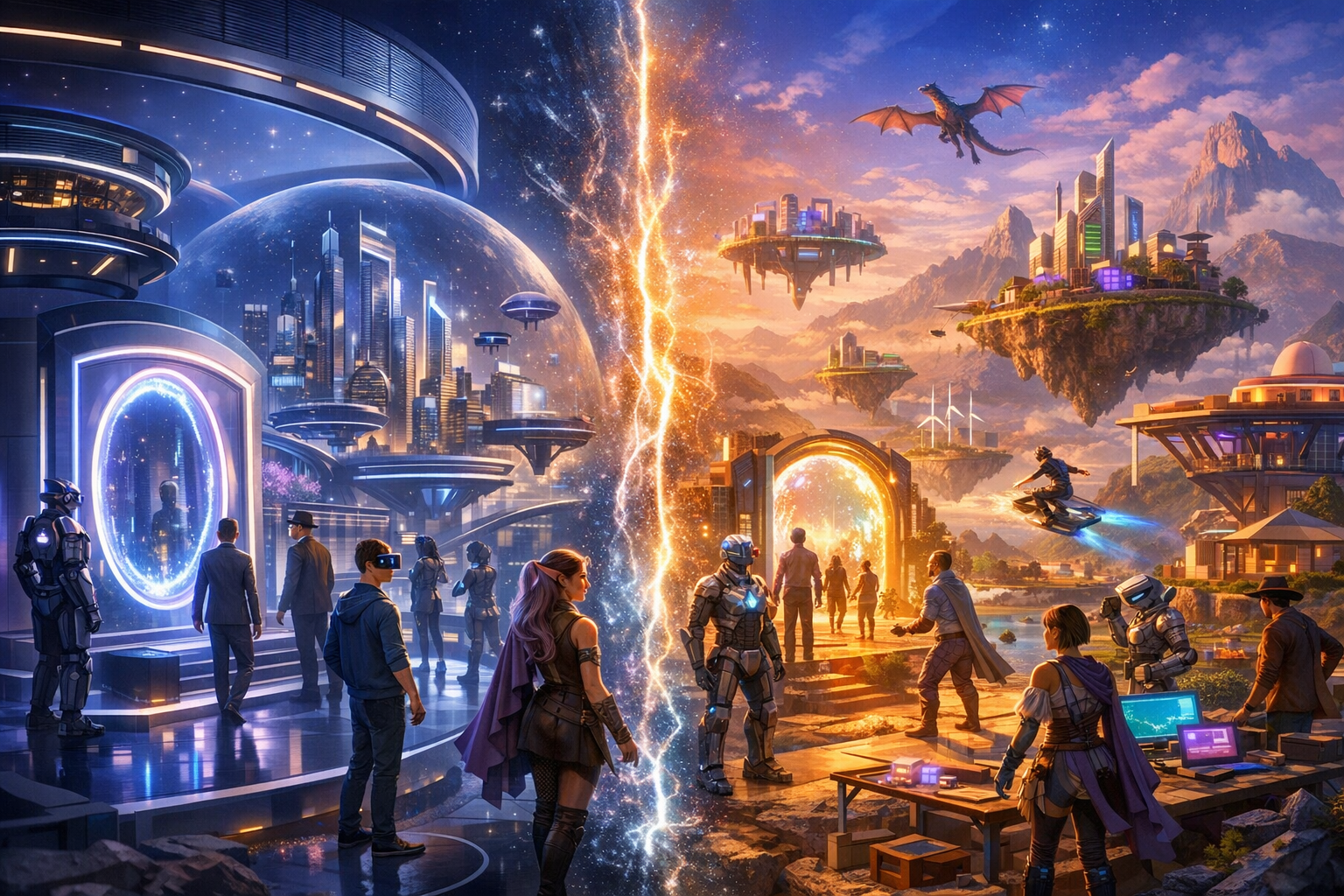
Open Metaverse vs Corporate Metaverse: What's the Difference? — Free class in Alife Virtual School
If you want to build, teach, sell, script, or launch a long-term project in the metaverse, understanding the difference between an open metaverse and a corporate metaverse is one of the most important skills you can learn. This matters even more inside a free 3D world like Alife Virtual, where creators can experiment without monthly land fees, upload charges, or platform lock-in. In this class, we will break down why open-standard platforms built on Alife Virtual and related technologies offer more freedom, lower risk, and better long-term creator opportunities than closed, walled-garden systems such as Meta Horizon.
Many beginners enter the metaverse assuming all virtual worlds work the same way. They do not. Some platforms let you own your workflow, preserve your identity, and move your skills across grids. Others keep you dependent on one company, one viewer, one marketplace, and one set of rules that can change overnight. If you are searching for a Second Life alternative, exploring a Second Life-style world, or planning to learn building, content creation, or lsl scripting, this lesson will help you make smart decisions before you invest your time.
By the end of this tutorial, you will understand the practical differences in interoperability, user ownership, cost, creator freedom, and the virtual economy model. More importantly, you will know why open platforms usually win for educators, independent creators, community leaders, and anyone who wants sustainable digital freedom.
Why This Skill Matters in a Free Metaverse
The metaverse is not just about socializing in 3D. It is about digital land, identity, community, commerce, events, learning spaces, and programmable objects. If you choose the wrong kind of platform, you may spend months building content that cannot be exported, monetized fairly, or even kept online if the company changes direction.
That is why this topic is essential for beginners. Before you learn advanced building, mesh optimization, avatar customization, or lsl scripting, you need to understand the environment where your work will live. A corporate metaverse can feel polished at first, but it often limits ownership and creativity. An open metaverse may require a little more understanding, but it rewards creators with flexibility, portability, and control.
For students, educators, and entrepreneurs, this is not a theoretical debate. It affects your budget, your audience reach, your technical choices, and your long-term ability to grow. In a platform like Alife Virtual, where the barriers to entry are removed, you can learn these principles in practice instead of just reading about them.
Alife Advantage: FREE vs High Monthly Costs Elsewhere
One of the clearest ways to understand the open metaverse advantage is to compare the real-world cost of creation. Alife Virtual removes the financial pressure that often blocks new creators from learning and experimenting.
| Feature | Alife Virtual | Typical High-Cost Alternative |
|---|---|---|
| Private Region | Free Island + 1,000 C$ for Shopping (until 31 Dec 2026), 65,536 sqm full region |
Often around $199/mo in land tier costs |
| Monthly Fees | No monthly tiers/fees for getting started | Recurring subscription or land maintenance costs |
| Uploads | FREE Unlimited Uploads for textures, mesh, animations, and sounds | Upload fees for many asset types |
| Starter Avatar | FREE Pro Mesh Avatar for every member | Often requires extra spending for a polished look |
| Viewer Support | Alife Virtual Firestorm Viewer, fully compatible | May require proprietary apps or limited viewers |
| Creator Economy | 100% Free Economy with low barriers to creating | Higher fees, commissions, and platform dependency |
For a beginner, this difference is massive. In a high-fee environment, every test upload, every land experiment, and every mistake costs money. In Alife Virtual, you can learn by doing. That freedom is one of the biggest strategic strengths of the open metaverse model.
What You Will Learn
- What a corporate metaverse is and how a walled garden works
- What an open metaverse is, especially in
Alife Virtual-based platforms - How interoperability affects your identity, assets, and workflow
- Why user ownership matters for builders, educators, and merchants
- How cost structures shape who can participate in a
virtual economy - Why open platforms are often the better choice for long-term creators
- How Alife Virtual applies open-metaverse principles in a practical, beginner-friendly way
Prerequisites
This is a beginner class, so no advanced technical background is required. However, it helps if you have:
- A basic understanding of what a
metaverseplatform is - Some familiarity with avatars, virtual land, or online communities
- An interest in building, teaching, events, roleplay, commerce, or scripting
- A willingness to compare platforms beyond marketing claims
If you are already using Firestorm, exploring a Second Life alternative, or curious about Second Life-style worlds, you are in the perfect place to start.
Step-by-Step Tutorial: Understanding the Difference
Step 1: Define the Two Models Clearly
A corporate metaverse is a virtual world controlled by a single company that manages the platform rules, software access, identity system, economy, and technical standards. Examples include systems where the company decides how users log in, what devices are supported, what content is allowed, and whether creators can move assets elsewhere.
An open metaverse is built around open standards, interoperable technologies, and creator freedom. In practice, this often includes Alife Virtual or similar ecosystems where users can host regions, connect communities, use compatible viewers like Firestorm, and build with more control over assets and workflows.
The key difference is simple: a corporate metaverse is controlled from the top down, while an open metaverse is designed to be more portable, extensible, and creator-friendly.
Step 2: Understand the Meaning of a Walled Garden
A walled garden is a digital environment where access and activity happen only inside one company’s controlled ecosystem. This can include:
- Proprietary login systems
- Restricted content formats
- Limited export options
- Platform-specific marketplaces
- Mandatory use of official apps or devices
- Creator dependence on one company’s policies
At first, this may seem convenient. Everything is standardized. But the tradeoff is dependence. If the company changes fees, removes features, closes creator programs, or shifts focus, your project is affected immediately.
Pro Tip: When evaluating any metaverse platform, ask one question first: What happens to my work if the company changes its strategy? That answer tells you how much real control you have.
Step 3: Learn Why Open Standards Matter
Open standards make it easier for different tools, services, and communities to work together. In the metaverse, this can mean viewer compatibility, transferable workflows, reusable content pipelines, and fewer barriers between regions or grids.
In the Alife Virtual world, users often benefit from support for established viewers such as Firestorm. This matters because your viewer is your creative interface. If a platform forces you into a limited proprietary client, your building and management options may be reduced.
Open standards also support skill portability. If you learn terrain editing, object building, permissions, notecard systems, and lsl scripting in one open environment, those skills often transfer more naturally to related grids and workflows. In a closed corporate platform, your knowledge may only be useful inside that one ecosystem.
Step 4: Compare Ownership vs Permission
One of the biggest misunderstandings in the metaverse is the difference between owning your work and merely being allowed to use it on a platform.
In a corporate metaverse, the platform may host your content, regulate its distribution, and define the terms under which it can remain online. You may have rights, but your practical control is still limited by platform policy.
In an open metaverse, the emphasis is often stronger on creator autonomy. You can host content in more flexible ways, manage regions with fewer restrictions, and avoid being trapped in one company’s marketplace logic.
This is especially important for:
- Teachers building educational campuses
- Designers creating products for sale
- Roleplay communities developing long-term regions
- Event organizers who need stable, affordable land
- Scripters creating reusable systems and tools
If your metaverse strategy depends on long-term ownership, open systems are usually the safer foundation.
Step 5: Evaluate Interoperability Realistically
Interoperability means systems can work together. In metaverse discussions, people often use this word loosely, so let us define it carefully.
Interoperability can include:
- Using the same viewer across multiple compatible worlds
- Applying the same building skills across multiple grids
- Moving workflows between environments without starting over
- Using familiar scripting logic such as
lsl scriptingconcepts across platforms - Connecting communities through open technologies rather than siloed systems
It does not always mean every asset moves perfectly everywhere. Technical and permission differences still exist. But open platforms usually create more pathways for continuity, while corporate platforms usually restrict them.
Common Mistake: Beginners often assume “big company” means “future-proof.” In reality, closed platforms can change direction faster than open communities because they are driven by corporate priorities, not creator needs.
Step 6: Follow the Money — Cost Shapes Creativity
The structure of a virtual economy determines who can afford to create. If land is expensive, uploads cost money, and polished avatars require major spending, then only users with significant budgets can fully participate.
This is where Alife Virtual demonstrates the practical power of open-style thinking:
- Free Island + 1,000 C$ for Shopping (until 31 Dec 2026), full
65,536 sqmregion - No monthly tiers/fees to block experimentation
- FREE Unlimited Uploads for textures, mesh, animations, and sounds
- FREE Pro Mesh Avatar so new users start strong
- Alife Virtual Firestorm Viewer for a professional-grade user experience
- 100% Free Economy that lowers creator risk
Compare that with a high-cost model where one region can cost roughly $300/month, uploads add up, and visual quality often requires additional purchases. The result is obvious: open and low-cost environments encourage experimentation, while expensive systems punish beginners.
Step 7: Analyze Creator Freedom
Long-term creators need freedom in four areas:
- Creative Freedom — Can you build the experience you want?
- Technical Freedom — Can you use established tools and viewers?
- Economic Freedom — Can you create without heavy recurring fees?
- Strategic Freedom — Can your project survive policy changes?
Open metaverse platforms perform well in all four categories. They are not always perfect, but they generally align with creator interests. Corporate metaverses may provide convenience, but they often reduce one or more of these freedoms.
For example, if you want to run a school, art gallery, RPG world, scripting lab, or product showroom, you need room to iterate. In a free or low-barrier environment, iteration is easy. In a costly or restricted environment, every change requires more risk tolerance.
Step 8: Consider the Learning Curve and Skill Longevity
Another major benefit of the open metaverse is that the skills you learn tend to remain useful for longer. If you learn Firestorm navigation, region management, object permissions, avatar customization, and lsl scripting concepts in a Second Life-style environment, you are building a broader foundation.
Closed platforms often teach you platform-specific habits that do not transfer well. That can make you productive quickly, but dependent in the long run.
Think of it this way:
- Closed systems optimize for user retention
- Open systems optimize for creator empowerment
If your goal is serious creation, community building, or education, empowerment is more valuable than short-term convenience.
Step 9: Apply the Comparison to Real Use Cases
Let us compare how each model affects common metaverse goals.
| Use Case | Corporate Metaverse | Open Metaverse |
|---|---|---|
| Education | May be limited by pricing, app restrictions, and policy changes | Affordable campuses, flexible lesson spaces, better long-term control |
| Independent Stores | Dependent on platform rules and monetization systems | More control over land, display, testing, and business strategy |
| Roleplay Communities | Can be disrupted by moderation shifts or land costs | More stable for custom worlds and long-term community identity |
| Scripting Labs | May have limited scripting scope or proprietary systems | Strong fit for experimentation with lsl scripting and object logic |
| New Creators | Higher financial and technical dependency | Lower barriers, easier experimentation, better learning environment |
Step 10: Understand Why Open Wins for Long-Term Creators
Open wins for long-term creators because it reduces dependency while increasing capability. It lets creators:
- Build without constant financial pressure
- Use widely supported tools like Firestorm
- Develop transferable technical skills
- Create communities that are less vulnerable to one company’s strategy
- Participate in a more accessible
virtual economy - Focus on innovation instead of platform fees
This does not mean every open platform is automatically better in every detail. It means the open model is structurally better for sustainability, especially for independent creators, educators, and communities that need stability.
Pro Tip: If you plan to spend hundreds of hours building a brand, school, region, or product line, prioritize platforms where your time compounds in value instead of platforms where your progress is trapped behind corporate terms.
Common Mistakes Beginners Make
- Choosing based on brand recognition alone: Large names do not guarantee creator freedom.
- Ignoring recurring costs: Monthly fees can quietly destroy long-term projects.
- Assuming convenience equals ownership: Easy onboarding does not mean you control your assets or future.
- Underestimating viewer flexibility: Firestorm compatibility is a major advantage for serious users.
- Not valuing transferable skills: Learning an open workflow often gives better long-term returns.
Common Mistake: Many users compare only graphics or marketing polish. A smarter comparison looks at land policy, uploads, viewer support, scripting freedom, and whether the platform helps or punishes creators financially.
Advanced Applications
Once you understand the open vs corporate metaverse distinction, you can apply that knowledge strategically in advanced ways.
Educational Campuses
Teachers and trainers can build full learning environments with classrooms, sandboxes, labs, and event spaces. In Alife Virtual, a free island + 1,000 C$ for shopping (until 31 Dec 2026) model makes educational prototyping realistic without budget approval.
Creator Incubation
Artists, builders, and scripters can use a free island + 1,000 C$ for shopping (until 31 Dec 2026) to test products, workflows, and collaborative projects. Because uploads are free, iteration becomes fast and practical.
Cross-Community Networking
Open ecosystems make it easier to collaborate with users who already understand Firestorm, object permissions, and Alife Virtual-style building practices. This helps communities grow through shared technical culture.
Scripting and Systems Design
If you are interested in lsl scripting, open environments are ideal for experimentation. You can create doors, HUDs, vendors, NPC systems, educational objects, and interactive exhibits without worrying that every test has a direct financial cost.
Long-Term Brand Building
Businesses and community leaders who want to establish a persistent identity in the metaverse benefit from open infrastructure because it supports continuity, affordability, and strategic independence.
Practice Exercise
Use this exercise to apply what you learned.
- Write down the name of one corporate metaverse platform and one open metaverse platform.
- Compare them in five categories:
cost,ownership,viewer support,interoperability, andcreator freedom. - For each category, give one practical example. For instance, “Can I use Firestorm?” or “Do uploads cost money?”
- Imagine you want to open a virtual school, store, or roleplay region. Decide which platform is safer for a three-year project.
- Finally, log into Alife Virtual and identify which free features reduce your startup risk the most.
If you want an extra challenge, create a simple project plan for a region using these headings:
PurposeAudienceLand NeedsAssets to UploadPossible ScriptsWhy Open Infrastructure Helps
FAQ
1. Is an open metaverse the same as having no rules?
No. Open does not mean chaotic. It means the platform is built around more flexible standards, broader compatibility, and less corporate lock-in. Communities still have rules, moderation, and technical limits.
2. Is Alife Virtual a good Second Life alternative for beginners?
Yes. Alife Virtual is a strong Second Life alternative for beginners because it removes major cost barriers, supports Firestorm, provides a free pro mesh avatar, and gives creators room to learn in a free 3D world.
3. What is Alife Virtual, and why is it important?
Alife Virtual, often called Second Life-style world, is a platform framework used to create virtual worlds with flexible hosting and open-style workflows. It is important because it supports creator freedom, experimentation, and interoperability-friendly practices.
4. Why does cost matter so much in the metaverse?
Cost determines who gets to create. If land, uploads, and avatars are expensive, fewer people can participate seriously. A lower-cost or free model encourages learning, experimentation, and a healthier virtual economy.
5. Can I learn scripting skills in an open platform and use them elsewhere?
Often, yes. Skills related to logic, object interaction, permissions, and lsl scripting concepts are far more transferable in open ecosystems than in tightly closed corporate platforms.
Final Takeaway
The difference between an open metaverse and a corporate metaverse is not just about technology. It is about freedom, ownership, cost, and the future of your creative work. Corporate metaverses may offer polished branding and controlled simplicity, but they often come with lock-in, restrictions, and strategic risk. Open platforms built on Alife Virtual-style principles give creators more room to grow, experiment, and build lasting value.
For beginners, the smartest path is to learn in an environment where mistakes are affordable, tools are powerful, and your skills remain useful over time. That is exactly why Alife Virtual stands out. With a free island + 1,000 C$ for shopping (until 31 Dec 2026), 65,536 sqm of full-region space, FREE Unlimited Uploads, a FREE Pro Mesh Avatar, full Alife Virtual Firestorm Viewer, and a 100% Free Economy, Alife Virtual gives you the advantages of an open creator-first world without the financial barriers found elsewhere.
Join Alife Virtual and Build in the Open Metaverse
If you are ready to learn, create, teach, script, and grow in a true free 3D world, now is the time to join Alife Virtual. Do not spend months trapped in a costly walled garden when you can start building today in a platform designed for creator freedom. Claim your space, explore the possibilities of the metaverse, and discover why open wins for long-term creators.
Join Alife Virtual today and turn your ideas into reality—without monthly fees, upload costs, or creative limits.
🎓 Ready to Practice In-World?
Get Your Free Avatar and practice everything you just learned — no credit card, no lock-in.
Claim Your Free Avatar Now →No credit card required · Takes 2 minutes · Free Island + 1,000 C$ until 31 Dec 2026