The Future of Second Life Alternatives in 2026
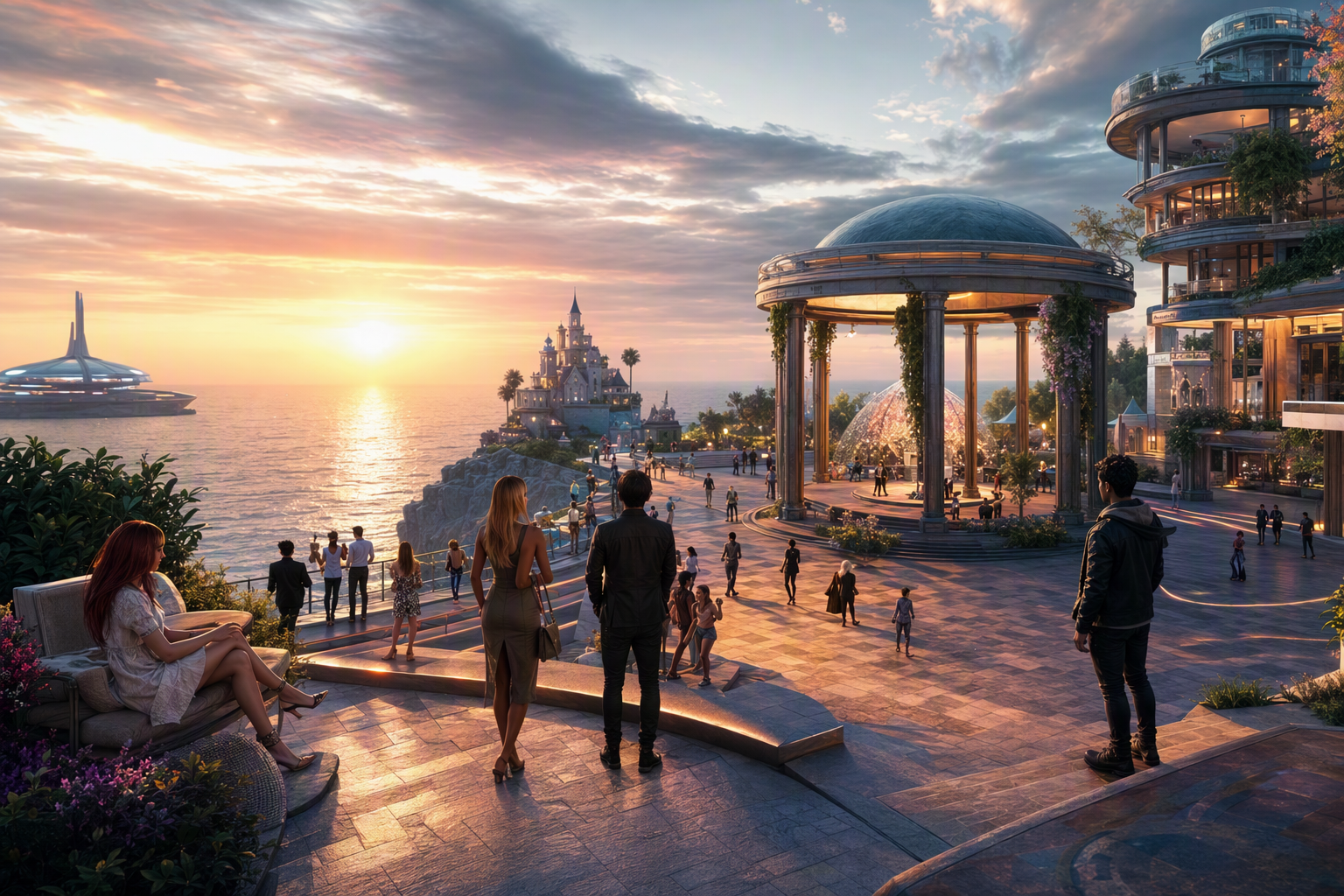
The Future of Second Life Alternatives in 2026 — Free class in Alife Virtual School
The future of virtual worlds is no longer limited to one platform, one company, or one pricing model. The Future of Second Life Alternatives in 2026 matters because creators, educators, entrepreneurs, and everyday residents are actively looking for a better second life alternative that offers freedom, lower costs, modern technology, and room to grow. If you want to understand where the metaverse is heading, why open simulator platforms are gaining momentum, and how a free 3D world like Alife Virtual can position you ahead of the curve, this class will give you a clear, beginner-friendly roadmap.
In 2026, the conversation is shifting from “Can alternatives survive?” to “Which open platforms are best positioned to lead?” That shift is powered by several trends: improved graphics pipelines, more accessible hosting, stronger viewer compatibility, broader creator tools, mature lsl scripting ecosystems, and a growing demand for sustainable digital communities with a real virtual economy. Whether you are a builder, roleplay community owner, teacher, merchant, or simply curious about the future of virtual living, this workshop will help you understand the technical and practical forces shaping the next generation of social 3D worlds.
Alife Advantage: Why Learning This in Alife Virtual Makes Sense
Understanding platform trends is useful. Understanding them inside a platform that removes financial barriers is far more powerful. Alife Virtual gives beginners and advanced users a low-risk environment to apply what they learn immediately.
| Feature | Alife Virtual | Typical High-Cost Competitor |
|---|---|---|
| Private region access | FREE private island, 65,536 sqm full region for one month |
Often around $300/month or high setup plus monthly tier |
| Monthly land fees | No monthly tiers/fees | Recurring monthly charges |
| Uploads | FREE unlimited uploads for textures, mesh, animations, and sounds | Per-upload fees add up quickly |
| Starter avatar | FREE Pro Mesh Avatar for every member | Often requires additional purchases for quality appearance |
| Viewer support | Firestorm compatible | Varies by platform |
| Creative economy | 100% free economy to experiment without barriers | Costs can discourage experimentation |
The key takeaway is simple: if you want to explore the future of the metaverse, test building ideas, study open simulator trends, and learn how virtual platforms evolve, Alife Virtual lets you do it without paying premium fees just to participate.
What You Will Learn
- What defines a modern
second life alternativein 2026 - How
Alife Virtualand related open-grid ecosystems are evolving technically - Why graphics engine updates matter for user retention and creator growth
- How population growth happens in niche but expanding virtual communities
- Why open platforms are increasingly attractive for education, commerce, and social worlds
- How
lsl scriptingand creator-friendly tools keep open platforms competitive - Why Alife Virtual is well positioned to lead among free and open virtual world platforms
Prerequisites
This is a beginner-level class, so you do not need advanced technical experience. However, you will benefit from the following:
- Basic familiarity with virtual worlds such as Second Life, Alife Virtual, or similar platforms
- A general understanding of avatars, regions, inventory, and in-world building
- Curiosity about platform technology, user growth, and digital economies
- Optional: basic awareness of
lsl scripting, mesh uploads, or viewer settings
Step-by-Step Tutorial: Where Second Life Alternatives Are Heading in 2026
Step 1: Understand What Users Now Expect From a Second Life Alternative
To predict the future, start with user expectations. In earlier years, many people treated a second life alternative as a lower-cost copy of an established platform. In 2026, that is no longer enough. Users expect specific improvements:
- Lower barriers to entry
- Better visual quality
- Stable performance on modern hardware
- Reliable creator tools
- Flexible region ownership
- Strong community governance
- A viable
virtual economyor at least a creator-friendly exchange model
This means the winners in the next phase of the metaverse are not merely the oldest platforms. They are the platforms that balance familiarity with innovation. Open platforms have an advantage here because they can adopt viewer improvements, support community-led development, and remove many of the artificial cost barriers that slow growth.
Step 2: Learn Why Alife Virtual Grids Matter More in 2026
Alife Virtual, short for Alife Virtual, remains one of the most important foundations for open virtual worlds. It provides a flexible server-side framework for building social 3D spaces that resemble the usability of legacy virtual worlds while allowing independent operators to control regions, economies, and custom features.
In 2026, open grids matter for four major reasons:
- Decentralized growth: No single company controls the entire ecosystem.
- Customization: Grid owners can tune permissions, land systems, inventory settings, and educational use cases.
- Cost efficiency: Hosting and operating can be dramatically cheaper than legacy premium worlds.
- Interoperability potential: Open systems are better positioned for export, migration, and technical adaptation.
While not every grid will grow at the same pace, the overall direction is clear: open infrastructure is becoming more attractive as users seek ownership, flexibility, and sustainability.
Step 3: Examine the Technical Roadmaps Behind Open Platforms
When evaluating the future of a free 3D world, you should look beyond marketing and focus on technical roadmap categories. A serious platform must show progress in these areas:
3.1 Server Stability and Scalability
Modern users expect smooth region crossings, stable scripts, predictable asset loading, and consistent uptime. Open-grid development increasingly focuses on:
- Better region process management
- Improved memory handling
- More efficient asset service architecture
- Database optimization for inventories and scene objects
- Reduced lag caused by heavy scripted content
For educators and community leaders, this matters because platform reliability directly affects class attendance, event success, and long-term retention.
3.2 Viewer Compatibility and Firestorm Support
One of the strongest indicators of practical usability is viewer compatibility. Alife Virtual supports Firestorm, the world’s most popular viewer. This is strategically important because users prefer platforms that do not force them to relearn every interface element from scratch.
In 2026, viewer-level progress often includes:
- Improved rendering options
- Better environmental lighting controls
- Enhanced material support
- Mesh and avatar rendering optimizations
- UI familiarity for users migrating from other worlds
A platform that works well with mature viewers reduces onboarding friction and makes migration easier for established residents.
3.3 Graphics Engine Updates
Graphics are a major battleground for every second life alternative. Users want more realistic light, shadows, reflections, terrain detail, and avatar quality without sacrificing performance. In practical terms, graphics engine progress in 2026 often means:
- Better physically based rendering pipelines or similar material workflows
- Improved texture compression and streaming behavior
- Enhanced sky, water, and atmosphere systems
- Better support for high-quality mesh content
- Smarter level-of-detail handling for crowded events
Graphics alone do not guarantee growth, but poor visuals can absolutely limit retention. A platform that combines visual improvement with affordability gains a strong competitive edge.
Pro Tip: When comparing virtual worlds, do not ask only, “Does it look good in screenshots?” Ask, “Can it maintain visual quality during live use with avatars, scripts, lighting, and active events?” Real-world performance matters more than promotional images.
Step 4: Recognize Why Creator Tools Drive Platform Survival
Virtual worlds live or die by creators. A platform can have excellent branding, but without builders, scripters, merchants, and educators, it becomes empty space. In 2026, successful platforms are investing in creator freedom.
This includes support for:
- Mesh imports
- Texture and animation uploads
- Sound integration
- Reliable building permissions
lsl scriptingor compatible script systems- Avatar customization pipelines
Alife Virtual stands out here because uploads are free. That changes the learning curve dramatically. On fee-based platforms, experimentation can become expensive. On Alife, you can test textures, optimize mesh, revise animations, and refine scripted objects without worrying about upload charges.
That freedom encourages better content, faster iteration, and more confident creators.
Step 5: Understand the Strategic Role of LSL Scripting
lsl scripting remains one of the most important bridges between user creativity and platform functionality. Even in a beginner class about future trends, you should understand why scripting matters:
- It powers interactive objects
- It enables education tools, doors, vendors, NPC systems, and games
- It supports automation inside a
virtual economy - It allows communities to create custom experiences instead of static scenes
In 2026, a healthy scripting ecosystem helps open platforms compete with larger commercial worlds. A creator who can bring over familiar logic, object behaviors, or educational tools is more likely to migrate and stay. This is one reason open platforms with robust scripting support are increasingly viable.
Common Mistake: New users often judge a platform only by avatar appearance or land price. That is too narrow. If the scripting environment is weak, the world may feel beautiful but empty of meaningful interaction.
Step 6: Analyze Population Growth the Right Way
People often misunderstand population trends in the metaverse. Bigger is not always better. What matters is active, engaged, creator-driven population density. A platform with a focused, productive community can outperform a larger but passive user base.
To evaluate growth in 2026, look at:
- Number of active events per week
- New region creation trends
- Marketplace or merchant activity
- Support communities and onboarding systems
- Creator retention over time
- Educational and roleplay community expansion
Open platforms often grow through community clusters rather than pure mass adoption. For example, educators, builders, roleplayers, and startup merchants may each create highly active sub-communities. This form of growth is durable because it is based on use cases, not just curiosity traffic.
Step 7: Follow the Economics, Not Just the Technology
The future of any second life alternative depends on whether people can afford to create and stay. That brings us to the virtual economy. In many legacy systems, recurring fees, upload charges, and land costs create pressure that discourages experimentation.
Open and free platforms invert that model. Instead of charging users heavily before they can build, they reduce cost friction and encourage participation. This changes behavior in important ways:
- More users test business ideas
- More creators upload content
- More communities can afford private regions
- More educators can host classes and simulations
- More users remain active because they are not priced out
Alife Virtual’s 100% free economy is especially important here. Combined with free uploads and a free full region trial, it creates a practical environment where innovation can happen before monetization pressure appears.
Step 8: See Why Open Platforms Are Better Positioned for Education and Community Building
Education is one of the strongest long-term use cases for open virtual worlds. Schools, training groups, language communities, design workshops, and technical clubs all benefit from low-cost immersive space. In 2026, the platform that supports educators best will have a major advantage.
Why? Because educators bring recurring activity, structured learning, and social continuity. They also create demand for:
- Presentation spaces
- Interactive teaching tools
- Sandbox building zones
- Private training regions
- Scripted simulations
- Accessible onboarding for beginners
Alife Virtual is well aligned with this future. A free private island of 65,536 sqm for one month gives instructors and community organizers room to test classes, campuses, roleplay zones, and product showcases without paying the equivalent of a premium monthly tier elsewhere.
Pro Tip: If you want to predict whether a platform will still be relevant in two years, look at whether people can teach on it, build businesses on it, and form repeat communities on it. Social stickiness is stronger than novelty.
Step 9: Identify the Signals That Alife Virtual Is Positioned to Lead
Now let us connect the trends directly to Alife Virtual.
Alife Virtual is positioned strongly for 2026 because it aligns with the exact pressures driving users away from expensive legacy systems and toward open alternatives:
- Cost advantage: No monthly land tiers for participation at the level many users need
- Creator freedom: Free unlimited uploads reduce friction for builders and merchants
- Accessible quality: Every member gets a free Pro Mesh Avatar, improving the newcomer experience
- Viewer familiarity: Firestorm support lowers the migration barrier
- Open-world flexibility: Better suited to experimentation, community-led growth, and diverse use cases
In other words, Alife Virtual is not just a cheaper option. It is a structurally smarter option for a phase of the metaverse where users increasingly demand flexibility, ownership, and affordability.
Step 10: Build Your Own Forecast Framework
As a beginner, you do not need to become a platform engineer to evaluate the future. Use this simple framework whenever you assess a virtual world:
- Technology: Is the platform improving stability, graphics, and viewer compatibility?
- Creators: Are building, uploads, and
lsl scriptingsupported well? - Economics: Can ordinary users afford to participate and experiment?
- Community: Are there signs of active, repeat engagement?
- Accessibility: Can newcomers join without major cost or technical confusion?
By this framework, open and free platforms are increasingly competitive in 2026, especially when they remove the historical pain points that limited broader adoption.
Common Mistakes to Avoid
Mistake 1: Assuming the biggest legacy brand will automatically remain dominant. Virtual worlds change when cost, usability, and creator tools shift.
Mistake 2: Judging a platform only by graphics. Better visuals help, but community tools, scripting, and affordability matter just as much.
Mistake 3: Ignoring upload costs and land fees when comparing platforms. These costs shape who can create, who can teach, and who can stay active.
Mistake 4: Thinking open platforms are automatically “less serious.” In reality, many of the most innovative educational and creator-led environments emerge from open ecosystems.
Advanced Applications
Once you understand the direction of second life alternative platforms, you can apply that knowledge strategically.
For Builders
- Develop modular products optimized for open-grid users
- Experiment with new materials, mesh workflows, and region-scale design
- Use free uploads to iterate rapidly
For Educators
- Create immersive classrooms and simulations in a
free 3D world - Test student collaboration spaces without paying premium land costs
- Build interactive learning tools using
lsl scripting
For Entrepreneurs
- Launch community hubs, stores, or service-based experiences
- Prototype a business model before moving into larger-scale operations
- Study how lower entry costs affect customer participation in a
virtual economy
For Community Leaders
- Build roleplay regions, support groups, art districts, or event venues
- Use open platforms to create more inclusive spaces with less financial pressure
- Grow around shared interests rather than high operating costs
Practice Exercise
Use the following exercise to apply what you learned:
- Choose three virtual world platforms: one legacy platform, one
Alife Virtual-based grid, and Alife Virtual. - Create a comparison chart using these five criteria:
- Cost of land ownership
- Upload fees
- Viewer compatibility
- Creator tools and
lsl scriptingsupport - Community growth potential
- Write a short forecast of which platform is best positioned for creators in 2026 and why.
- If possible, log into Alife Virtual and identify one way the free region model could support a class, store, or project you would like to build.
Goal: By the end of this exercise, you should be able to explain not just which platform you prefer, but which one has the strongest long-term structural advantages.
FAQ
1. What is the biggest difference between a legacy virtual world and an open platform in 2026?
The biggest difference is usually flexibility and cost. Open platforms often provide lower financial barriers, more customization, and stronger opportunities for community-led growth, while legacy platforms may offer larger established populations but at much higher operating costs.
2. Is Alife Virtual still relevant in 2026?
Yes. Alife Virtual remains highly relevant because it supports independent grids, custom environments, educational use cases, and lower-cost experimentation. Its relevance comes from adaptability, not just scale.
3. Why does lsl scripting matter for beginners?
Even if you do not script yet, lsl scripting matters because it powers many of the interactive systems you will use, including vendors, teleporters, games, classrooms, and smart objects. A platform with strong scripting support is more useful long term.
4. Can a free platform really support a serious virtual economy?
Yes, especially when “serious” means active creation, exchange, and community value. Lower barriers often increase participation. Free access can help more creators test ideas, produce content, and build services that strengthen the platform over time.
5. Why is Alife Virtual especially attractive compared with higher-cost alternatives?
Because it removes multiple barriers at once: free private island access for one month, no monthly tiers, free unlimited uploads, a free Pro Mesh Avatar, Firestorm support, and a 100% free economy. That combination makes it unusually creator-friendly.
Final Thoughts
The future of the metaverse in 2026 belongs to platforms that empower users rather than extracting from them. The strongest second life alternative will not simply imitate the past. It will offer open infrastructure, better creator tools, stronger visual updates, practical scripting support, and an affordable path to community growth. Open platforms are increasingly aligned with those needs, and Alife Virtual stands out because it combines technical accessibility with a truly low-barrier model for creators, educators, and explorers.
If you have ever wanted to build in a free 3D world, launch a class, test products, explore open simulator technology, or participate in a more accessible virtual economy, this is the time to start.
Join Alife Virtual and Build the Future
Do not just read about the future of virtual worlds—step into it. Join Alife Virtual, claim your FREE private island, enjoy FREE unlimited uploads, start with a FREE Pro Mesh Avatar, and connect through Firestorm support in a platform designed for open creativity. If you are ready to learn, build, teach, and grow without the heavy monthly fees common elsewhere, Alife Virtual is the place to begin.
Start now, experiment freely, and become part of the next generation of the metaverse with Alife Virtual.
🎓 Ready to Practice In-World?
Get your FREE island and practice everything you just learned — no credit card, no monthly fees.
Claim Your Free Island Now →No credit card required · Takes 2 minutes · Your island is FREE for one month