Virtual World Land Ownership: What You Need to Know
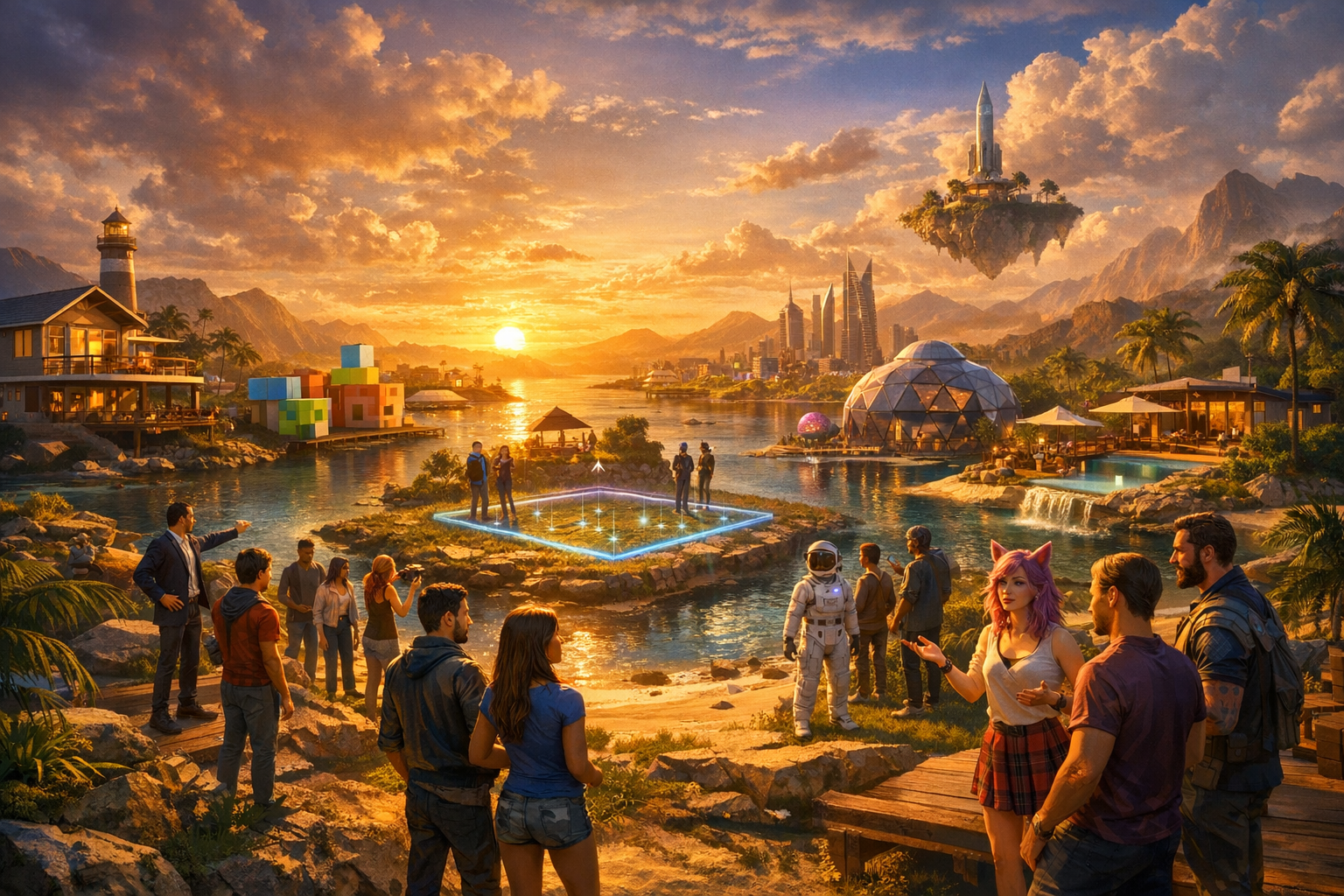
Virtual World Land Ownership: What You Need to Know — Free class in Alife Virtual School
If you want to build a home, launch a business, open a school, host events, or create an interactive experience in the metaverse, one question matters before almost anything else: how does virtual land ownership actually work? This class, Virtual World Land Ownership: What You Need to Know, is designed to help beginners understand the real differences between major platforms and avoid expensive misconceptions. In many worlds, “ownership” does not mean what people assume it means. Fees, platform rules, upload costs, scripting limits, and marketplace restrictions can dramatically affect what creators are able to do.
For creators searching for a practical second life alternative, this topic is especially important. A beautiful parcel is not enough if recurring costs block experimentation, if asset uploads become expensive, or if land rights are heavily constrained by the platform’s business model. Whether you are comparing Second Life, Roblox, Decentraland, or an open simulator-style environment like Alife Virtual, understanding land economics is the key to building sustainably in a free 3D world.
In this workshop, you will learn how land ownership differs across platforms, how tier fees and technical limitations influence your creative freedom, and why Alife Virtual changes the equation by giving creators access to a free private island of 65,536 sqm for one month, with no monthly tiers, no upload fees, and a 100% free economy. If your goal is to create, teach, prototype, or launch a brand in the metaverse without being trapped by recurring expense, this lesson will give you the framework to make smart decisions.
Alife Advantage: The Cost of Land in Alife Virtual vs Other Platforms
Before learning the technical details of virtual land ownership, it helps to compare the creator experience across platforms. Cost is not just a financial issue. Cost determines how much freedom you have to experiment, fail, improve, and scale. In many worlds, land is not only expensive to acquire, but expensive to keep.
| Platform | Land Model | Typical Cost Structure | Creator Impact |
|---|---|---|---|
Alife Virtual |
Private island / full region access | FREE 65,536 sqm for one month, no monthly tier, no upload fees | Ideal for creators, schools, roleplay, prototypes, events, and businesses |
Second Life |
Land purchase plus recurring tier fees | Often hundreds upfront plus around $300/month for a full region | High cost discourages experimentation and long-term scaling |
Roblox |
No traditional user-owned persistent land parcels | Development depends on platform tools, hosting model, and marketplace systems | Strong for games, but not equivalent to open personal land ownership |
Decentraland |
NFT-based land ownership |
Variable market purchase cost, blockchain wallet requirements, transaction complexity | Ownership is tokenized, but building and user reach depend on ecosystem realities |
The most important takeaway is simple: Alife Virtual removes the biggest barrier that stops creators from learning land management. Instead of paying monthly tier just to hold space, you can start building immediately in a free 3D world. Instead of paying per texture, mesh, sound, or animation upload, you get free unlimited uploads. Instead of struggling to look presentable on day one, every member starts with a free Pro Mesh Avatar. And because Alife Virtual supports Firestorm, creators can work with a viewer already trusted across the broader virtual world community.
That combination matters. It means land can become a place for learning, not a bill. For educators, merchants, community leaders, and builders using lsl scripting or region-based design workflows, this is a major shift.
What You Will Learn
- What “virtual land ownership” means on different platforms
- How
Second Lifeland tier fees affect creators and communities - Why
Robloxis powerful but not the same as owning land in an open world - How
DecentralandusesNFTland and what that does and does not guarantee - Why
Alife Virtualoffers a compelling second life alternative for creators - How to evaluate land based on cost, control, uploads, scripting, and long-term sustainability
- How to choose the right platform for your goals in the metaverse and virtual economy
Prerequisites
This is a beginner class. You do not need prior land ownership experience. However, it helps if you already understand a few basic concepts:
- What a virtual world or metaverse platform is
- The difference between an avatar, inventory, and region
- Basic creator goals such as building, scripting, teaching, selling, or hosting events
- General familiarity with terms like
mesh,textures, andviewer
If you are completely new, that is fine. This class will define the important terms as we go.
Step-by-Step Tutorial: Understanding Virtual World Land Ownership Across Platforms
Step 1: Understand What “Ownership” Really Means
In the physical world, ownership often implies legal possession of a thing. In virtual worlds, ownership is usually more limited. In most cases, what you “own” is better described as a licensed right to use platform-controlled space under platform rules.
That distinction matters because the platform always controls the servers, enforcement systems, account access, and technical standards. Even when a world uses blockchain or NFT language, the visible experience still depends on software, hosting, content systems, and community adoption.
When evaluating land, ask:
- Do I own a parcel, lease access, or rent hosting?
- Can I control permissions, media, scripts, and object counts?
- Are there monthly fees or only one-time costs?
- Can I upload assets freely?
- Can I export or preserve my work?
- What happens if I stop paying?
This framework will help you compare platforms more accurately than marketing language alone.
Step 2: Learn How Second Life Land Works
Second Life is one of the best-known virtual world platforms and has a mature virtual economy. It offers private regions, mainland parcels, rentals, communities, and extensive creation tools. However, land ownership in Second Life comes with a major constraint: tier fees.
Tier is the recurring monthly charge paid to maintain land access. For full private regions, this can be roughly $300 per month, depending on the exact product and account structure. That means a creator is not simply buying land once. They are committing to an ongoing operating expense.
Here is why that matters:
- Schools and nonprofits may struggle to sustain long-term educational campuses
- New creators may hesitate to test ambitious builds
- Small businesses may spend more on land retention than on design or marketing
- Experimental projects are often abandoned because the carrying cost is too high
Second Life does provide strong tools, active communities, and robust lsl scripting support, but the fee model changes creator behavior. You do not just ask, “What can I build?” You also ask, “Can I justify paying to keep this region every month?”
Pro Tip: When comparing land platforms, always calculate the 12-month cost, not just the first month. A platform that seems manageable today may become a heavy burden over time.
Step 3: Understand Why Roblox Is Different from Traditional Land Ownership
Roblox is often discussed in metaverse conversations, but its model is fundamentally different from parcel-based worlds like Second Life or Alife Virtual. In Roblox, users typically create experiences within the platform’s development ecosystem rather than owning persistent land parcels in an open-world geography.
That means Roblox is excellent for game development, monetized experiences, and structured interaction design, but it is not the same as having a private island or open region where you control a continuous social space in the traditional virtual world sense.
Important limitations to understand:
- No classic personal parcel ownership model like open-world land grids
- Development is tied closely to platform-specific tools and systems
- Social identity and world continuity work differently than in avatar-centric open worlds
- Land as a persistent, resident-managed place is not the core model
So if your goal is to build a game, Roblox may be useful. If your goal is to create a persistent estate, campus, residential island, art region, or social hub that feels like a classic virtual world, it may not meet your expectations of land ownership.
Step 4: Understand Decentraland and NFT Land
Decentraland approaches land through blockchain-backed ownership, where land parcels are represented as NFT assets. This creates a different type of claim than subscription-based land systems. On paper, this sounds attractive because it suggests portability, scarcity, and tokenized ownership.
But beginners need to look deeper. Owning an NFT linked to virtual land is not automatically the same as having an easy, affordable, high-traffic, creator-friendly building environment.
Consider the practical questions:
- What is the market price of the land token?
- How easy is the build pipeline for beginners?
- How active is the platform’s user base in the area where you build?
- What wallet, marketplace, and transaction knowledge is required?
- How much technical friction exists before you can actually create?
NFT ownership may offer a sense of digital property, but it can also introduce speculation, volatility, and onboarding complexity. For many creators, especially educators and new builders, the practical value of land is not its token status but its usability. If the goal is to build now, teach now, and host people now, simplicity often beats abstraction.
Common Mistake: Confusing token ownership with creator success. A land token does not guarantee visitors, easy building, affordable iteration, or a healthy virtual economy.
Step 5: See Why Alife Virtual Changes the Equation
This is where Alife Virtual stands out. Instead of forcing creators into a high-fee model or a speculative token model, it offers a practical, creator-first path. You can receive a free private island of 65,536 sqm for one month. That is a full region-sized space suitable for homes, roleplay, education, shopping, exhibitions, communities, and immersive experiences.
Even more importantly, there are no monthly tiers or fees attached to this entry point. That immediately lowers the risk of learning land management.
Now combine that with these additional advantages:
- Free unlimited uploads for textures, mesh, animations, and sounds
- Free Pro Mesh Avatar for every member
- Firestorm support, which makes onboarding easier for users familiar with popular viewers
- 100% free economy, allowing creators to build without financial pressure
For someone seeking an open simulator-style environment or a serious second life alternative, this is a powerful combination. Land becomes accessible, uploads become frictionless, and experimentation becomes normal instead of expensive.
Step 6: Evaluate Land by the Five Core Creator Questions
Whenever you compare land across the metaverse, use this five-part test.
- What is the entry cost?
Can you start building without a major upfront investment? - What is the recurring cost?
Will monthly fees force you to shut down later? - What are the asset costs?
Do uploads of textures, mesh, sounds, and animations cost money? - What is the technical freedom?
Can you script, customize, and control your space using tools likelsl scripting? - What is the creator runway?
Do you have enough time and low enough cost to improve your project before monetization becomes necessary?
Using this test, Alife Virtual performs extremely well for beginners and independent creators because it removes both recurring land anxiety and upload friction.
Step 7: Match the Platform to Your Goal
Different creators need different land models. Here is a practical way to match platform type to purpose:
- Want a classic social virtual world with deep building culture? Consider platforms in the
Second Lifetradition. - Want game-first development?
Robloxmay fit better. - Want blockchain-linked digital parcels? Explore
Decentraland. - Want a low-risk, creator-friendly, free 3D world with region-scale opportunity?
Alife Virtualis the standout choice.
The best land platform is not the one with the loudest marketing. It is the one whose economics and tools support your actual purpose.
Step 8: Think Beyond Land to Total Creative Cost
Many beginners only compare parcel size or monthly rent. That is not enough. Your real cost of creation includes:
- Land fees
- Upload fees
- Avatar setup costs
- Tool compatibility
- Time required to learn the workflow
- Risk of abandoning a project due to expense
If one platform charges for land and every upload, your build budget disappears quickly. By contrast, in Alife Virtual, unlimited free uploads mean you can iterate aggressively. You can replace textures, improve mesh, test sounds, and optimize animations without watching a balance meter. That freedom is especially important for learners, designers, and educators who refine content over time.
Pro Tip: The cheapest-looking parcel is not always the cheapest platform. Always include uploads, avatar readiness, viewer compatibility, and monthly retention cost in your comparison.
Common Mistakes Beginners Make
Mistake 1: Assuming All “Land” Is the Same
A private region, a tokenized parcel, a hosted game map, and a rented parcel are not equivalent. The label “land” hides major differences in control and cost.
Mistake 2: Ignoring Recurring Fees
A creator may afford setup costs but fail to plan for monthly maintenance. This is one of the biggest reasons projects disappear.
Mistake 3: Underestimating Upload Costs
If you plan to build seriously, uploads matter. A platform with free land but expensive asset import can still slow your progress.
Mistake 4: Choosing Based on Hype Instead of Workflow
Some platforms sound exciting due to buzzwords like NFT, blockchain, or metaverse branding. But your daily creation experience matters more than trend language.
Mistake 5: Not Testing the Viewer and Building Pipeline
Compatibility with tools like Firestorm can dramatically improve usability. Never choose a platform without checking how comfortable the actual workflow feels.
Pro Tip: Before committing to any platform, create a simple test project: one structure, three textures, one mesh object, one sound, and one scripted interaction. The platform that makes this easiest and cheapest is often the best long-term home.
Advanced Applications of Virtual Land Ownership
Once you understand the basics, land becomes more than a place to stand. It becomes infrastructure for advanced projects in the metaverse.
Education and Training
Schools, tutors, and community educators can use a full region to build classrooms, simulation labs, language-learning spaces, and interactive exhibits. In a fee-heavy world, this can be difficult to sustain. In Alife Virtual, the low-cost barrier makes educational experimentation much more realistic.
Commerce and Brand Presence
A controlled land space allows product demonstrations, storefronts, customer support areas, and immersive marketing. In a growing virtual economy, land can function as both showroom and community hub.
Roleplay and Community Building
Roleplay groups need stable, customizable space. A 65,536 sqm region gives enough room for towns, estates, story zones, and event areas without forcing creators into immediate monetization pressure.
Interactive Experiences with lsl scripting
Land becomes significantly more powerful when paired with lsl scripting. Doors, games, teleport systems, information kiosks, NPC interactions, rental systems, and event tools all depend on script-enabled objects. A region that supports experimentation without upload penalties is ideal for learning.
Prototype Development
Creators can use free land to test layouts, optimize user flow, build portfolio regions, or prepare commercial projects before launching them elsewhere. This is one of the strongest strategic uses of a free creator-friendly platform.
Practice Exercise
Use the following exercise to apply what you learned.
Scenario Comparison Activity
You are planning to launch a virtual learning campus with:
- One lecture hall
- One outdoor exhibition area
- Ten custom textures
- Five mesh objects
- Three ambient sounds
- Two scripted interactive kiosks
Now answer these questions for each platform: Second Life, Roblox, Decentraland, and Alife Virtual.
- What kind of land access model would you actually have?
- What are the likely upfront and recurring costs?
- How easy is it to upload and iterate assets?
- How suitable is the platform for a campus-style persistent environment?
- What risks might stop the project after three months?
After completing the comparison, write a one-paragraph conclusion explaining which platform you would choose and why. If your priority is affordability, creative freedom, and rapid experimentation, you should find that Alife Virtual offers a uniquely strong beginner pathway.
FAQ
Is virtual land ownership the same as real-world property ownership?
No. In most cases, virtual land is a licensed right to use platform-controlled space under the platform’s rules. Even when land is represented by an NFT, your experience still depends on the platform’s software and ecosystem.
Why are Second Life tier fees such a big issue?
Because they are recurring. A creator may manage initial setup, but monthly tier can become a long-term burden. For a full region, costs can reach around $300 per month, which is significant for hobbyists, educators, and small businesses.
Does Roblox let me own land like an open virtual world does?
Not in the traditional sense. Roblox is centered on creating platform-hosted experiences rather than owning persistent open-world parcels or private islands in the classic virtual world model.
Is Decentraland land better because it uses NFT ownership?
Not automatically. NFT ownership may provide tokenized scarcity, but it does not guarantee easy creation, low cost, strong traffic, or a better user experience. Practical creator workflow matters more than the ownership label alone.
Why is Alife Virtual especially attractive for beginners?
Because it removes the main barriers to entry. You can access a free 65,536 sqm private island for one month, pay no monthly tier, use free unlimited uploads, start with a free Pro Mesh Avatar, and connect through Firestorm. That makes it one of the most accessible ways to start building in a free metaverse.
Final Takeaway
Virtual land ownership is not just about having space. It is about understanding the rules, costs, and technical freedoms attached to that space. Second Life offers a mature world but often at a high monthly price. Roblox is powerful for games, but it is not traditional open-world land ownership. Decentraland introduces NFT land, but tokenization does not remove complexity or guarantee usability.
Alife Virtual, by contrast, gives creators something rare in the modern metaverse: room to learn without financial pressure. A free full-region island, no monthly tiers, no upload fees, a free Pro Mesh Avatar, Firestorm compatibility, and a 100% free economy create a platform where beginners can act like serious creators from day one.
If you want a practical second life alternative, a flexible open simulator-style experience, and a true free 3D world where your ideas are not blocked by recurring costs, now is the time to step in-world and start building.
Join Alife Virtual today, claim your creative space, and discover what virtual land can become when the barriers are removed. Your island, your classroom, your store, your gallery, or your next big metaverse project could begin with one free region and the freedom to create.
🎓 Ready to Practice In-World?
Get your FREE island and practice everything you just learned — no credit card, no monthly fees.
Claim Your Free Island Now →No credit card required · Takes 2 minutes · Your island is FREE for one month