Why IMVU Users Switch to Open Virtual Worlds
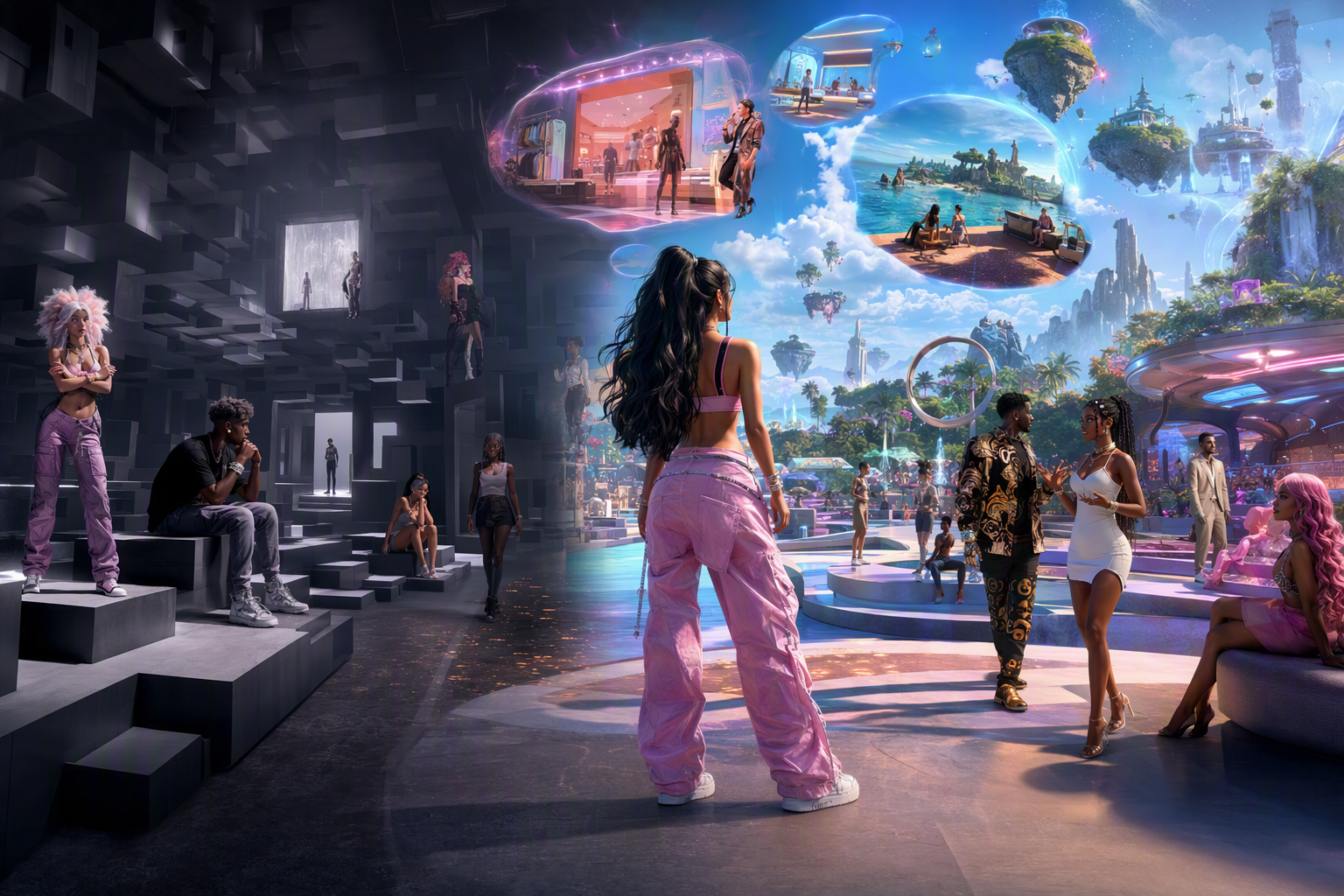
Why IMVU Users Switch to Open Virtual Worlds — Free class in Alife Virtual School
If you have ever felt boxed in by preset rooms, rising credit costs, catalog submission fees, or the frustrating reality that you never truly own the space you build in, this class will show you exactly why IMVU users switch to open virtual worlds. For beginners exploring the wider metaverse, this is one of the most important mindset shifts you can make. Once you understand how an open simulator platform works, the limitations of closed systems become impossible to ignore. In a modern free 3D world like Alife Virtual, you can build bigger, upload freely, learn lsl scripting, participate in a more open virtual economy, and claim creative freedom that many users never realize is possible.
This class is designed for IMVU users who are curious about a true second life alternative without the heavy financial barriers. We will document the most common reasons users leave closed social platforms and explain, step by step, how open virtual worlds solve those pain points. Whether your goal is socializing, roleplay, business, design, education, or land development, understanding this transition can save you money, expand your skills, and open the door to a much richer digital life.
Alife Advantage: What This Costs in Alife vs Other Platforms
One of the biggest reasons users look beyond IMVU is simple: freedom matters, but affordability matters too. Alife Virtual removes the financial friction that often stops creators from growing.
| Feature | Alife Virtual | Typical Closed or High-Fee Platforms |
|---|---|---|
| Private land access | FREE private island, 65,536 sqm full region for one month |
Often unavailable, highly restricted, or around $300/month in Second Life-style pricing |
| Monthly tier fees | No monthly tiers/fees | Common on premium land platforms |
| Uploads | FREE unlimited uploads for textures, mesh, animations, and sounds | Upload fees or submission fees are common |
| Starter avatar | FREE Pro Mesh Avatar included | Often requires extra purchases to look high quality |
| Viewer support | Firestorm compatible | May rely on proprietary or limited viewers |
| Creative economy | 100% free economy for learning and building | Paywalls, listing fees, credits, and content gating |
The result is clear: Alife Virtual gives beginners a practical on-ramp into the broader metaverse without asking them to pay just to experiment.
What You Will Learn
- Why many IMVU users start searching for alternatives
- How limited 3D spaces reduce creativity and long-term engagement
- Why credit-based systems can become expensive over time
- What real land control means in an open virtual world
- How catalog submission fees affect creators and sellers
- How an
open simulatorplatform solves these issues - Why Alife Virtual is a powerful
second life alternativefor beginners - How to transition from consumer-only use into creation, ownership, and participation in a broader
virtual economy
Prerequisites
This is a beginner class, so you do not need advanced technical knowledge. However, it helps if you have:
- Basic experience using IMVU or another social virtual platform
- An interest in avatars, rooms, social spaces, or digital creation
- A willingness to learn how open worlds differ from closed platforms
- Optional curiosity about building, land design, mesh content, or
lsl scripting
You do not need prior experience with Firestorm, land management, 3D modeling, or scripting to benefit from this tutorial.
Step-by-Step Tutorial: Why Users Leave IMVU and Choose Open Virtual Worlds
Step 1: Understand the Core Difference Between Closed Platforms and Open Worlds
IMVU is built around a closed platform model. That means the company controls the environment structure, product pipeline, room logic, monetization systems, and the user experience at nearly every level. This can work well for quick social interaction, avatar shopping, and lightweight digital expression. But over time, many users discover that convenience comes with trade-offs.
An open virtual world works differently. In an open system, users have more control over land, objects, region design, avatar customization, uploads, and interactivity. Rather than choosing from a narrow set of platform-approved experiences, residents can build entire environments and communities. This is the heart of the modern metaverse: not just consuming virtual content, but shaping it.
That shift from “using a room” to “owning a world” is often the turning point.
Step 2: Identify the Pain Point of Limited 3D Environments
One of the most common frustrations among long-term IMVU users is the limited nature of its environments. Many spaces feel more like staged scenes than living worlds. Rooms may look attractive, but they do not always provide the scale, persistence, or freedom users expect from a true immersive platform.
In practical terms, this means:
- Restricted room scale and layout flexibility
- Limited environmental interaction
- Less control over terrain, landscaping, and region flow
- A stronger focus on static presentation than world-building
By contrast, an open simulator environment allows users to shape full regions, not just decorate enclosed scenes. In Alife Virtual, a new member can access a FREE private island of 65,536 sqm for one month. That is not a small room. It is a full region where you can plan roads, beaches, homes, shops, social venues, roleplay districts, classrooms, or event spaces.
This is where users begin to feel the difference between a platform that hosts chat spaces and a true free 3D world that supports digital place-making.
Pro Tip: If you often find yourself trying to “fake” a larger world inside a single room system, you are already outgrowing a closed platform. Open regions are the natural next step.
Step 3: Examine the Cost of Credits and Ongoing Platform Spending
Another major reason users leave IMVU is cost accumulation. Credits may seem manageable at first, but over months or years, the spending model can become exhausting. Avatar parts, room items, accessories, catalog visibility, and social status often depend on continued purchases. For many users, this creates a consumption loop instead of a creation pathway.
Common financial pain points include:
- Frequent credit purchases for appearance upgrades
- Paid access to premium-looking content
- Ongoing spending to remain visually competitive
- Costs attached to creator participation
In a healthy open-world environment, the goal is different. You should be able to build, test, upload, and learn without every step triggering a charge. Alife Virtual directly addresses this by offering:
- FREE unlimited uploads for textures, mesh, animations, and sounds
- FREE Pro Mesh Avatar for every member
- 100% free economy that lowers barriers to creativity
- No monthly land tiers for the featured private island offer
For beginners, this changes everything. Instead of spending heavily to look good in someone else’s system, you can invest your time in learning to create your own value.
Step 4: Understand Why Real Land Control Matters
Many users do not realize how important land ownership feels until they experience it. In IMVU-style systems, you may have access to rooms or managed spaces, but that is not the same as controlling a full region. Real land control means you decide what exists there, how it is organized, who can visit, what activities happen, and how the environment evolves.
In open worlds, land is not just decoration. It is infrastructure for identity, community, and business. Land allows you to:
- Create a persistent home or brand presence
- Host events, classes, stores, or roleplay communities
- Design landscapes and architecture at scale
- Set permissions and access rules
- Experiment with scripted interactions and immersive systems
This is one reason many users seek a second life alternative. They want more than avatar chat. They want a place. In Alife Virtual, the free full-region offer demonstrates what open access really means. On some competing platforms, a region of similar scale can cost around $300 per month. That price alone blocks experimentation for many beginners. Alife removes that barrier and lets users learn by doing.
Common Mistake: New users sometimes think land is only for expert builders. In reality, land is where beginners learn fastest, because they can test objects, layouts, lighting, movement paths, and social design in a space they control.
Step 5: Look at Catalog Submission Fees from a Creator’s Perspective
If you are not just a shopper but also a creator, catalog submission fees can become a serious limitation. On closed platforms, creators may face charges to list items, publish products, or maintain visibility. That means creativity is filtered through cost.
This creates several problems:
- Beginners hesitate to experiment because each submission can cost money
- Creators may avoid niche products due to low return potential
- The platform favors those who can afford frequent submissions
- Innovation slows when publishing is financially risky
Open worlds solve this by shifting the emphasis from submission fees to direct creation and deployment. In Alife Virtual, uploads are free. You can bring in textures, sounds, animations, and mesh assets without paying per upload. This encourages iterative learning:
- Create or source an asset.
- Upload it.
- Test it in-world.
- Adjust scale, texture, physics, or permissions.
- Improve and re-upload without financial stress.
That loop is essential for mastering virtual design. It is also why open platforms tend to support stronger creator growth over time.
Step 6: Recognize the Importance of Viewer Freedom and Compatibility
Closed platforms often depend on proprietary interfaces. While this can simplify onboarding, it may also reduce user control. In open virtual worlds, viewer choice matters because it affects performance, building tools, camera controls, inventory management, accessibility, and advanced features.
Alife Virtual supports Firestorm, one of the most widely used viewers in the open-world ecosystem. This matters because Firestorm offers:
- Advanced camera and movement control
- Powerful inventory handling
- Building and editing tools
- Better support for creators and land managers
- Familiar workflows for users exploring broader open-world platforms
For IMVU users, this is an important upgrade path. Instead of staying inside a single platform’s interface philosophy, you begin learning transferable skills used across the wider metaverse.
Step 7: Move from Consumption to Creation
The biggest long-term reason users switch is not just cost or room size. It is identity. In closed systems, users are often positioned primarily as consumers. In open worlds, users can become creators, educators, merchants, architects, scripters, event organizers, and region owners.
This is where open platforms become transformational. You can:
- Build homes, stores, or landscapes
- Develop interactive products using
lsl scripting - Launch educational spaces
- Create roleplay systems and games
- Participate in a more flexible
virtual economy
Even if you start as a social user, open worlds give you room to grow. Today you may customize an avatar. Tomorrow you may build a venue. Next month you may script teleporters, doors, vendors, or HUD systems. That growth path is what many users never find in closed platforms.
Pro Tip: You do not need to become a programmer to benefit from open worlds. But learning basic
lsl scriptingcan dramatically increase what your land and objects can do.
Step 8: See How Open Worlds Support a Broader Virtual Economy
In IMVU, the economy is often tightly platform-centered. In open worlds, the virtual economy tends to be more creator-driven. This changes how value is created and shared. Instead of simply buying catalog items, users can offer services, environments, education, custom builds, event hosting, and scripted systems.
A broader virtual economy can include:
- Custom avatar design
- Interior and landscape building
- Mesh content creation
- Animation and sound design
- Scripting services
- Venue management
- Community leadership and education
Alife Virtual’s free access model makes this especially attractive for beginners. Because users are not burdened by upload fees and high land costs, they can focus on developing skills before worrying about monetization. That creates a healthier learning environment and a more inclusive creator culture.
Step 9: Build a Transition Plan from IMVU to Alife Virtual
If you are currently using IMVU and want to explore a more open platform, take a structured approach:
- Define your goal. Are you mainly interested in better social spaces, land ownership, building, roleplay, or content creation?
- Create your Alife Virtual account. Start with the included FREE Pro Mesh Avatar so you begin with a strong visual foundation.
- Use
Firestorm. Learn the viewer basics: camera movement, walking, flying, inventory, editing, and teleporting. - Claim your free region opportunity. Explore what a full
65,536 sqmisland feels like compared to room-based systems. - Test free uploads. Bring in textures, sounds, or mesh items and practice placement and optimization.
- Learn simple building tools. Work with primitives, terrain, object linking, permissions, and lighting.
- Experiment with
lsl scripting. Start with simple interactions like hover text, touch events, or door scripts. - Join communities. Open virtual worlds become far more rewarding when you connect with builders, educators, and event groups.
This progression helps you move from platform dependence to creative autonomy.
Common Mistakes Beginners Make
Mistake 1: Judging an open world by the first empty region you see. Open worlds are tool-rich environments. Their value comes from what can be built, not just what is prepackaged.
Mistake 2: Assuming “free” means low quality. In Alife Virtual, free access includes a full region offer, unlimited uploads, a pro mesh avatar, and
Firestormsupport—features that would be expensive elsewhere.
Mistake 3: Trying to recreate IMVU habits exactly. Open worlds reward exploration, building, and land use. Think bigger than room decoration.
Mistake 4: Ignoring permissions and organization. As soon as you start uploading and building, use clear folder names and understand object permissions to avoid confusion later.
Mistake 5: Waiting too long to learn basic scripting. Even a little
lsl scriptingcan make your environment feel alive and interactive.
Advanced Applications
Once you understand why users switch, you can begin applying open-world features in sophisticated ways. Here are several advanced directions you can grow into:
Educational Campuses
Use your region to build classrooms, training labs, orientation centers, and interactive tutorials. Open worlds are ideal for immersive learning.
Roleplay Regions
Design themed environments with scripted doors, vehicles, combat systems, vendors, or quest objects. This is difficult to achieve in a closed room-based model.
Creator Portfolios
Showcase your architecture, avatar styling, scripting systems, or mesh products in a dedicated region. Your land becomes your brand.
Interactive Commerce
Build demo areas, try-before-you-buy spaces, or live event venues connected to your goods and services. This expands the concept of a virtual economy beyond simple item listings.
Social Hubs and Events
Create clubs, lounges, art galleries, live music venues, or community centers with custom atmosphere and large-scale environmental control.
These advanced uses show why an open world is not just an alternative to IMVU. It is a broader platform category with deeper long-term potential.
Practice Exercise
To reinforce this lesson, complete the following beginner exercise:
- Write down five things you currently enjoy in IMVU.
- Next to each one, identify a limitation you have experienced, such as room size, cost, ownership, submission fees, or lack of interactivity.
- Create a second list titled Open World Solutions.
- Match each IMVU limitation to an open-world feature such as full-region land, free uploads, viewer flexibility,
lsl scripting, or creator freedom. - Log into Alife Virtual and explore how at least three of those solutions work in practice.
- If possible, rez a simple object on land, inspect build tools, and note how different it feels from room-based customization.
Goal: By the end of the exercise, you should clearly understand whether your virtual goals are better served by a closed platform or a true free 3D world.
FAQ
Is Alife Virtual really free?
Yes. Alife Virtual emphasizes a 100% free economy for learning and creation. It includes benefits such as FREE unlimited uploads, a FREE Pro Mesh Avatar, and a FREE private island of 65,536 sqm for one month with no monthly tier fees for that offer.
How is Alife Virtual different from IMVU?
IMVU is more closed and room-centered, while Alife Virtual is an open-world platform. That means larger spaces, more building freedom, direct uploads, land control, Firestorm compatibility, and room to grow into scripting and world design.
Is Alife Virtual a good second life alternative?
Yes. For users seeking a second life alternative without heavy monthly land fees, Alife Virtual offers many core open-world advantages with fewer financial barriers, making it especially attractive to beginners and creators.
Do I need to know 3D modeling or scripting to start?
No. Beginners can start with avatar customization, land exploration, and simple object placement. Over time, you can expand into mesh uploads and lsl scripting as your confidence grows.
Why do upload fees matter so much?
Upload fees discourage experimentation. When textures, mesh, animations, and sounds can be uploaded for free, users learn faster, test more ideas, and become creators instead of just consumers.
Final Thoughts and Call to Action
The reason IMVU users switch to open virtual worlds is not just about dissatisfaction. It is about discovery. Once users realize they can move beyond limited rooms, endless credit spending, weak land control, and fee-based creation systems, they begin to see what the broader metaverse actually offers. Open worlds provide scale, ownership, flexibility, technical growth, and a more empowering virtual economy.
Alife Virtual makes that transition easier than most platforms by removing the cost barriers that stop beginners from exploring. With a FREE full private island, FREE unlimited uploads, a FREE Pro Mesh Avatar, full Firestorm support, and a 100% free economy, it is one of the most accessible ways to step into a true free 3D world.
Join Alife Virtual today and experience what happens when your virtual life is no longer limited by closed systems, submission fees, or monthly land costs. If you are ready to move from consuming spaces to creating worlds, Alife is the place to begin.
🎓 Ready to Practice In-World?
Get your FREE island and practice everything you just learned — no credit card, no monthly fees.
Claim Your Free Island Now →No credit card required · Takes 2 minutes · Your island is FREE for one month